Limited floor space can often hinder the full potential of your dining area. Are you aiming to craft a stylish yet practical dining space that feels open rather than cramped? This guide explores inventive and functional techniques to enhance small dining rooms, elevating both the visual appeal and comfort of your home. Discover a variety of clever furniture choices and space-saving design hacks that transform narrow dining zones into cozy, efficient retreats through smart storage, color selection, and minimalist styling.
Harness Vertical Storage to Expand Your Dining Space
When working with compact dining rooms, looking upward is key. Utilizing vertical space is one of the most effective ways to maximize limited square footage. Installing tall shelving units, wall-mounted cabinets, and floating shelves turns bare walls into valuable storage zones. Elevated shelves keep essentials organized without encroaching on floor area, while also enhancing the perception of height and openness in the room.
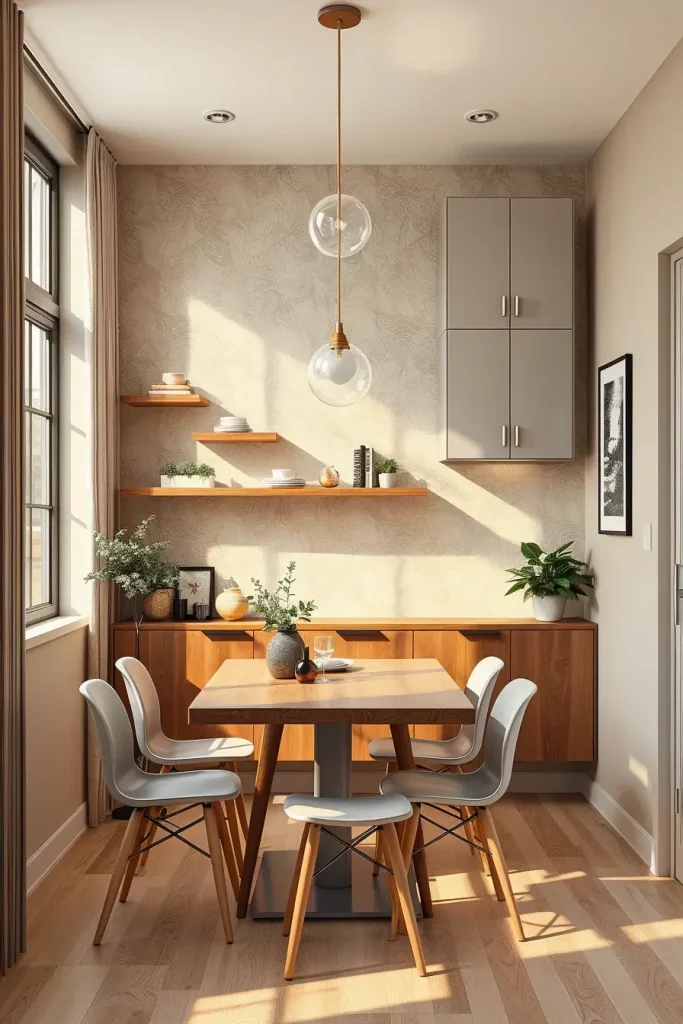
In a recent project, I incorporated slender open shelves above a banquette seating area to showcase dinnerware, decorative jars, and small art pieces. The dining setup was pared down to essentials: a narrow table with integrated storage and a bench. Vertical storage solutions like these are perfect for tight spaces, offering practical storage without sacrificing precious floor room.
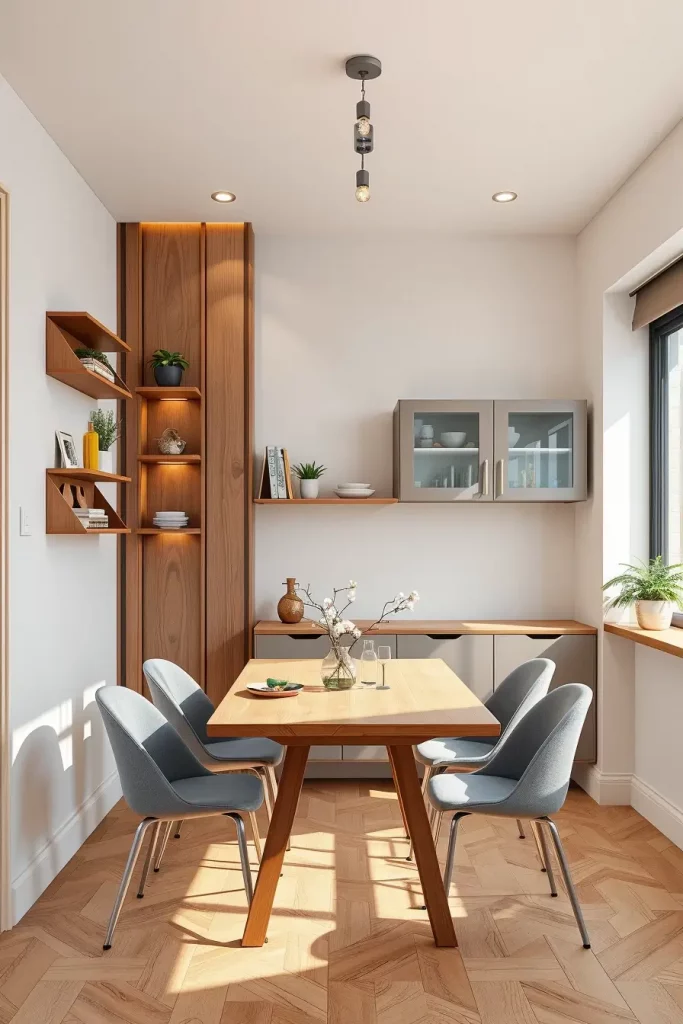
Combining vertical storage with stylish design elements creates a harmonious and upscale look. For example, pairing wooden shelves with sleek black metal brackets or glass-fronted cabinets blends functionality with elegance. Filling these shelves with curated decorative items ensures the space feels thoughtfully designed rather than overcrowded. Adding under-shelf lighting and using monochromatic accessories can further unify the look, while a slim ladder shelf fits neatly into corners without bulk.
Brighten and Enlarge with Light Color Palettes
Color choice plays a crucial role in making small dining rooms feel more spacious. Opting for soft hues like off-white, pale pastels, or light grays can visually expand the room and amplify natural light. These shades reflect sunlight, making walls seem to recede and creating an airy atmosphere.
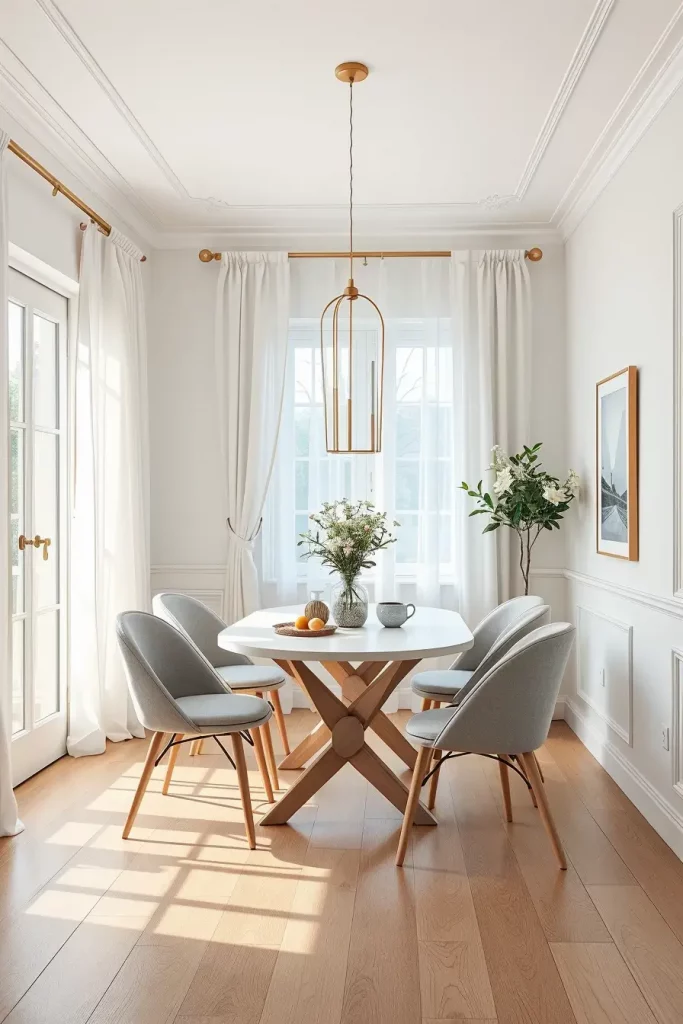
Pairing light-colored walls with white or beige dining furniture is a winning combination. For instance, a whitewashed oak table complemented by soft gray chairs and linen curtains introduces warmth and brightness. Neutral tones effortlessly harmonize with greenery, wooden accents, and patterned cushions without overwhelming the space.
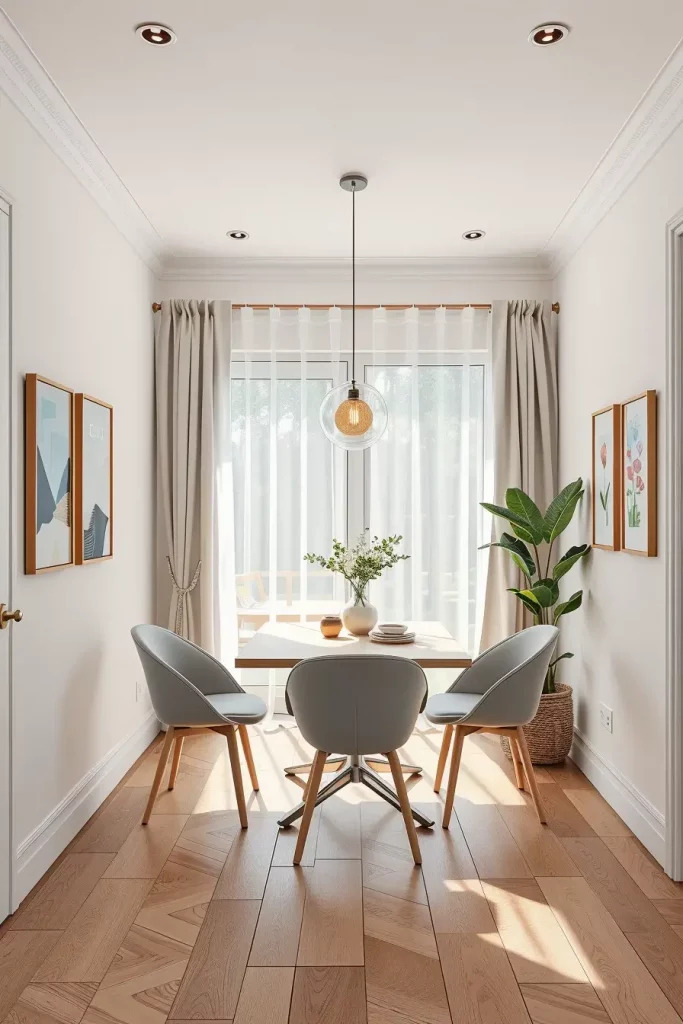
Eggshell or matte finishes on walls can soften the ambiance, while natural materials like unfinished wood and rattan add texture and timeless appeal. To introduce visual interest without clutter, consider large-scale wall art in gentle tones or subtle murals that complement the overall palette.
Flexible Dining with Foldable Tables
Adaptability is essential in small dining areas. Foldable tables offer a practical solution by providing extra seating when needed and compact storage when not in use. These tables can switch between a full dining surface and a slim profile that frees up space.
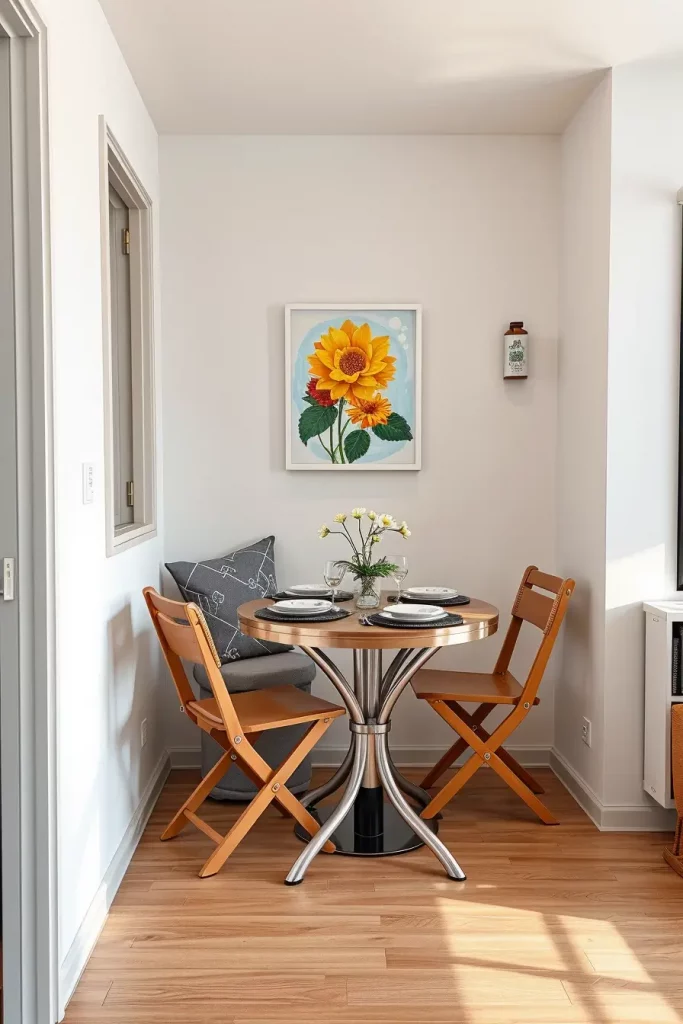
One of my favorite designs features a wall-mounted drop-leaf table that comfortably seats four when extended and folds flat against the wall when not in use. Pairing this with stackable or foldable chairs enhances versatility, making it ideal for studio apartments or multi-use rooms.
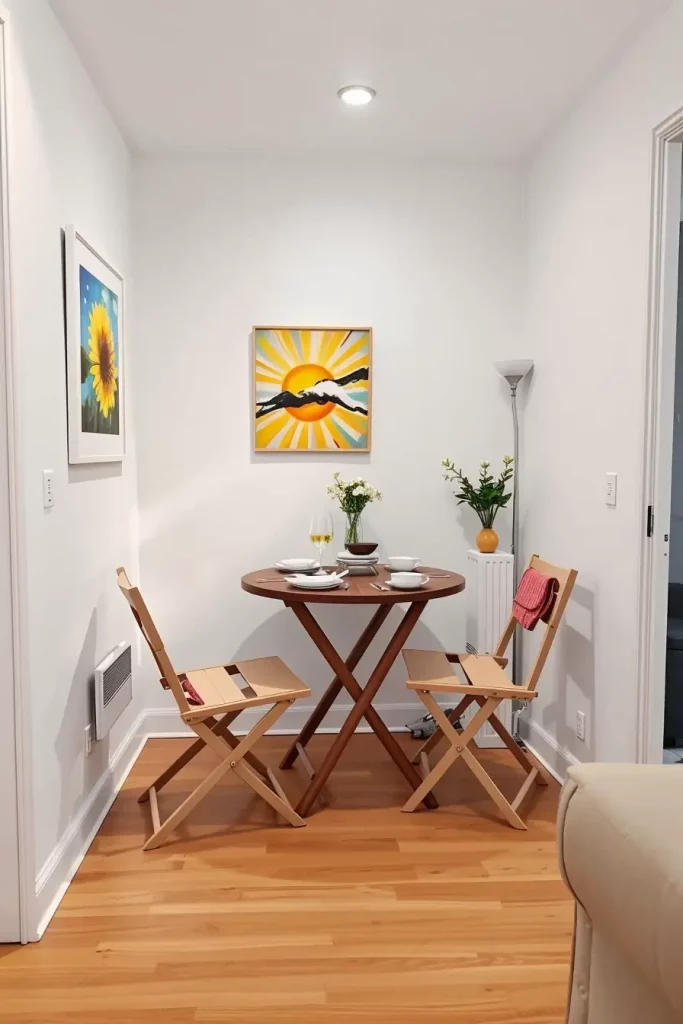
Materials like warm wood, matte metal, and marble tops add sophistication to foldable furniture, which often includes built-in storage compartments. Wall hooks for vertical storage of foldable chairs keep essentials accessible yet out of the way.
Round Tables: Enhancing Flow and Space
Round dining tables are excellent for small rooms because their curved edges facilitate smooth movement and eliminate the awkwardness of corners. They foster intimate conversations and fit well in both square and irregularly shaped spaces.
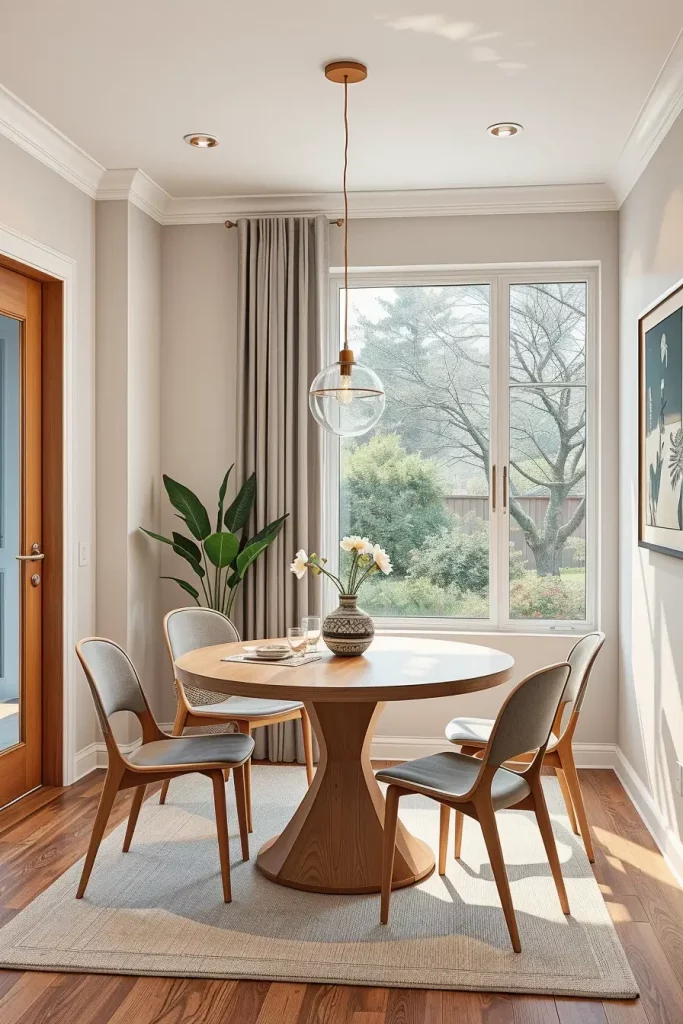
In a compact 6×6 nook I designed, a light wood round pedestal table comfortably seated four while maintaining ample room for movement. The pedestal base frees up leg space, a crucial feature in tight quarters. Pairing round tables with slim, armless chairs keeps the area visually open and inviting.
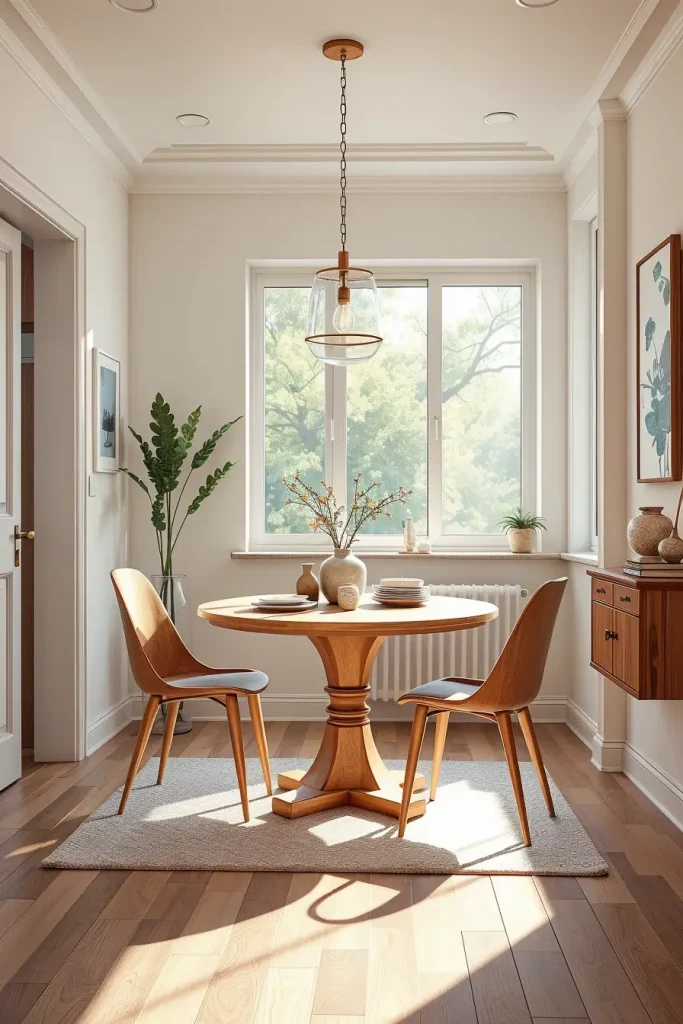
Design experts often recommend round tables for small spaces due to their versatility and space-saving benefits. Adding a small rug beneath the table anchors the dining zone, while tables with extendable leaves offer hidden extra seating when needed.
Mirrors: The Ultimate Space Enhancer
Mirrors are a powerful tool to visually enlarge small dining rooms by reflecting light and creating depth. Whether you opt for a large statement mirror or a curated gallery of smaller mirrors, these reflective surfaces add brightness and the illusion of spaciousness.
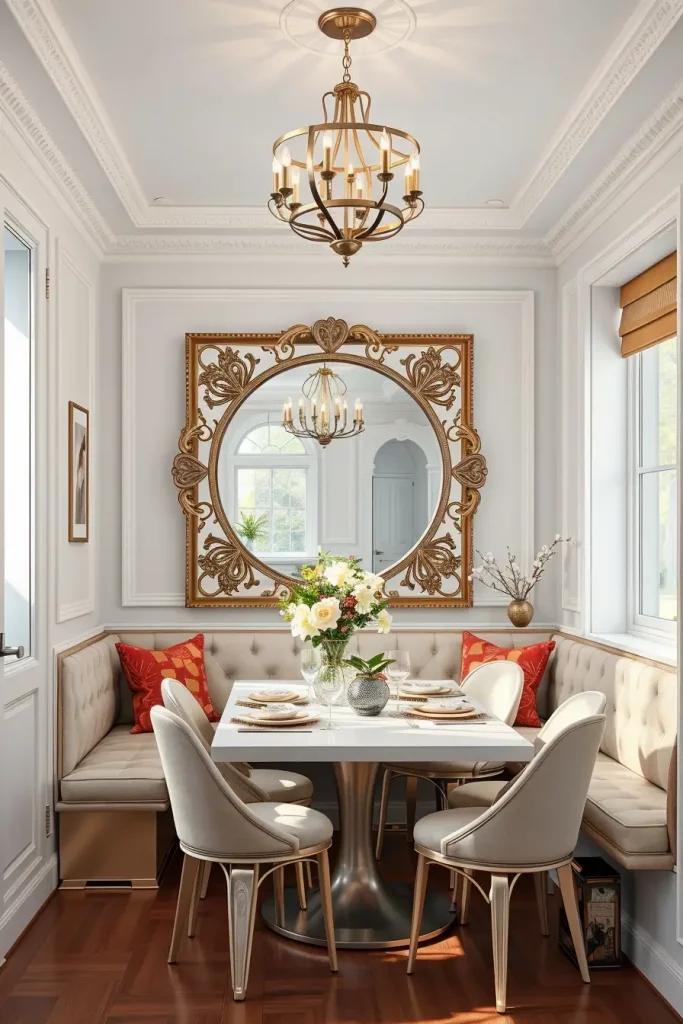
In one project, a vintage-style mirror behind a banquette doubled the perceived size of the room while adding elegance. Pairing mirrors with metallic accents and light colors enhances this effect. Floor-to-ceiling mirrors can dramatically increase vertical space perception.
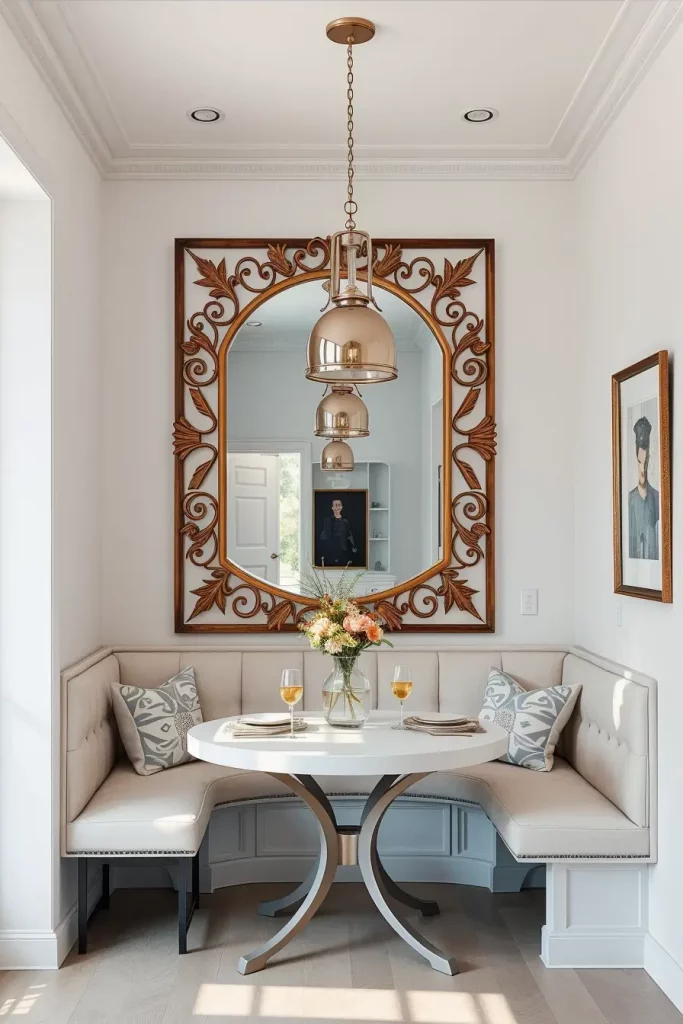
Experts advise placing mirrors opposite windows to maximize natural light reflection. Choose from frameless, wooden-framed, or arched designs to complement your décor. Enhance the ambiance by flanking mirrors with sconces or suspending pendant lights in front for added warmth.
Minimalist Design: Embrace Simplicity and Clean Lines
In confined spaces, simplicity is key. Minimalist design with clean, straight lines and uncluttered layouts reduces visual noise and fosters a serene environment. I recommend selecting essential furniture with sleek profiles and limiting accessories to maintain openness.
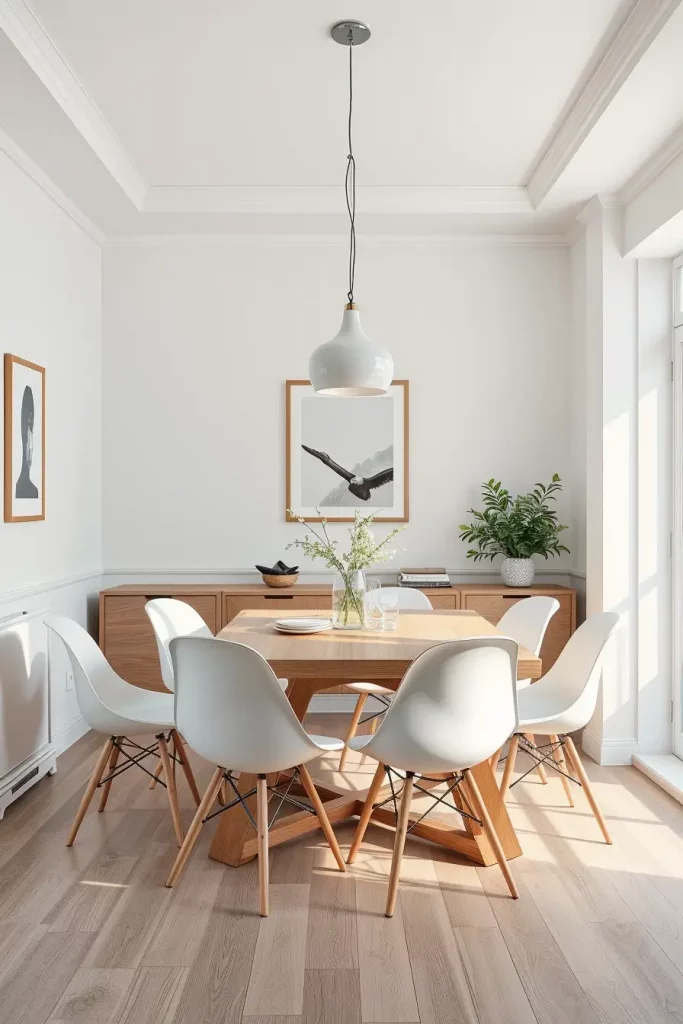
For example, an oak dining table paired with stackable white molded plastic chairs creates a purposeful, tidy space. The absence of armrests and the stackable feature optimize seating without crowding.
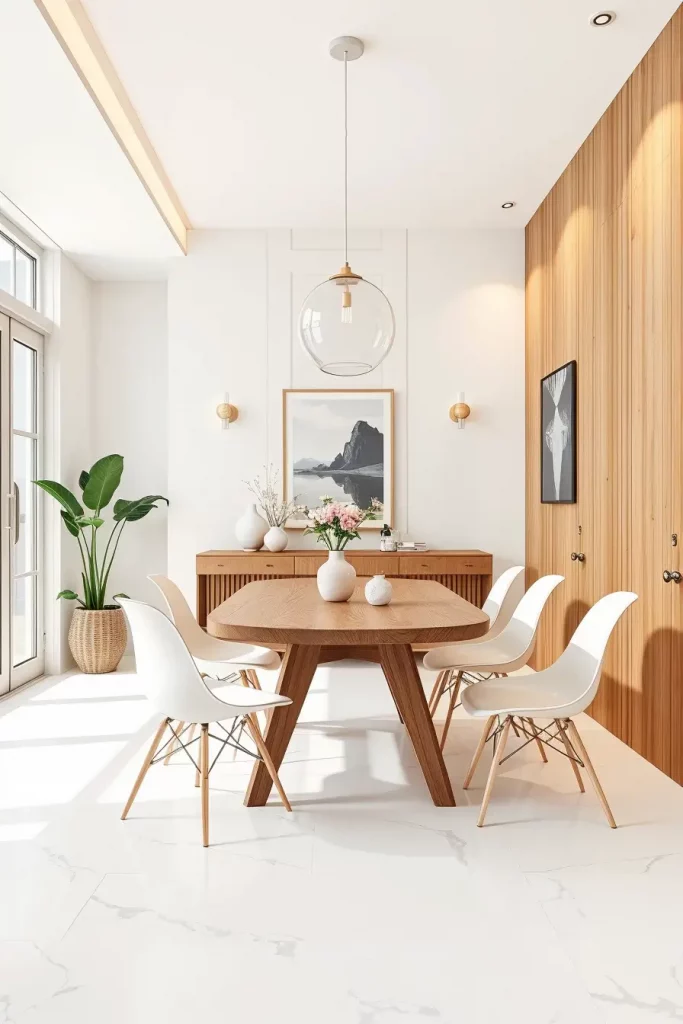
Design authorities emphasize the importance of negative space in minimalist interiors. Every extra item can add clutter, so the mantra “less is more” applies strongly. A sculptural pendant light can serve as a striking focal point without overwhelming the room. Incorporating under-seat storage or built-in shelving instead of bulky buffets helps maintain a clean look while keeping essentials organized.
Built-In Seating: Streamlined Comfort and Storage
Built-in seating solutions like banquettes are perfect for maximizing space and style. Positioned against walls or windows, they offer cozy seating with hidden storage beneath, keeping floors clear and the room feeling open.
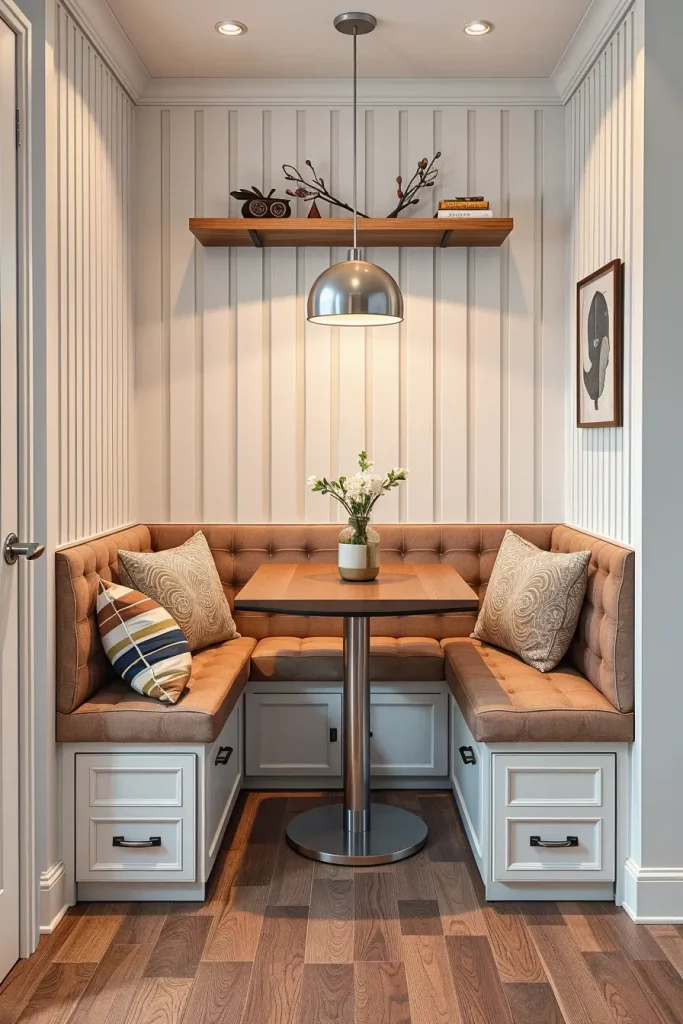
One of my favorite transformations involved a corner bench with drawers under cushioned seats, paired with a compact rectangular table. Coordinated fabric panels and vertical stitching added texture and warmth, creating a perfect nook for dining or reading.
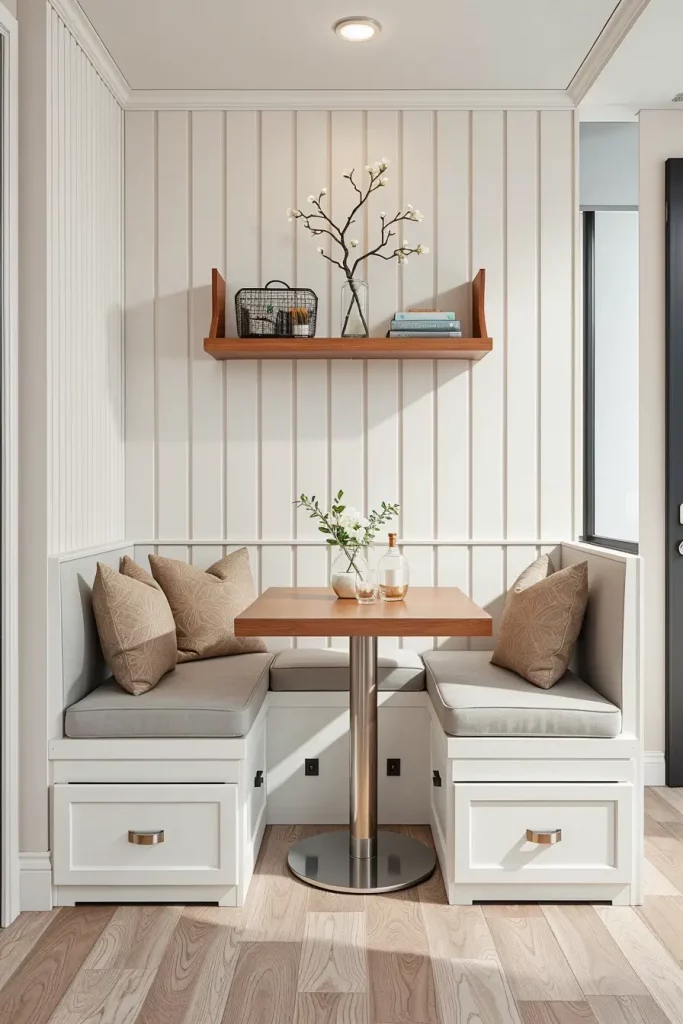
Built-in banquettes are celebrated for combining practicality with style, allowing customization to fit room layouts and personal tastes. Adding a narrow shelf above the seating area provides space for artwork or books, completing the design and personalizing the nook.
Transparent Furniture to Maintain an Airy Ambiance
In small dining rooms, the perception of lightness is as important as actual space. Transparent furniture made from acrylic or glass creates an open, airy feel by allowing light to pass through and reducing visual clutter.
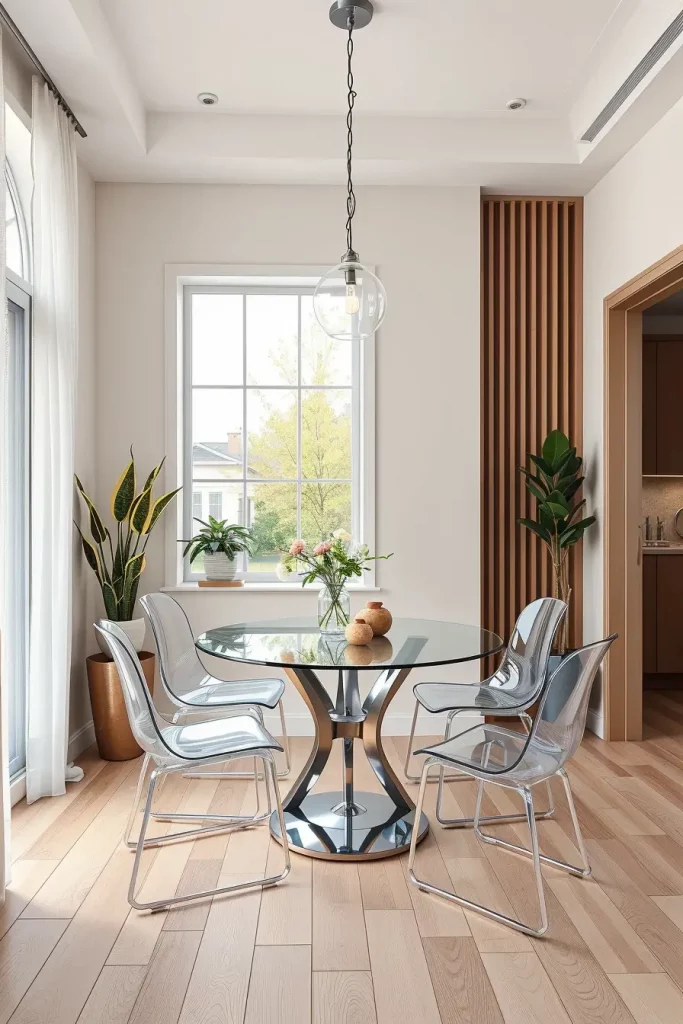
Initially, some clients hesitate to try acrylic chairs, but they quickly appreciate their functionality and style. Pairing clear chairs with glass or light-toned tables complements modern minimalist or eclectic interiors, maintaining a sleek, lightweight look.
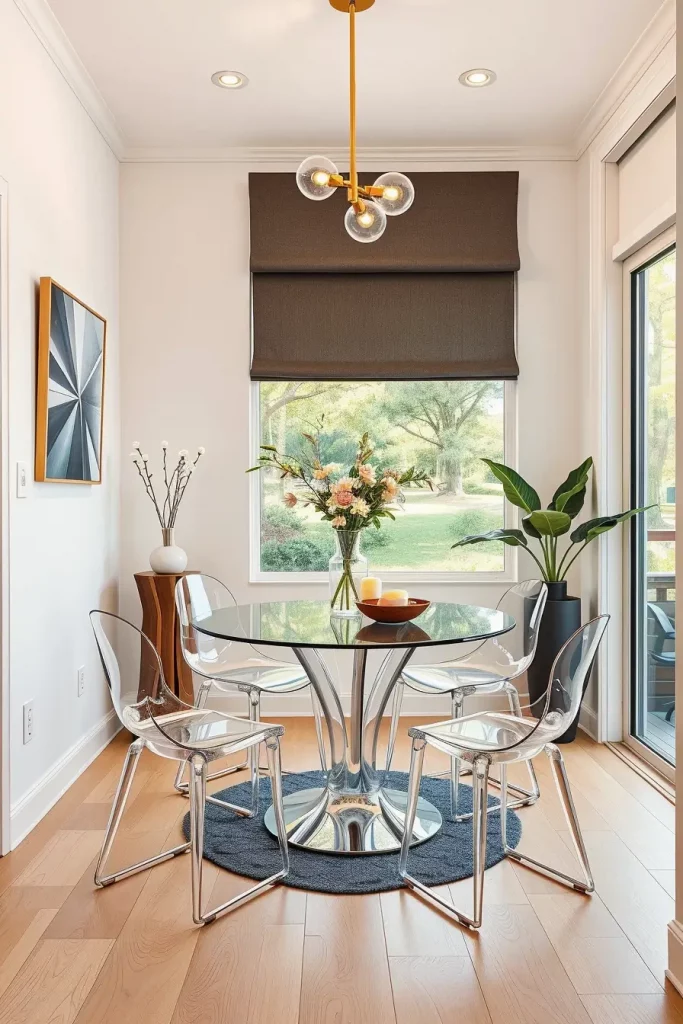
Design experts recommend materials like Lucite and polycarbonate for dining chairs because they visually “disappear,” allowing bolder rugs, wall art, and lighting to shine without competing for attention. Complement glass tabletops with metallic or wooden bases and translucent décor like vases or pendant lights to reinforce the open, airy theme.
Compact Banquettes: Space-Saving Seating Solutions
Banquettes are an excellent choice for small dining areas, fitting snugly against walls or corners to maximize seating without crowding the room. They often include storage beneath the seats, making them both practical and stylish.
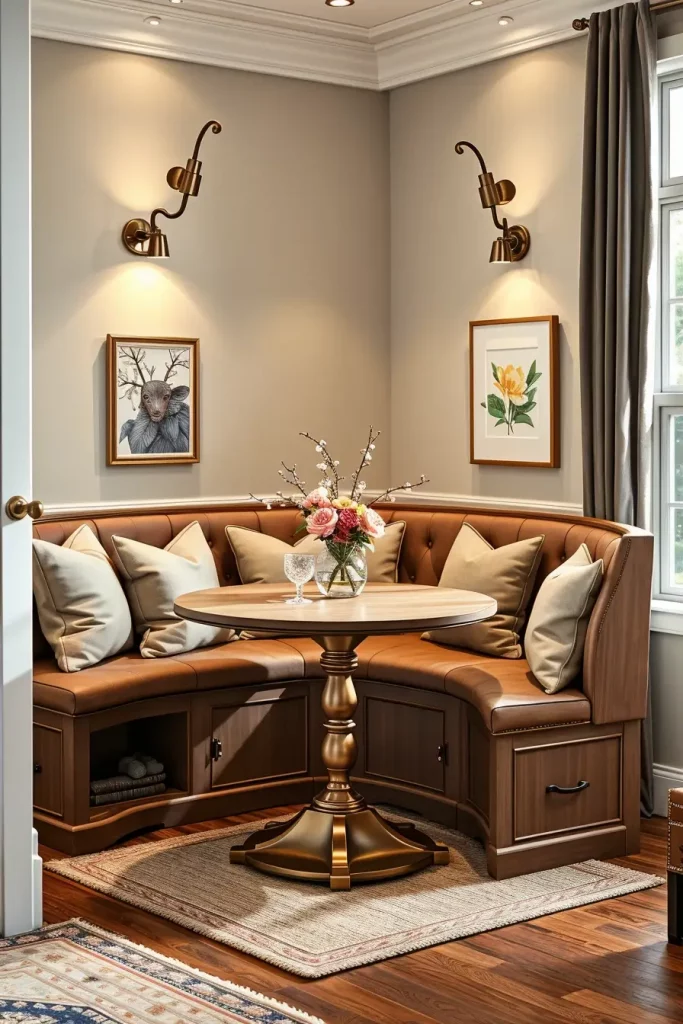
Pairing banquettes with narrow rectangular or oval tables enhances comfort and usability. Cushions in soft, washable fabrics add coziness. This versatile design fits seamlessly into styles ranging from modern farmhouse to Scandinavian and transitional interiors.
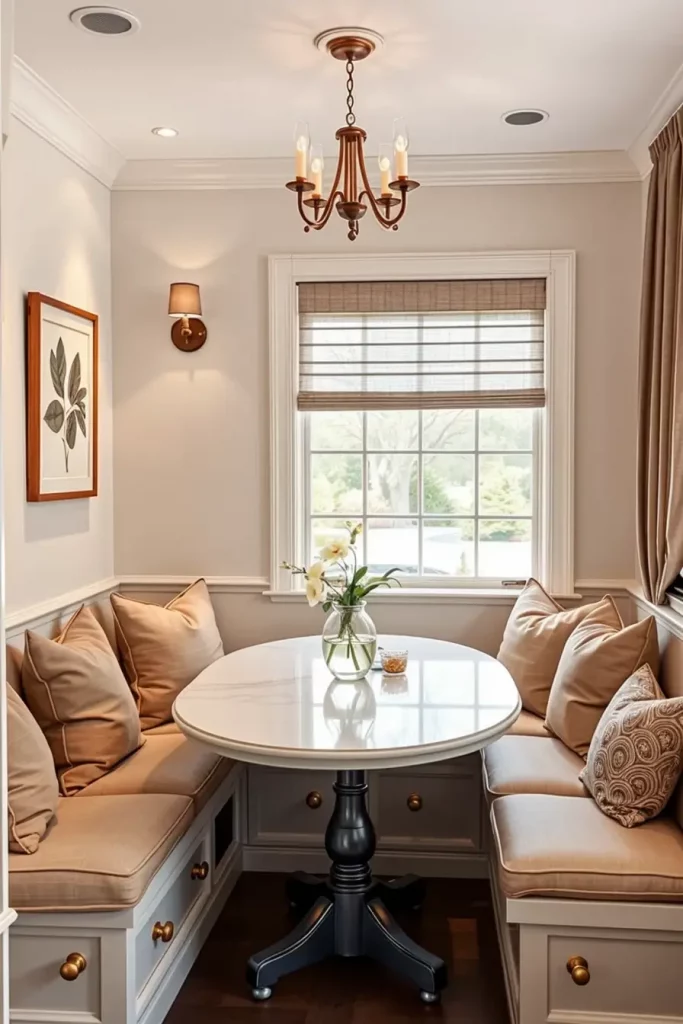
Adding wall sconces or a gallery of framed prints above the banquette introduces height and balance, completing the inviting atmosphere.
Corner Dining Nooks: Making the Most of Unused Spaces
Often overlooked, corners can be transformed into charming dining nooks that maximize every inch of your home. Whether tucked into entryways, near windows, or beside cabinetry, these spaces become functional and intimate dining spots.
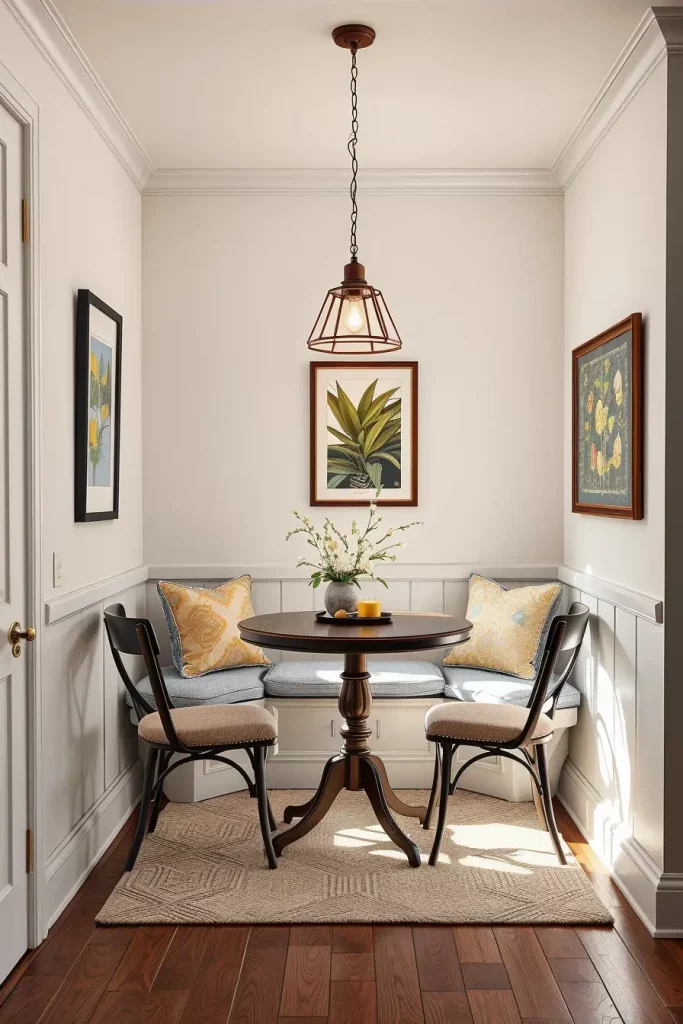
Choosing a small round or square table that fits snugly into the corner, combined with built-in or compact freestanding seating, optimizes space. A corner bench paired with two side chairs can seat four without obstructing traffic flow. Vertical décor elements like mirror panels and pendant lights add visual interest.
Design publications highlight corner nooks for their blend of style and function, often becoming beloved personal spaces. Installing a floating shelf above the table offers a spot for cookbooks, plants, or condiments, enhancing both utility and aesthetics.
Define Dining Zones with Area Rugs
In open-plan or small spaces, dining areas can easily blend into the background. Strategically placed rugs help delineate the dining zone, adding warmth, texture, and a sense of cohesion.
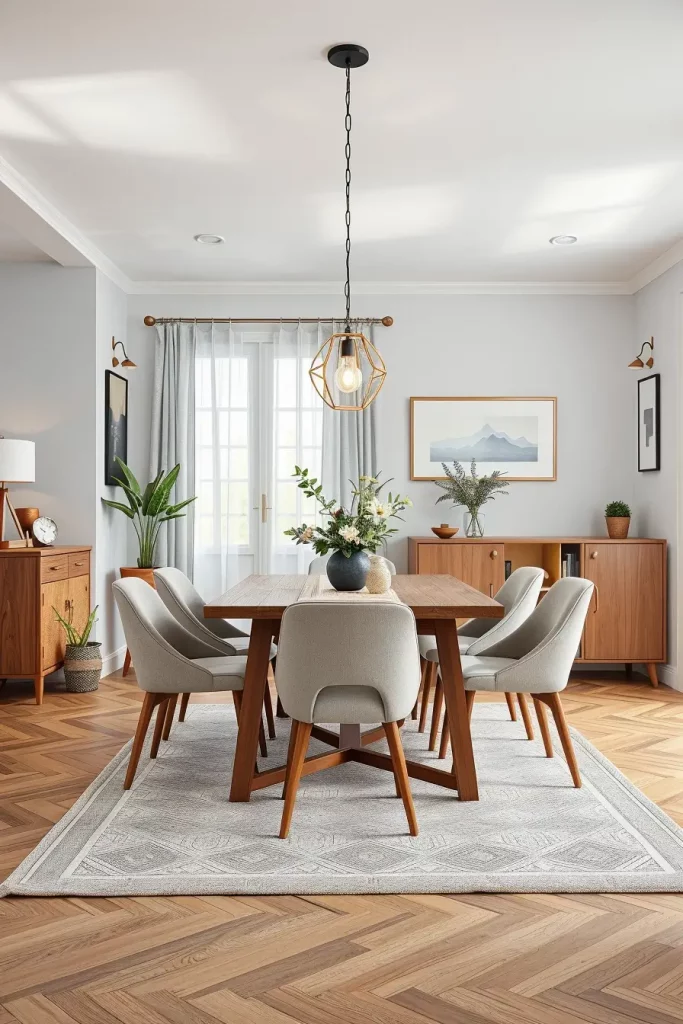
Before purchasing, measure carefully to ensure the rug accommodates the table and chairs even when pulled out. Low-pile rugs are preferable for ease of cleaning and maintaining an open feel. Subtle patterns in light tones add character without overwhelming the space.
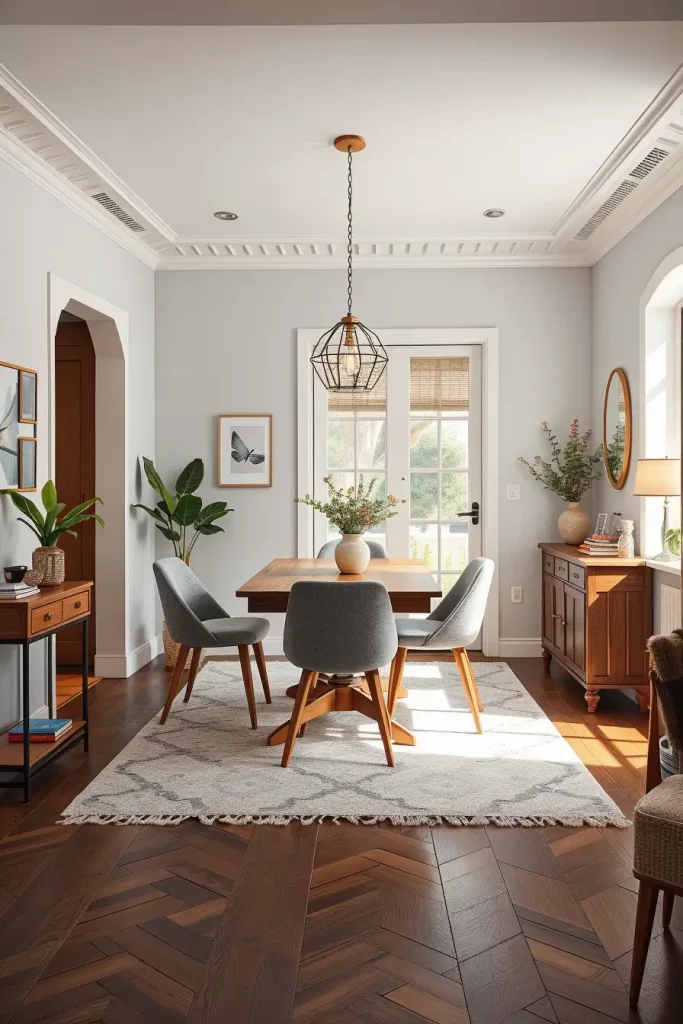
Design experts recommend rugs to create distinct zones in open layouts, making small dining rooms feel more inviting. Rugs with borders or geometric patterns that echo the table shape add purposeful style and visual balance.
Opt for Slim Seating: Chairs and Benches
Maximizing seating without overcrowding requires choosing slim-profile chairs and benches. These pieces fit comfortably in tight spaces while maintaining comfort and style.
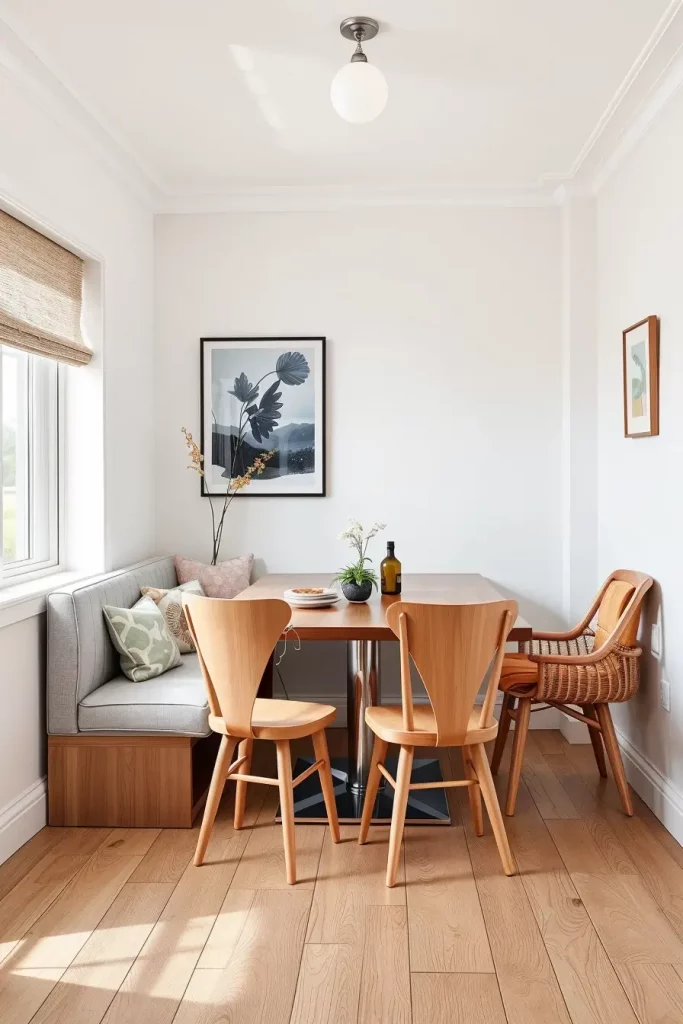
For example, a narrow metal-framed bench opposite two armless upholstered chairs allows guests to interact across the room without sacrificing seating for four. Slim furniture also offers flexibility in arranging different layouts.
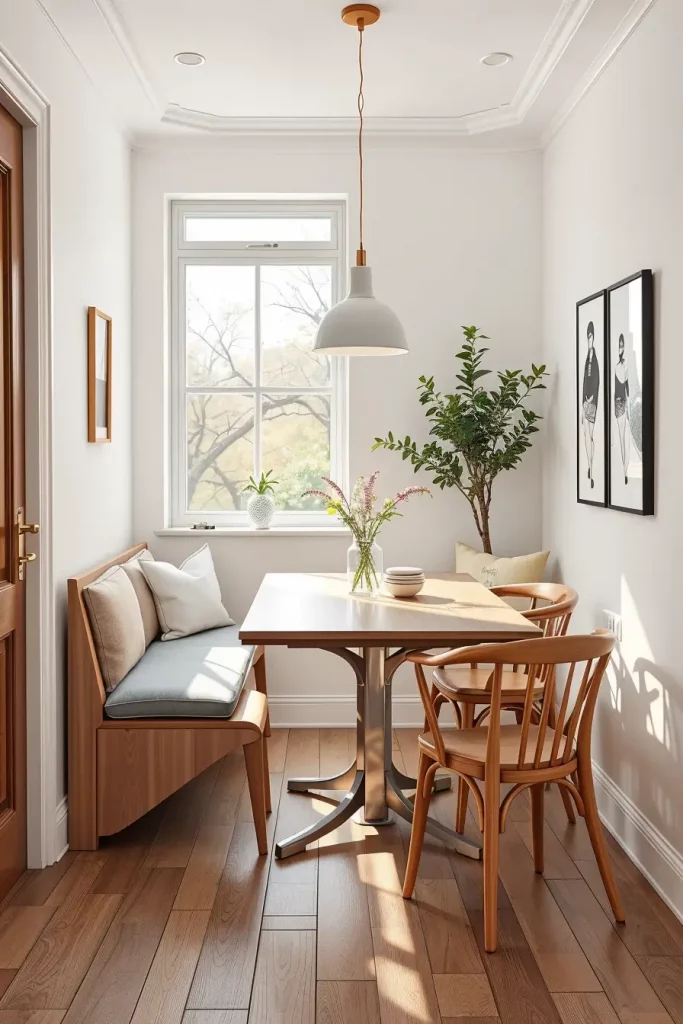
Stackable and folding slim chairs are ideal for multi-purpose homes, providing easy storage and adaptability. Incorporating cushioned benches with storage or sliding stools tucked under the table further optimizes space.
Wall-Mounted Drop Leaf Tables: Space-Saving Elegance
Wall-mounted drop leaf tables are a sophisticated solution for small dining areas, offering a compact footprint that expands when needed. These tables can also double as extra kitchen prep surfaces.
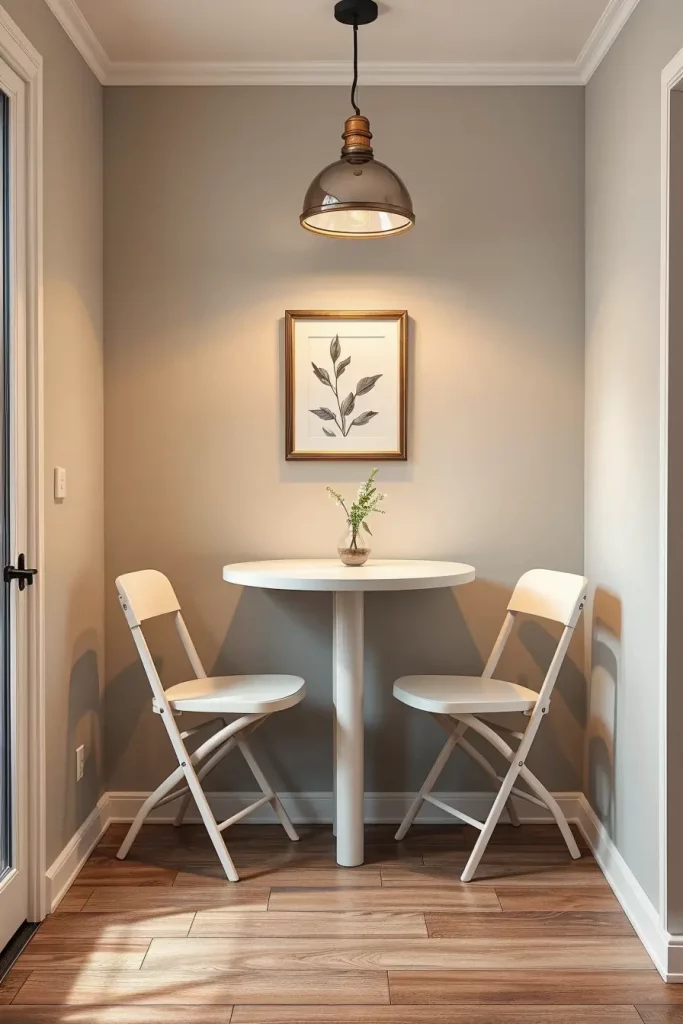
Ideal placement is on a central wall, paired with folding chairs or backless stools stored nearby. Light wood tones or painted finishes keep the area bright and inviting. These tables excel in multi-use spaces like hallways or kitchen-dining combos.
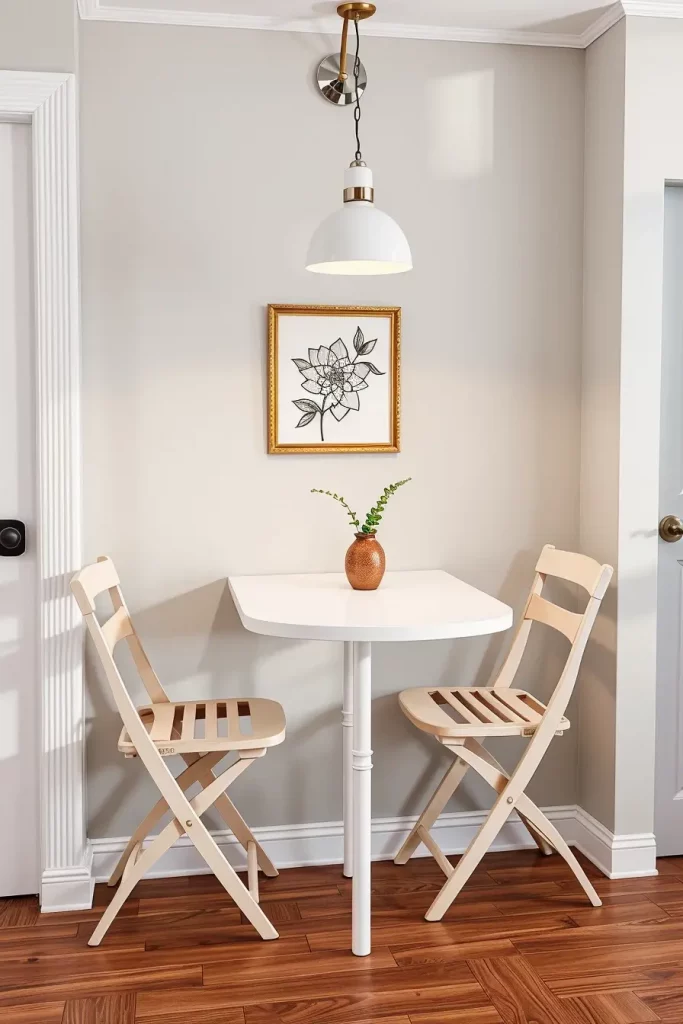
Design enthusiasts praise these tables for blending flexibility with contemporary style and practical features. Adding artwork above and wall sconces on either side frames the table, turning it into a functional and decorative focal point.
Bright Lighting to Amplify Space
Effective lighting is essential in small dining rooms to create an open, welcoming atmosphere. Maximizing natural light is ideal, but layered artificial lighting can also enhance the space when windows are limited.
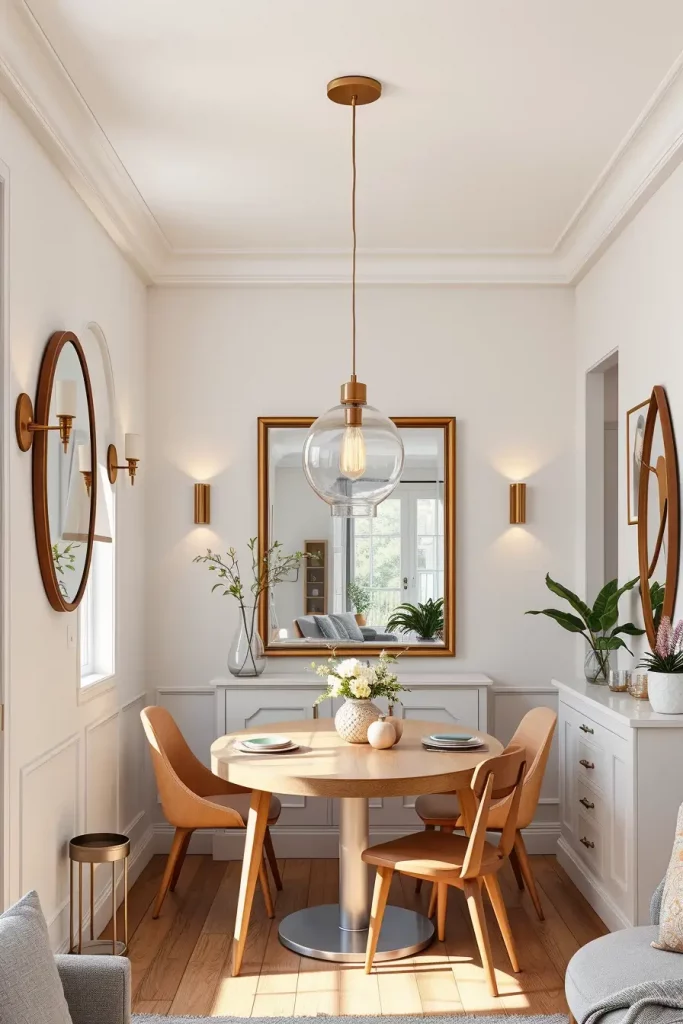
Combining overhead fixtures with wall sconces and under-shelf LED strips creates balanced illumination. For example, a glass pendant light paired with a mirror opposite a window and LED lighting beneath shelves can transform a compact nook into a vibrant, spacious-feeling area.
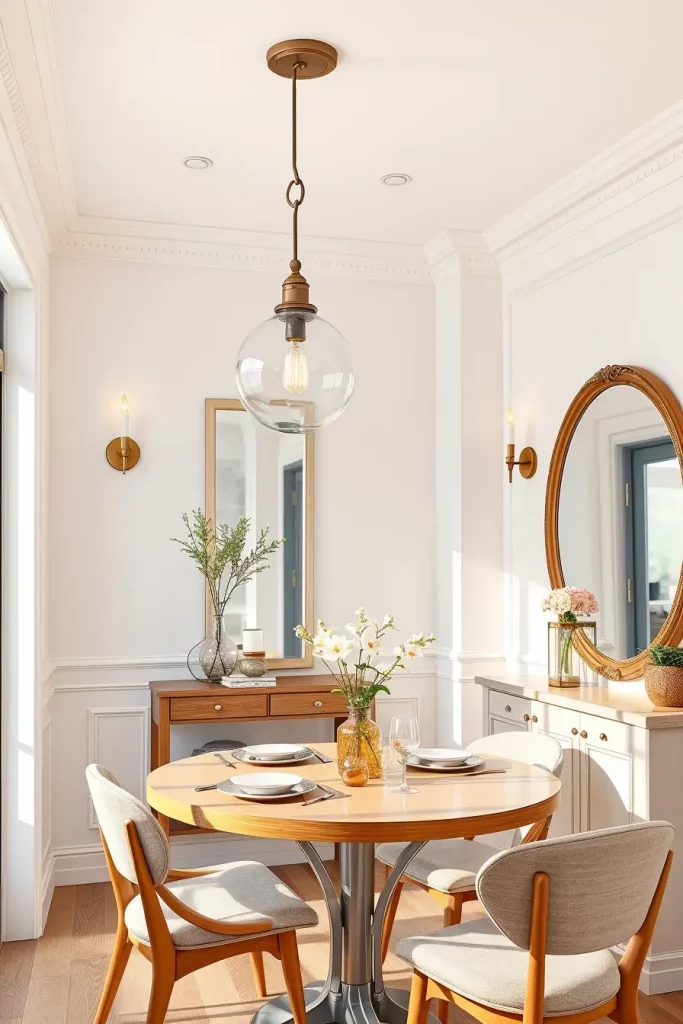
Large pendant lights with white shades and transparent bulbs reflect light effectively without overpowering the table. Incorporating dimmer switches allows seamless transitions from bright daytime settings to cozy evening moods.
Monochromatic Schemes for Seamless Flow
Using a single color palette throughout your dining room creates a continuous visual flow that makes the space feel larger and more cohesive. Neutral tones like beige, gray, and soft white are excellent choices for walls, furniture, and accessories.
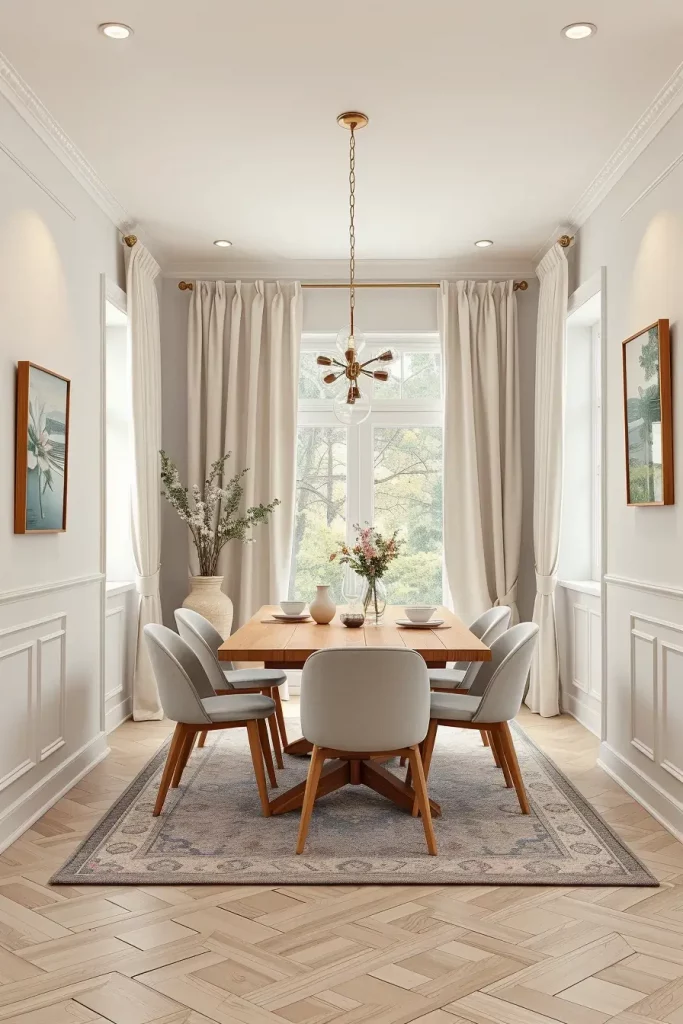
Matching wall and floor colors with dining chairs and tables ensures a smooth transition across the room. Pale oak furniture paired with cream walls, light curtains, and a coordinating rug enhances the sense of openness. Accessories should stay within the same color family to avoid visual breaks.
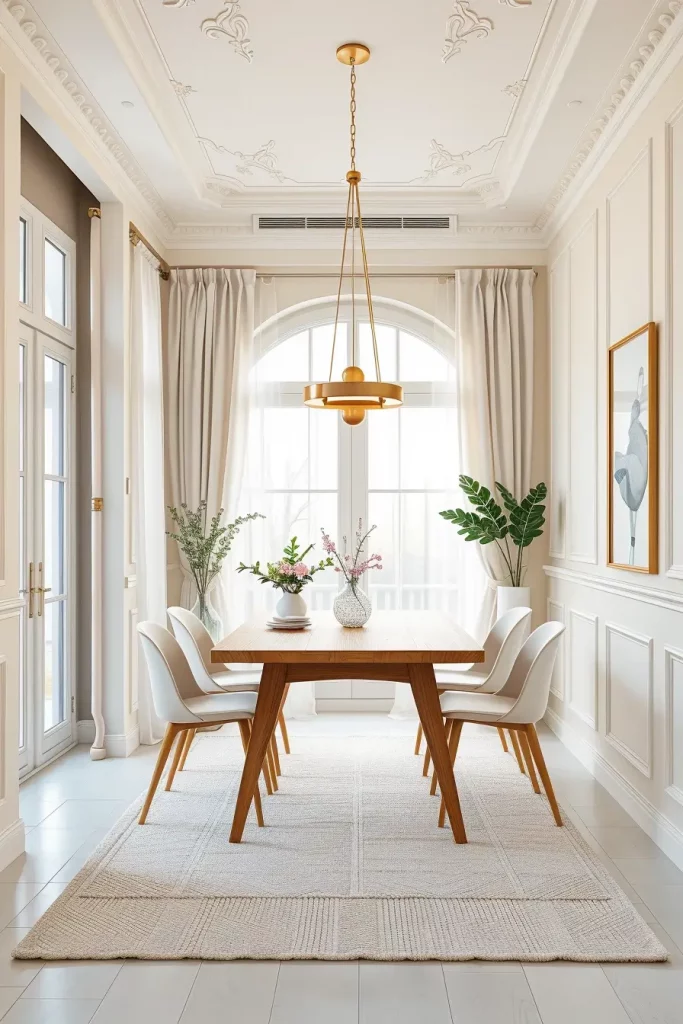
Clients often find this approach yields an unexpectedly elegant and serene space. Matte finishes help diffuse light softly, preventing visual clutter. A single statement artwork in muted tones can add subtle contrast without disrupting harmony.
Layer Textures to Add Warmth and Depth
Even with a limited color palette, mixing textures can prevent a small dining room from feeling flat or dull. Combining materials like velvet upholstery, natural wood, and linen curtains creates a cozy yet uncluttered environment.
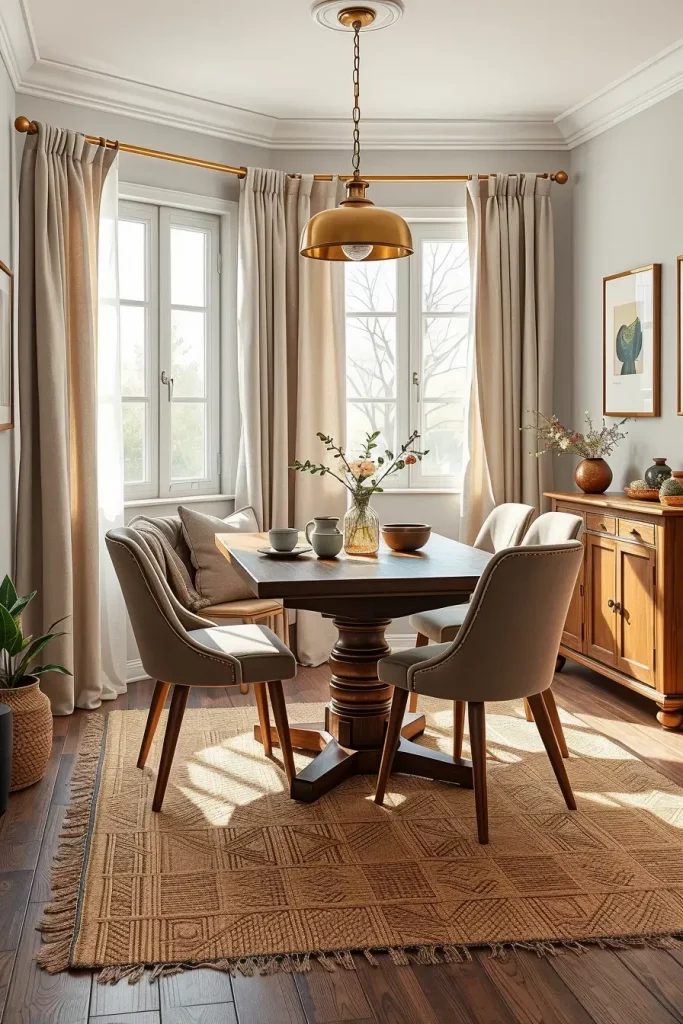
For example, pairing a wooden table with boucle or velvet chairs on a woven jute rug adds visual interest without overwhelming the space. Walls can feature fabric panels or grasscloth wallpaper to extend texture vertically. Accessories like ceramic vases or brushed brass fixtures introduce subtle variety.
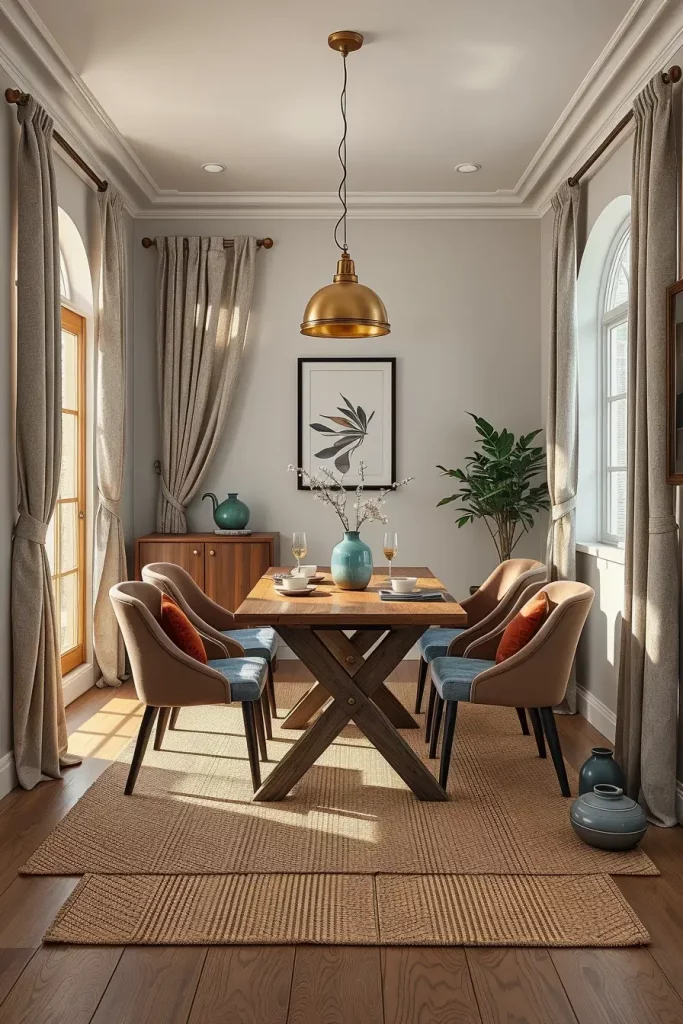
Design experts recommend incorporating at least three distinct textures to create a balanced and inviting space. Matte and natural finishes are preferable over glossy ones in small rooms. A rattan or matte metal ceiling fixture can continue the tactile theme from floor to ceiling.
Accent Walls to Inject Character
Adding an accent wall is a smart way to introduce personality without sacrificing floor space. A single wall painted in a bold color or adorned with patterned wallpaper serves as a visual anchor and adds depth.
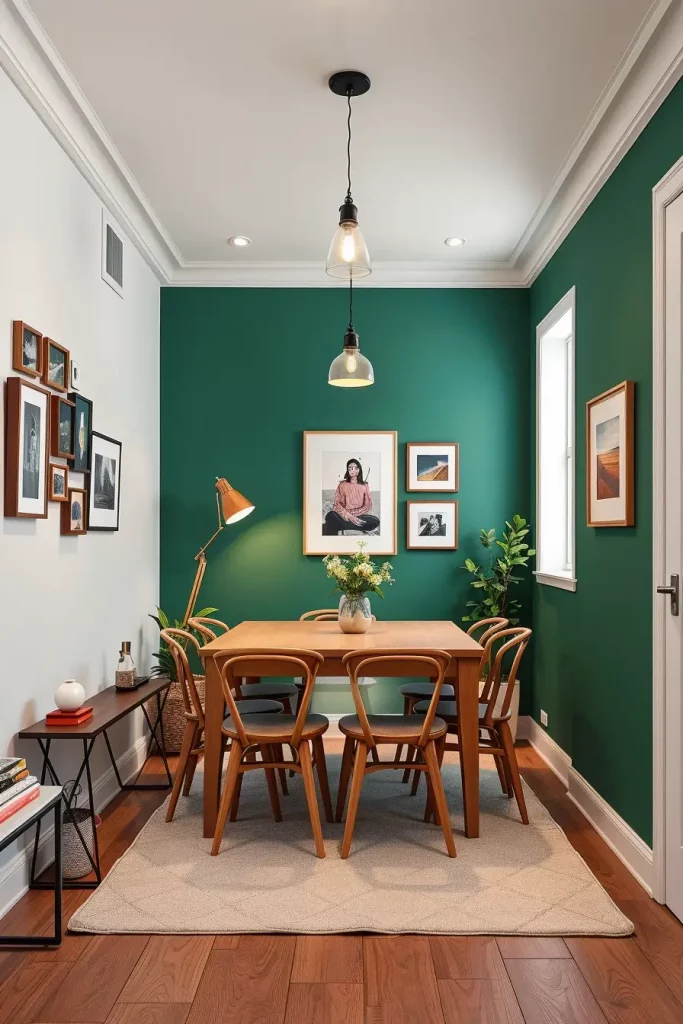
Deep navy or forest green walls pair beautifully with light wood furniture. Vertical stripes or subtle floral wallpapers add sophistication without overwhelming the room. Framed artwork arranged on the accent wall enhances the artistic vibe while preserving openness.
Feature walls offer a flexible design element that can be easily updated, making them ideal for small homes. Adding picture lights or sconces above artwork creates depth and highlights the focal point.
Narrow Rectangular Tables for Slim Spaces
For elongated or narrow dining rooms, slim rectangular tables fit the space perfectly and improve traffic flow. These tables are especially suitable for galley kitchens or breakfast nooks.
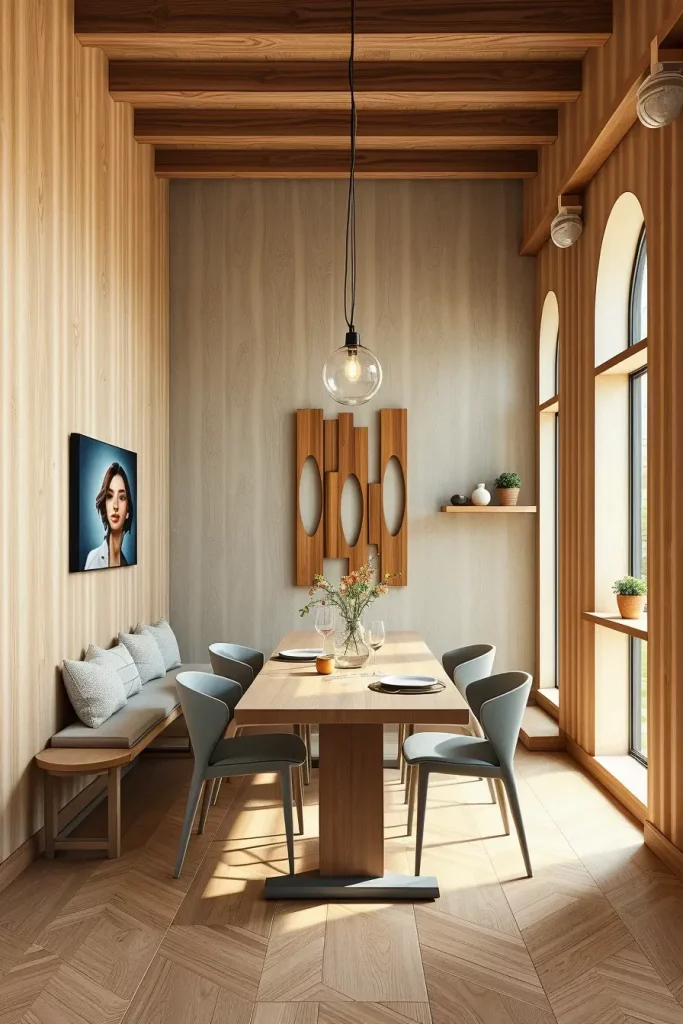
Choose tables no wider than 28 inches, crafted from light wood or glass to maintain openness. Pair with armless chairs and benches on one side to keep the design uncluttered. Vertical wall panels and a narrow runner rug visually elongate the space.
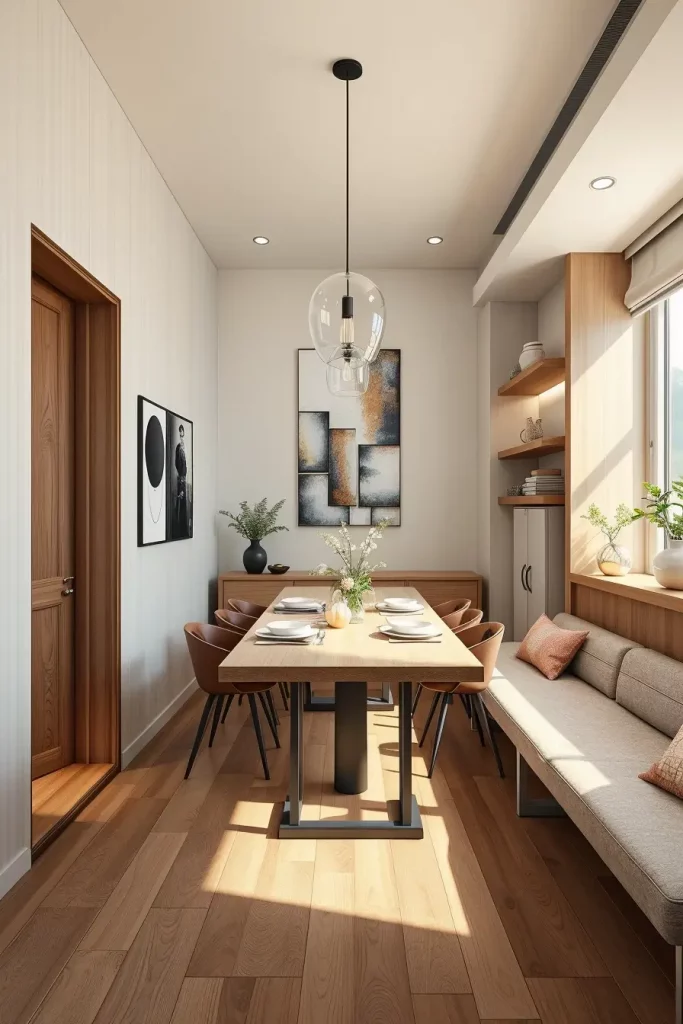
Adding a simple pendant light centered above the table anchors the area, while a matching floating shelf or mirror enhances the sense of width.
Elevate Storage with Shelves Above Dining Areas
When expanding floor space isn’t an option, going vertical with shelves is the next best strategy. Installing floating or bracket shelves above dining tables or sideboards adds storage and decorative display space without crowding the room.
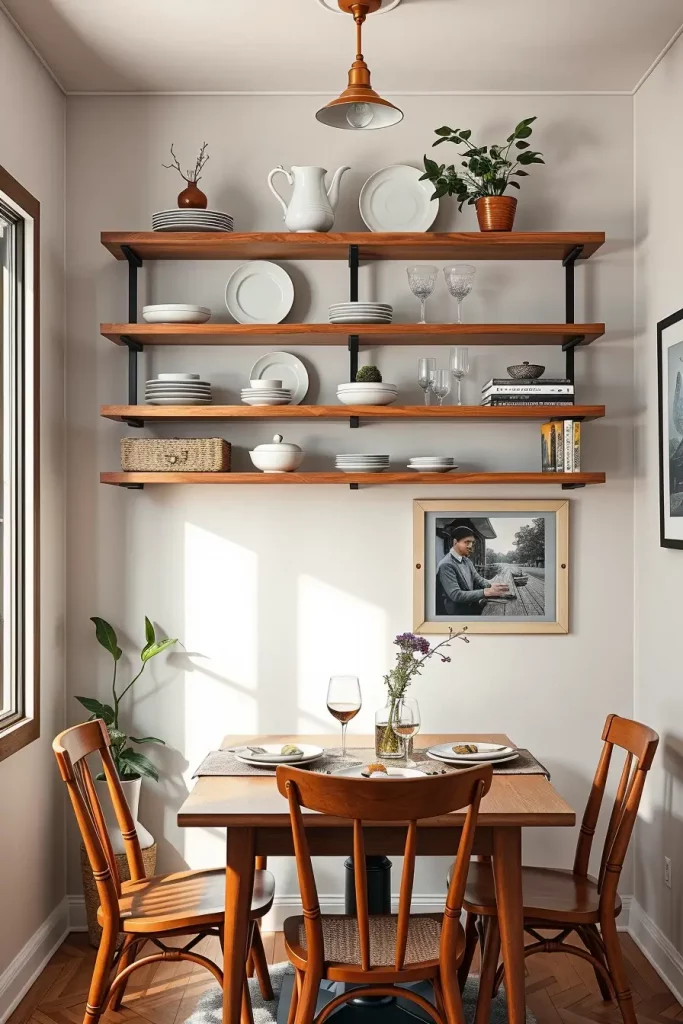
I recommend placing shelves 16 to 24 inches above furniture, matching the finish to your table for a cohesive look. Use them to store plates, glassware, cookbooks, or plants, blending function with style.
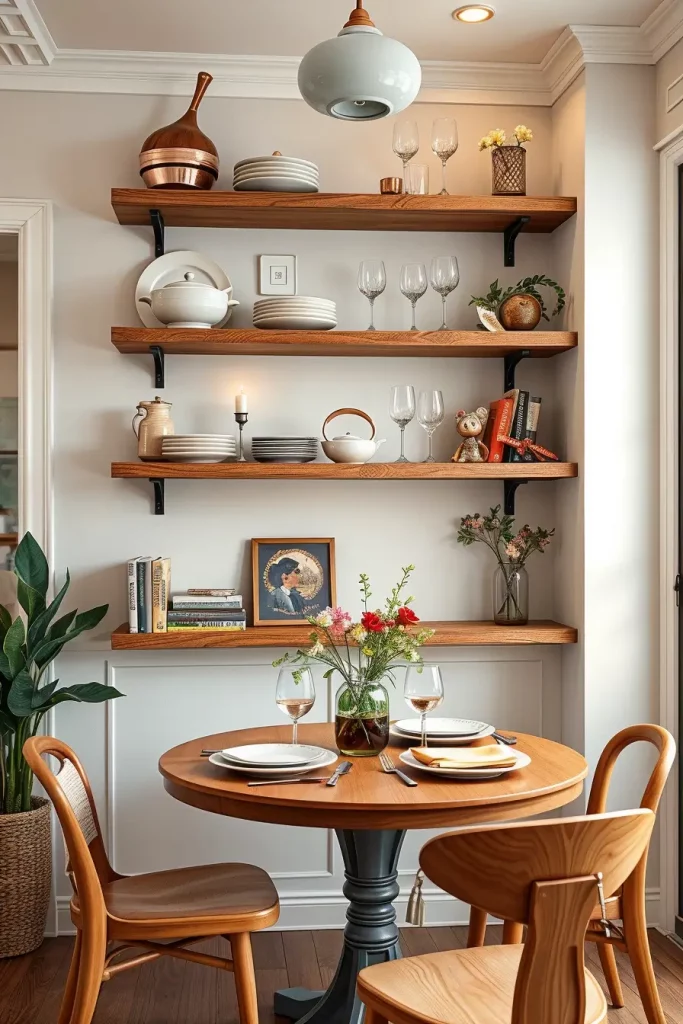
Adding under-shelf lighting can softly illuminate both the table and shelf contents, enhancing ambiance. Vertical storage solutions like these are praised for their versatility and aesthetic appeal.
Glass Tabletops to Amplify Light and Space
Glass dining tables are a smart choice for small rooms, reflecting light and maintaining an open feel. Their sleek, modern look complements urban apartments and studio flats.
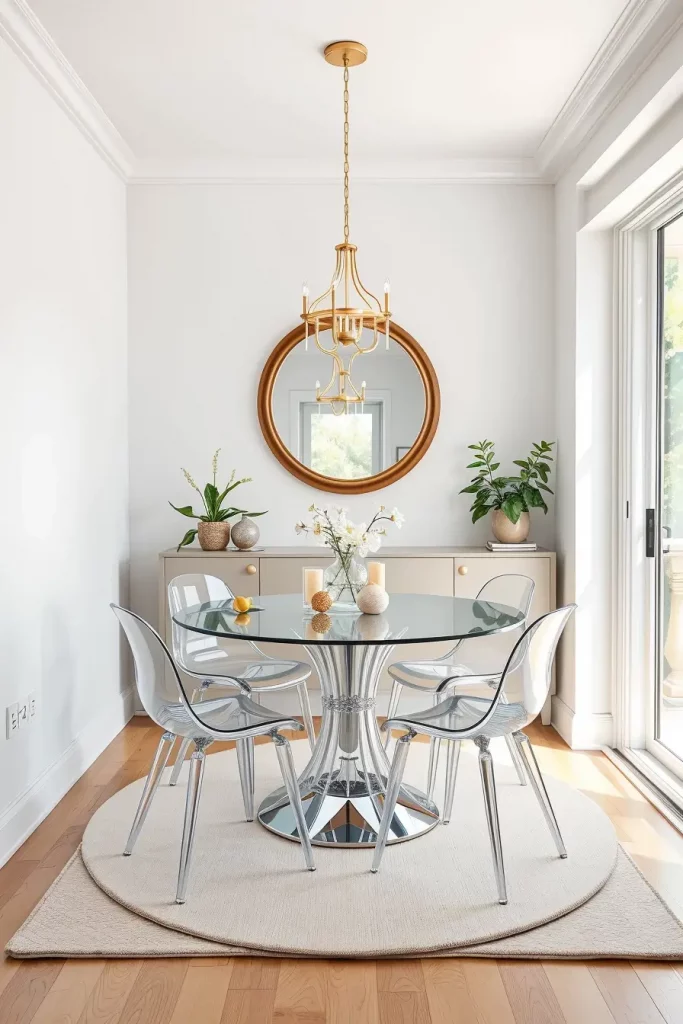
Opt for round or rectangular tables with tempered glass tops and minimalist metal or wood legs. Pair with wooden or clear acrylic chairs for a refined, unobtrusive look. Simple, neutral rugs help the glass surface stand out.
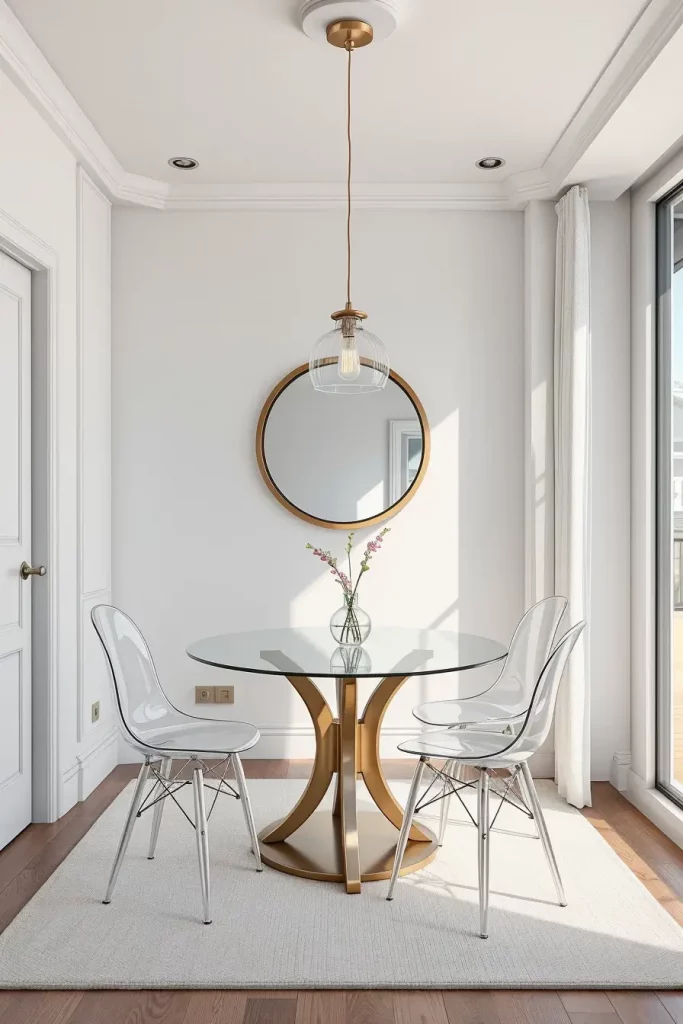
Clients often report a surprising sense of spaciousness after adding glass furniture. Glass is especially effective in rooms with limited sunlight, reflecting and intensifying available light. Positioning glass tables near reflective wall art or mirrors further enhances this effect. A central hanging light above the table completes the look.
Multi-Functional Dining Tables with Integrated Storage
In small spaces, furniture must serve multiple purposes. Dining tables with built-in storage-such as shelves, drawers, or hidden compartments-maximize functionality by combining eating surfaces with storage.
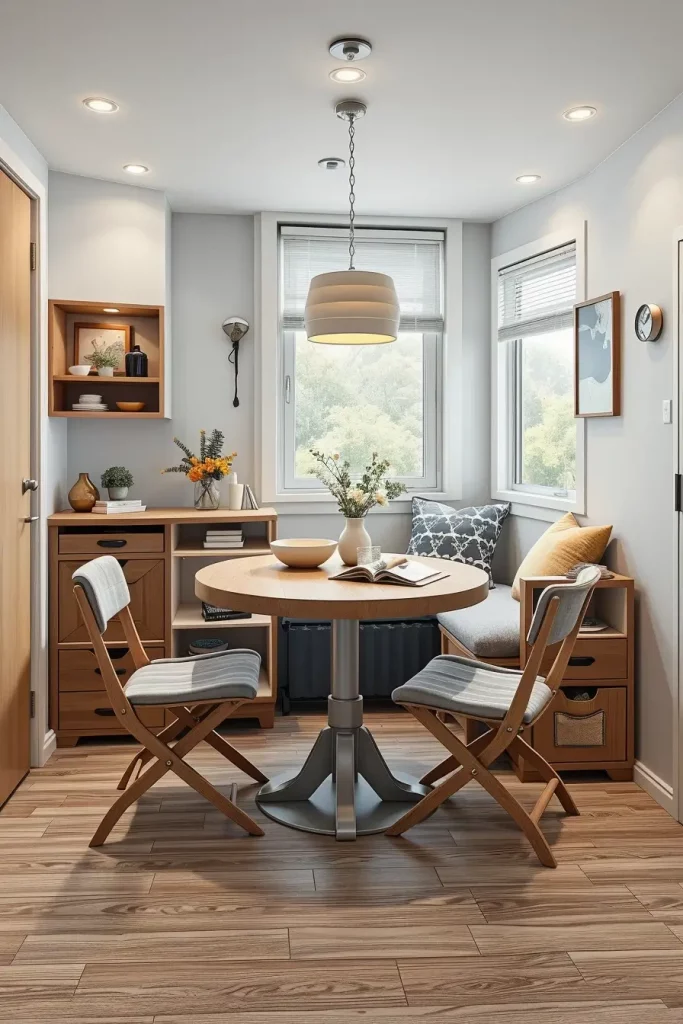
Drop-leaf tables with side shelving and extendable surfaces offer hidden storage while maintaining durability with materials like oak or walnut. Pairing these tables with stackable or folding chairs optimizes space further.
These designs help clients keep rooms organized and open, aligning with modern living trends that prioritize multifunctional furniture. Adding wheels to table legs enhances mobility for larger gatherings.
Elevate Walls with Vertical Artwork
Artwork arranged vertically draws the eye upward, creating the illusion of higher ceilings and a more spacious room. Tall, narrow frames or staggered vertical galleries work well in small dining areas.
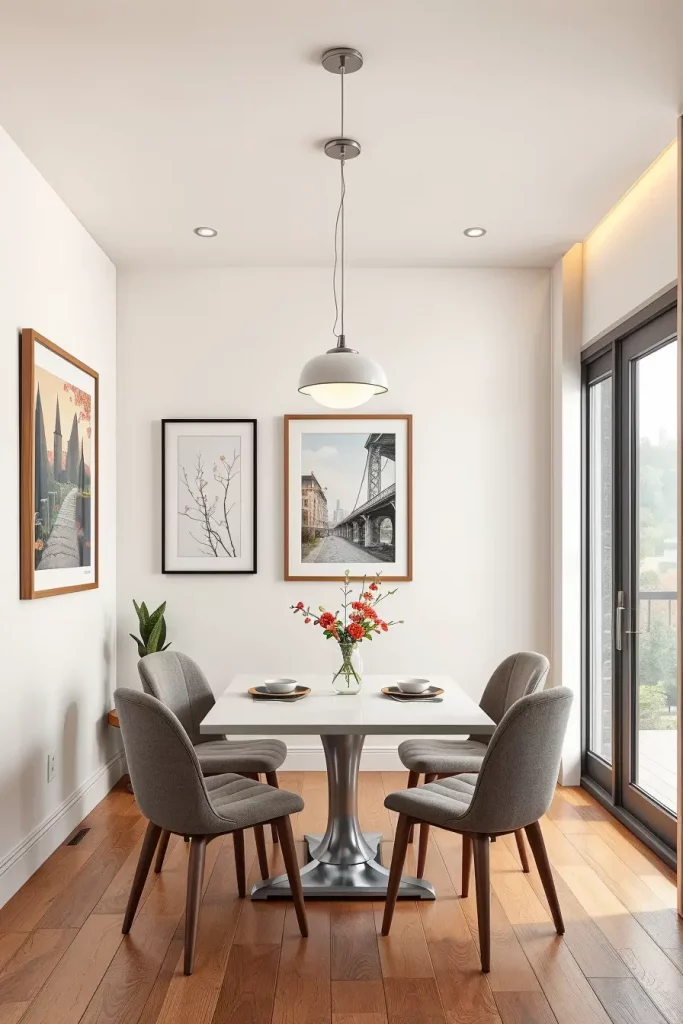
Abstract minimalist pieces in slender black or brass frames arranged above a slim buffet create upward movement. Pairing artwork with sculptural pendant lighting extends vertical lines, enhancing openness. Light backgrounds with dark linear elements yield the best results in confined spaces.
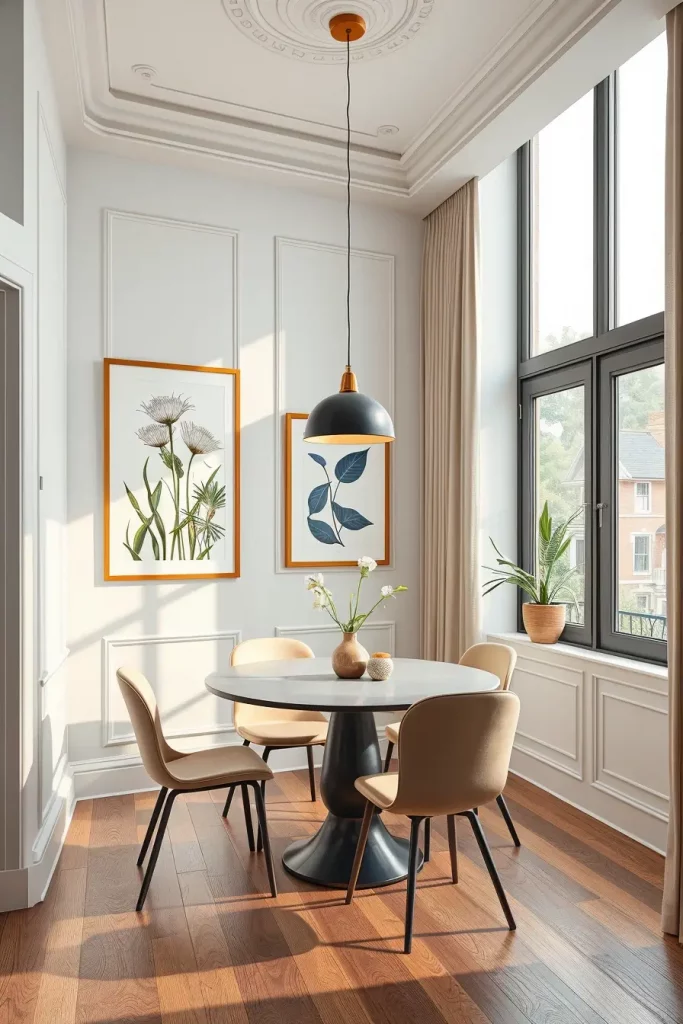
Clients often notice their dining areas feel taller after incorporating vertical design elements. Adding picture lighting above the top frame further accentuates this effect.
Backless Stools for Space-Saving Seating
Backless stools are a clever way to optimize seating in small dining rooms. Their compact design allows them to slide under tables, freeing up floor space when not in use.
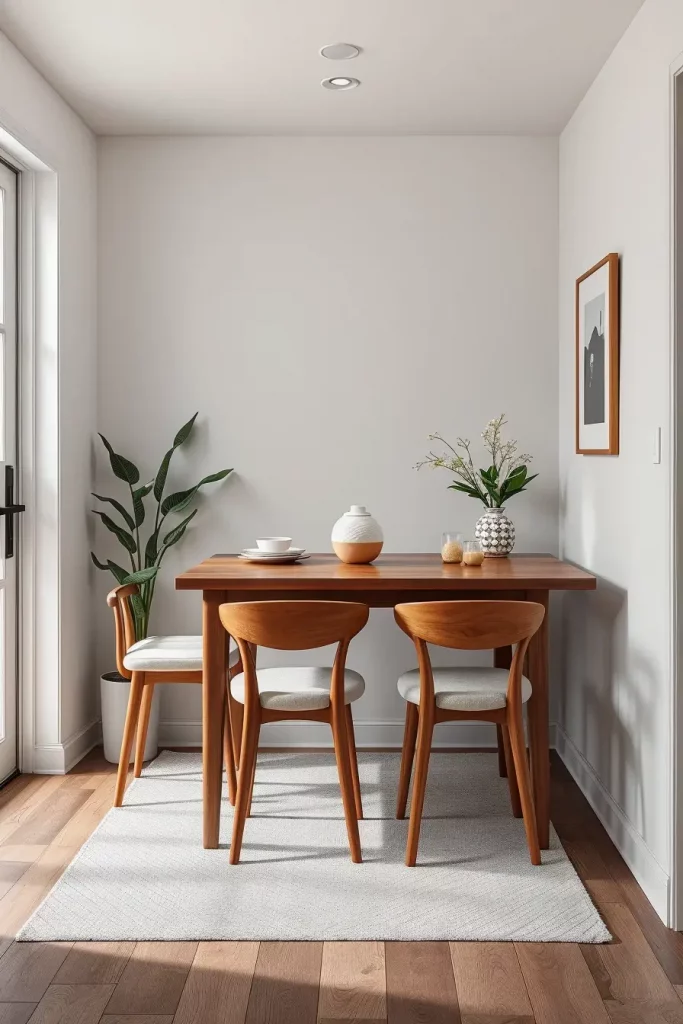
Leather-cushioned stools with wooden legs offer comfort without bulk. Ensure stool height matches the table for ergonomic dining. These stools can double as ottomans, adding versatility.
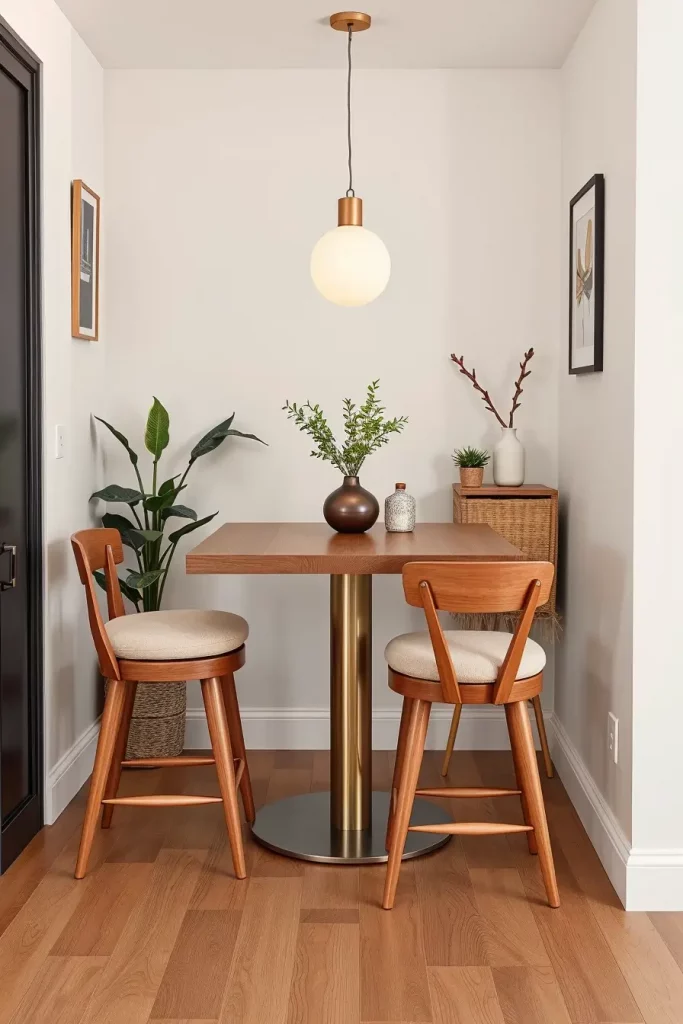
Minimalist, multi-purpose furniture like backless stools is highly recommended for limited spaces. Their absence of backs maintains clear sightlines, keeping the room feeling open. Adding a small storage drawer or basket beneath the table can neatly hold placemats and napkins.
Extendable Tables for Occasional Guests
Extendable dining tables are perfect for small spaces that occasionally host guests. These tables remain compact for daily use but expand to accommodate larger groups.
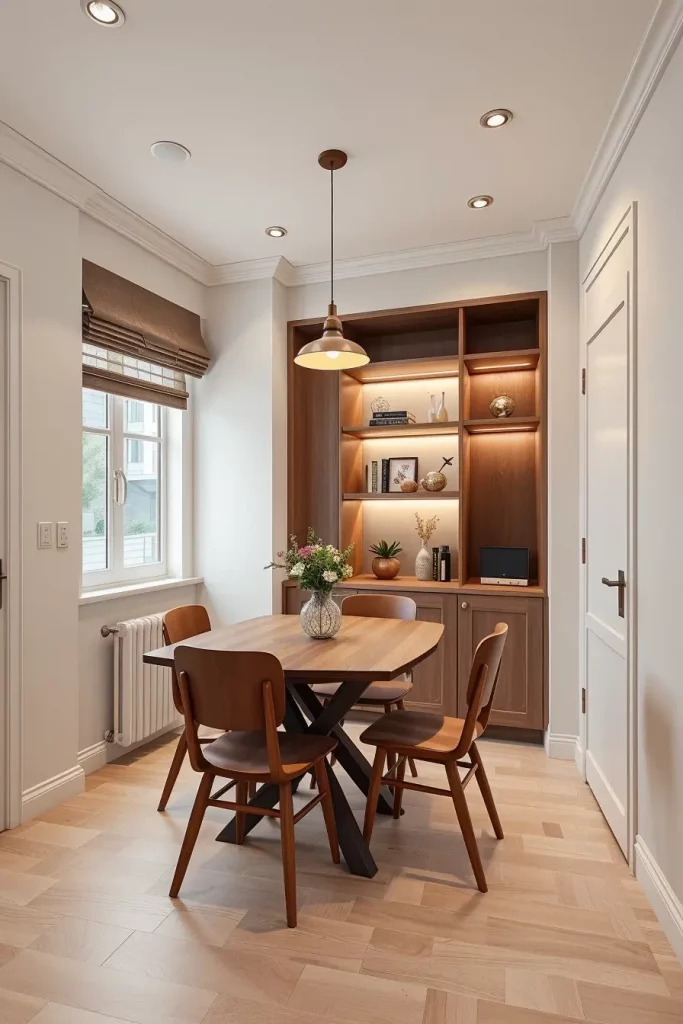
Drop-leaf or butterfly leaf tables in finishes like ash, white oak, or walnut combine durability with style. Foldable chairs stored in nearby closets or stackable chairs offer flexible seating without clutter.
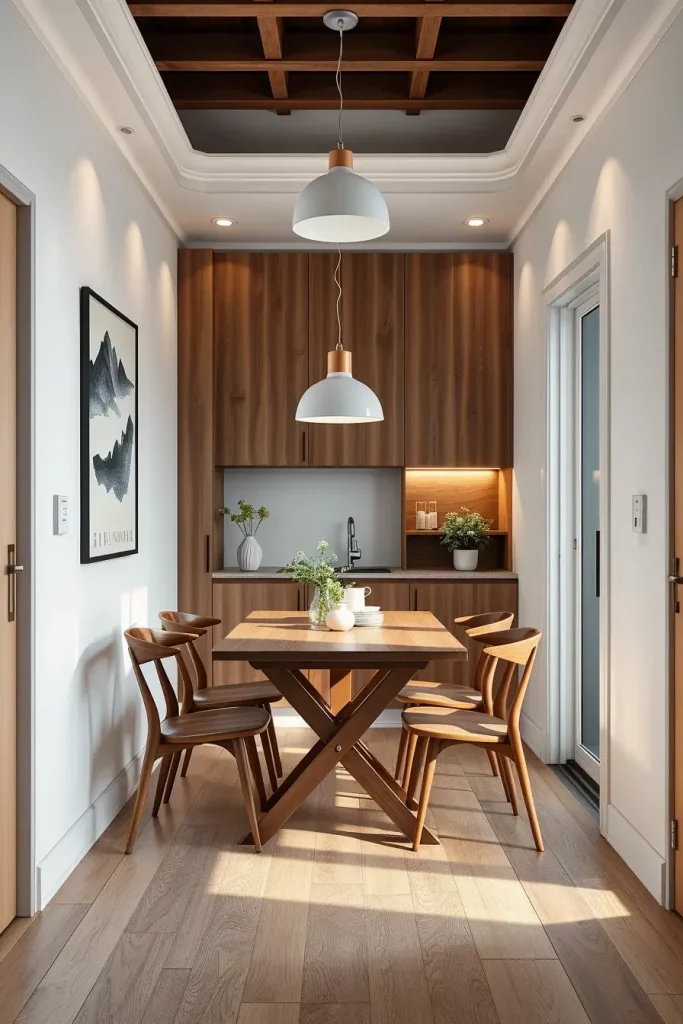
Adding caster wheels to the table base facilitates easy repositioning, especially useful during gatherings or room rearrangements.
Compact Sideboards and Buffets for Essential Storage
Even the simplest dining areas benefit from storage, and compact sideboards or buffets provide an ideal solution. Their narrow profiles store dinnerware, linens, and serveware without consuming much floor space.
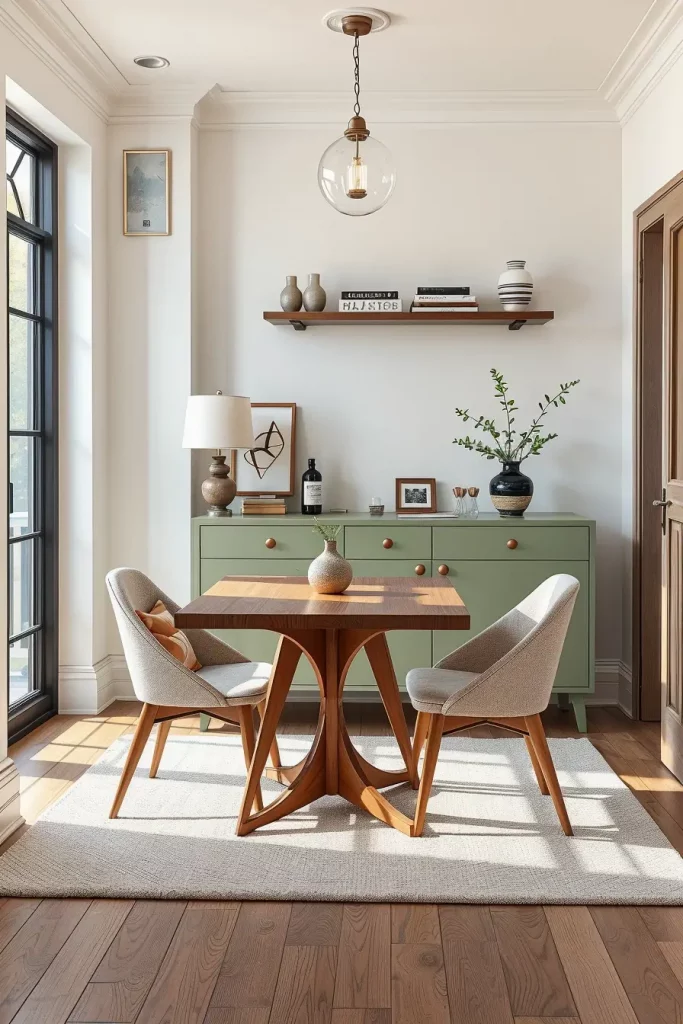
Sideboards with depths of 14-16 inches and closed doors maintain a sleek look. Light wood or pale paint finishes like navy blue or sage complement small rooms. Pairing these with floating shelves maximizes vertical storage. Rounded furniture edges improve flow in tight corridors.
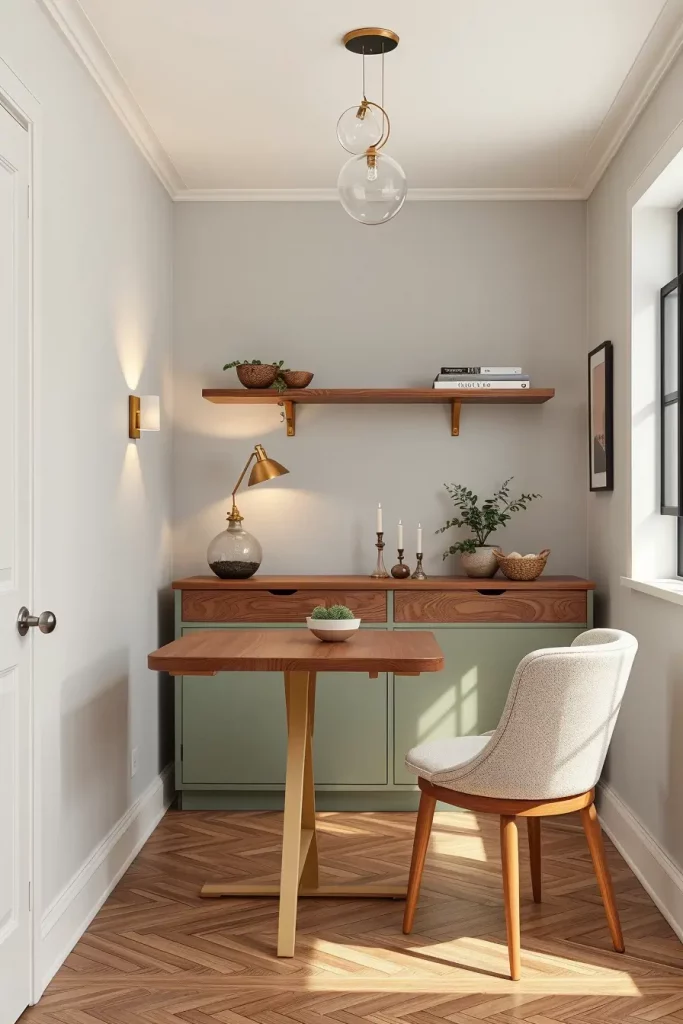
Adding drawer organizers and pull-out trays inside cabinets enhances functionality, making these pieces invaluable in small dining rooms.
Define Dining Zones with Ceiling Fixtures
In open-plan homes, ceiling fixtures like pendants or chandeliers effectively delineate dining areas. Hanging a light directly above the table creates a focal point and defines the space.
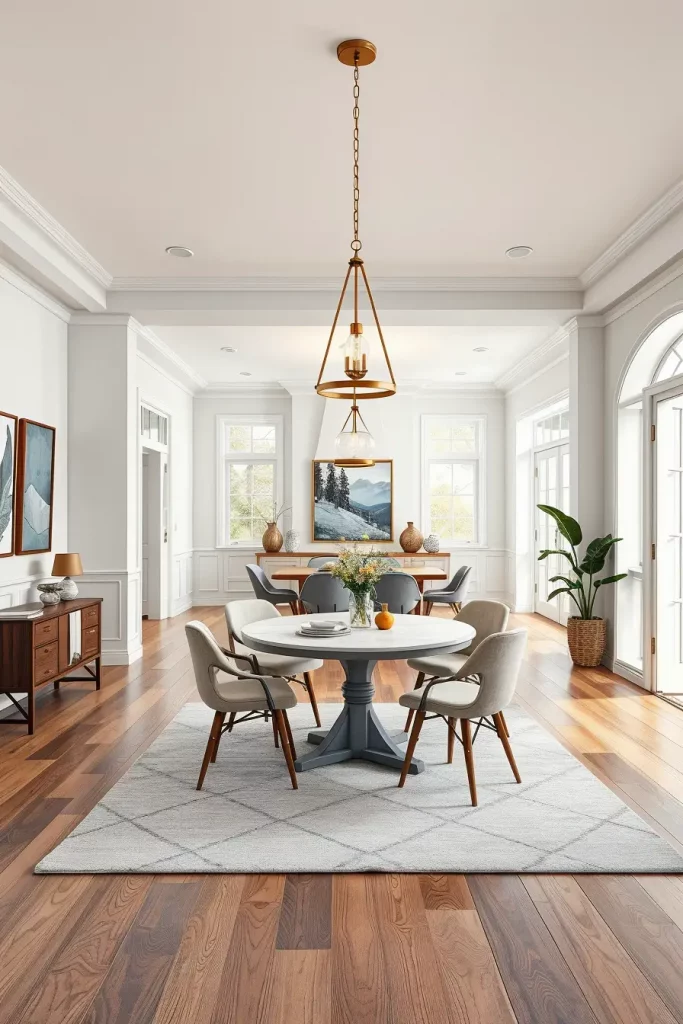
Choose fixtures with finishes that complement room accents-brass, matte black, or frosted glass are popular options. Positioning the light centrally balances the space, while dimmer switches allow mood adjustments from bright to intimate.
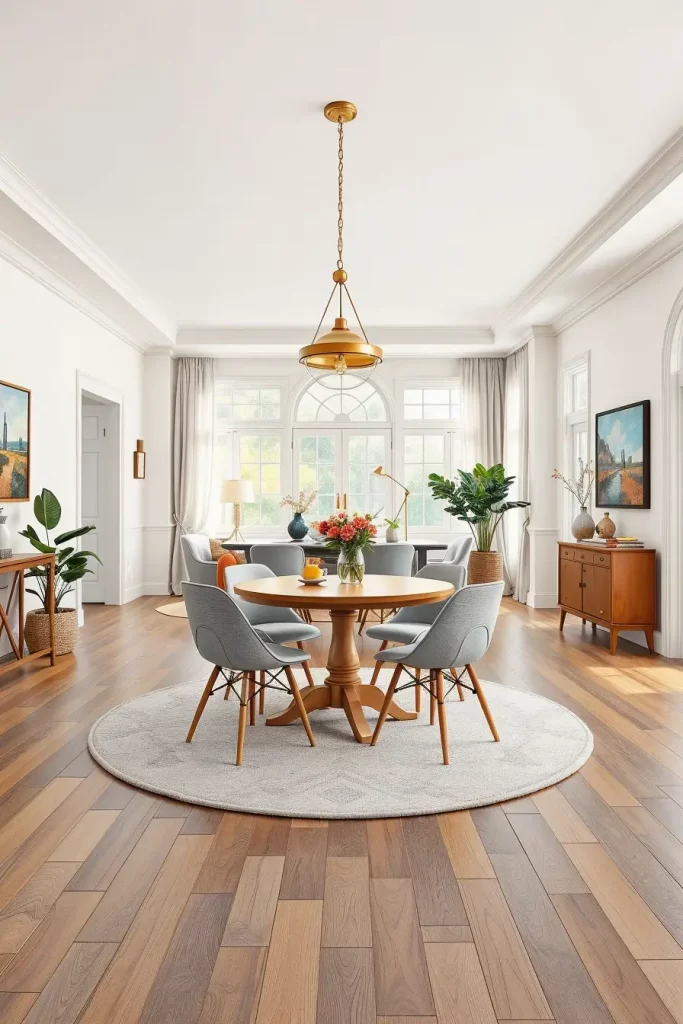
Adding a coordinating area rug beneath the table enhances spatial definition and ties the design together.
Bold Wallpaper to Energize Small Dining Rooms
Small dining spaces can confidently showcase bold wallpaper patterns, transforming ordinary corners into vibrant design features. Floral, geometric, or tropical motifs inject personality and energy.
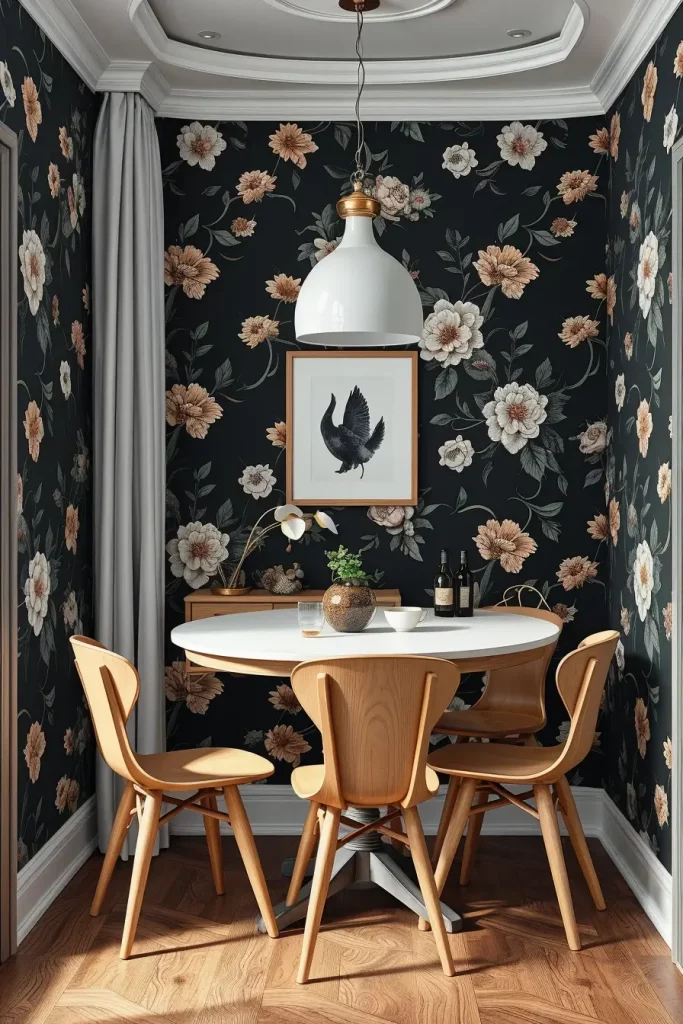
Vertical or symmetrical patterns maintain visual balance. I often select tropical leaf or animal print wallpapers in navy, emerald, or terracotta tones, paired with neutral furnishings like white round tables and light wood chairs to keep the wallpaper as the focal point.
Textured wallpaper should be used sparingly to avoid bulkiness, with matte or semi-gloss finishes preferred for soft light reflection.
Sliding Doors to Reclaim Space
Traditional swinging doors consume valuable square footage in small dining rooms. Replacing them with sliding doors-such as pocket or barn-style-frees up space and improves furniture layout options.
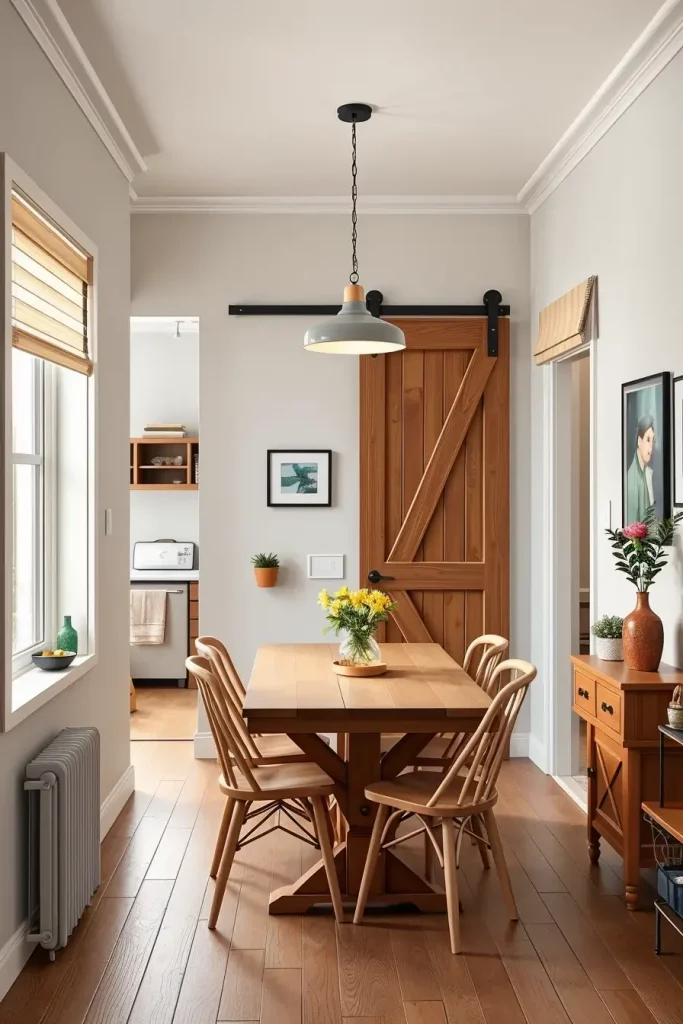
For contemporary interiors, flat-panel pocket doors painted to match walls maintain a seamless look. Rustic or transitional rooms benefit from reclaimed wood barn doors with sleek hardware, combining character with practicality.
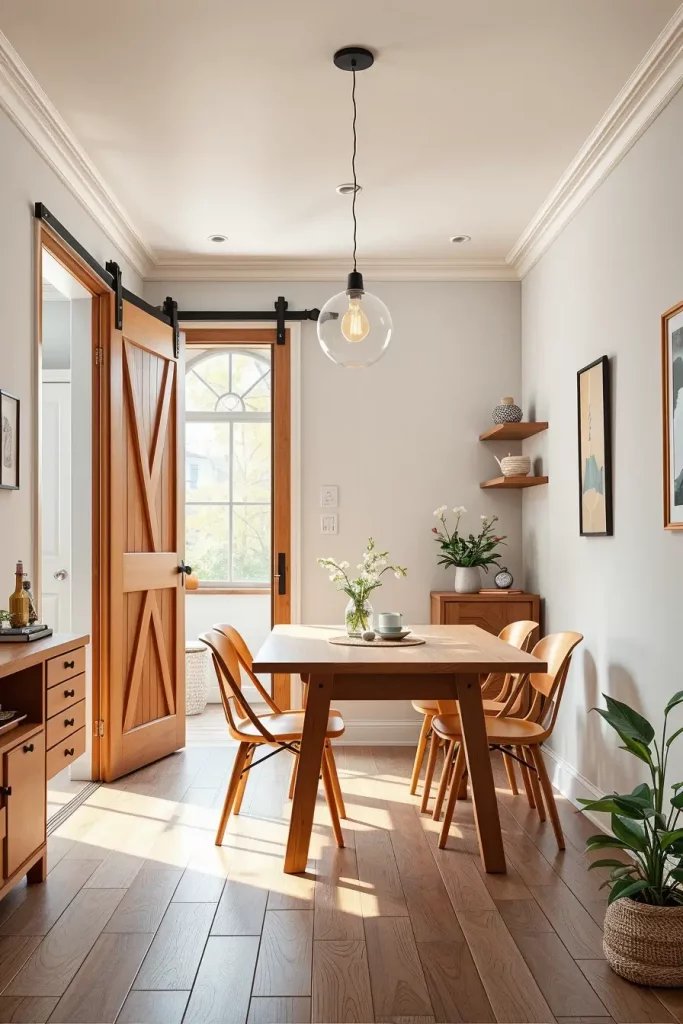
Soft-close hardware enhances user experience by reducing noise and ensuring smooth operation.
Mirror Backsplashes to Expand Dining Corners
Installing mirror backsplashes in dining alcoves or between walls visually enlarges the space by reflecting light and creating depth. Frameless mirrors or mirrored tiles behind built-in benches or cabinetry work best.
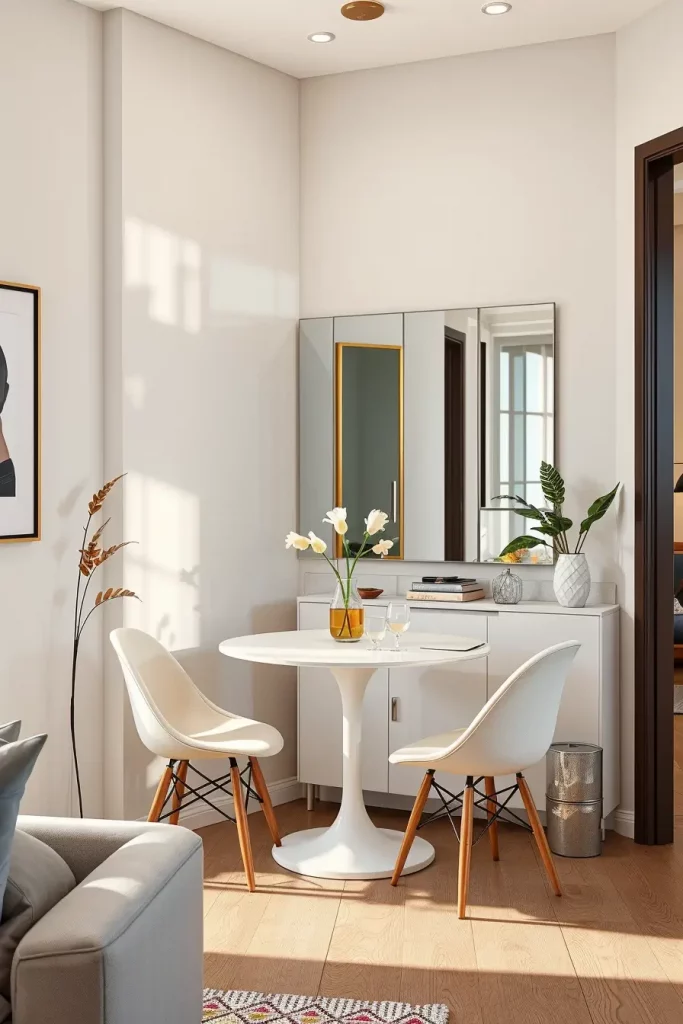
Pairing mirrors with pale color schemes like soft gray, beige, or white enhances openness. Adding LED strip lighting along mirror edges creates a subtle glow, while floating shelves in front display delicate ceramics or plants without obstructing views.
Maximize Daylight with Sheer Curtains
Sheer curtains are an excellent choice for small dining rooms, allowing sunlight to filter through while preserving privacy. Replacing heavy drapes with lightweight, translucent fabrics instantly brightens and visually expands the space.
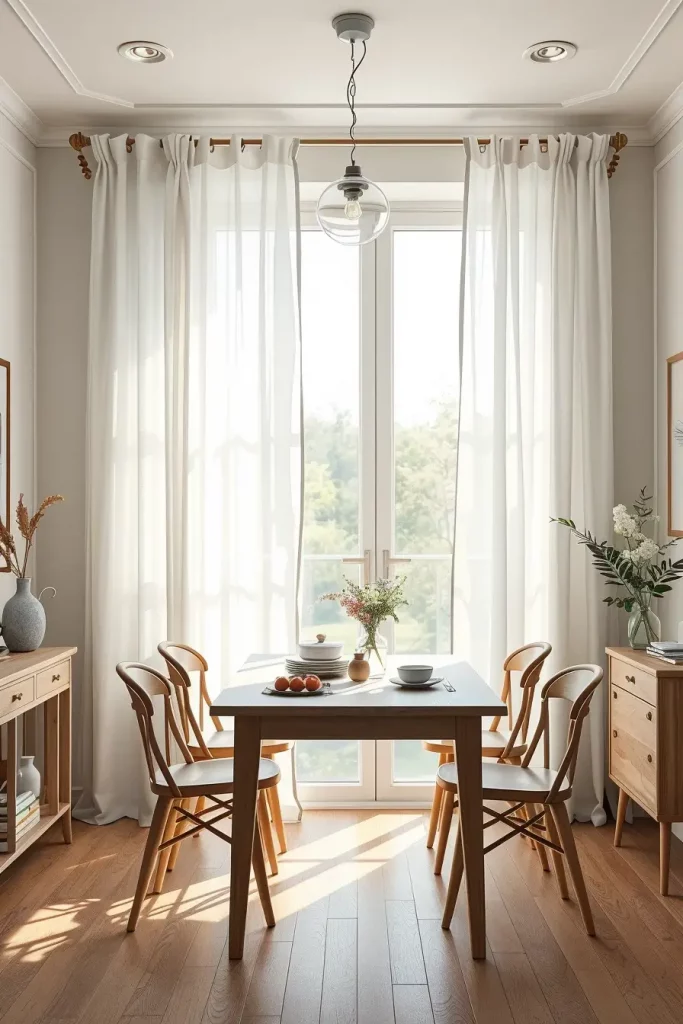
Floor-length panels in white or neutral tones made from linen or gauzy polyester blends create a natural, flowing effect. Paired with light walls and minimalist furniture, they enhance the room’s spacious feel.
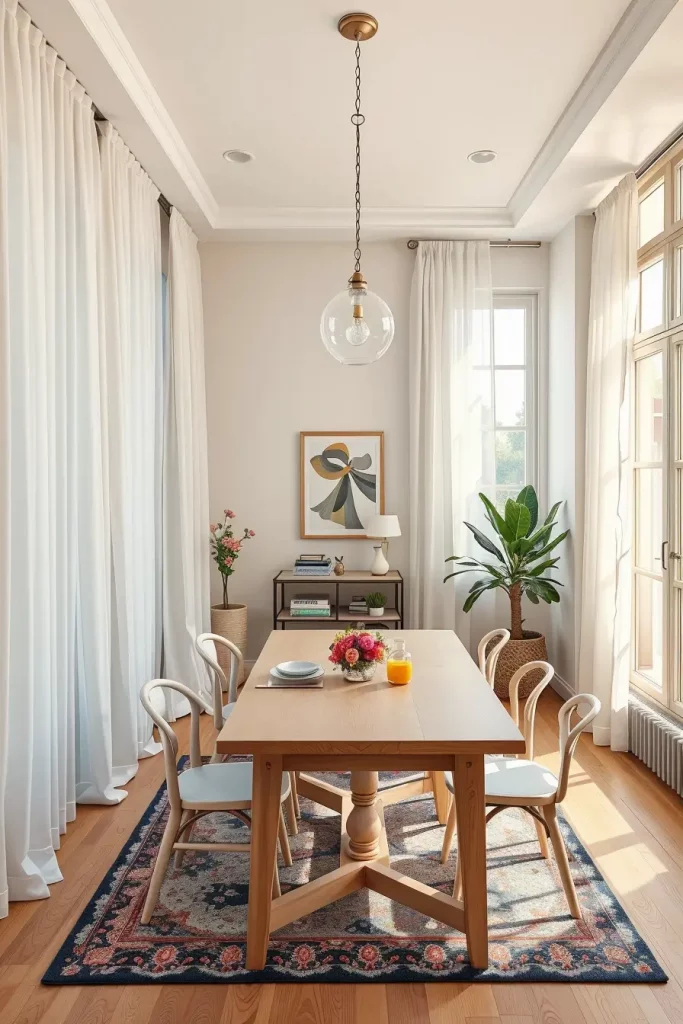
For rooms lacking large windows, hanging a sheer curtain in front of a mirror simulates filtered sunlight, softening the atmosphere creatively.
Built-In Bars: Stylish and Functional Additions
Incorporating a built-in bar into a small dining area combines chic design with practical storage for entertaining. Wall units or cabinets integrated into the room save floor space compared to bulky bar carts.
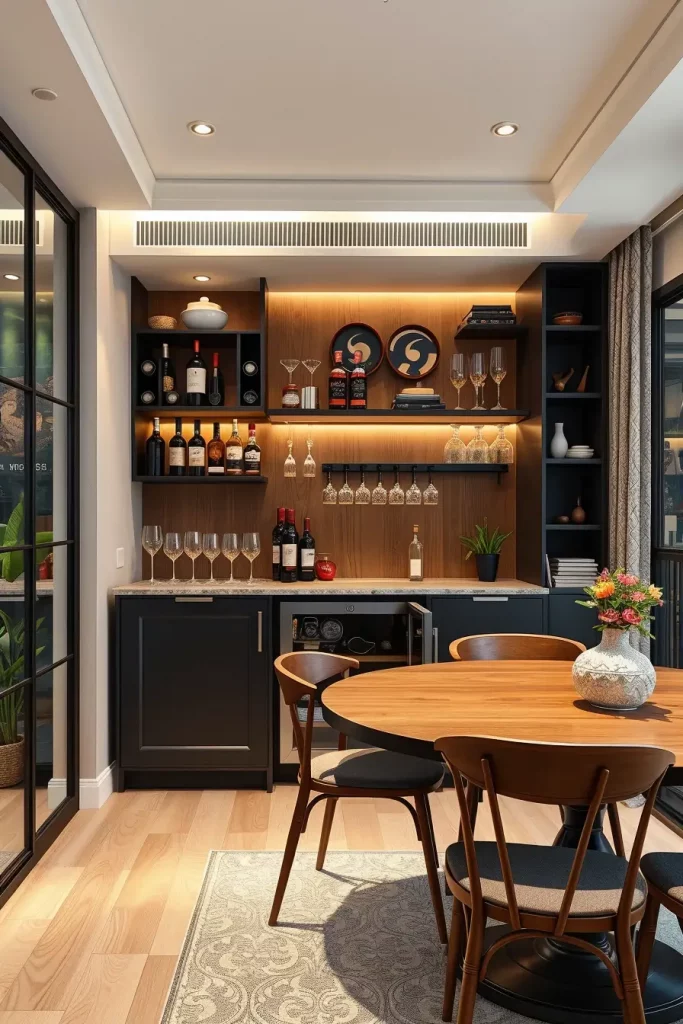
These bars often feature closed compartments below for bottles and open shelves above for glassware and décor. Narrow bar counters double as buffet tables during meals. Material choices like oak veneer, matte black, or glossy lacquer depend on your home’s style.
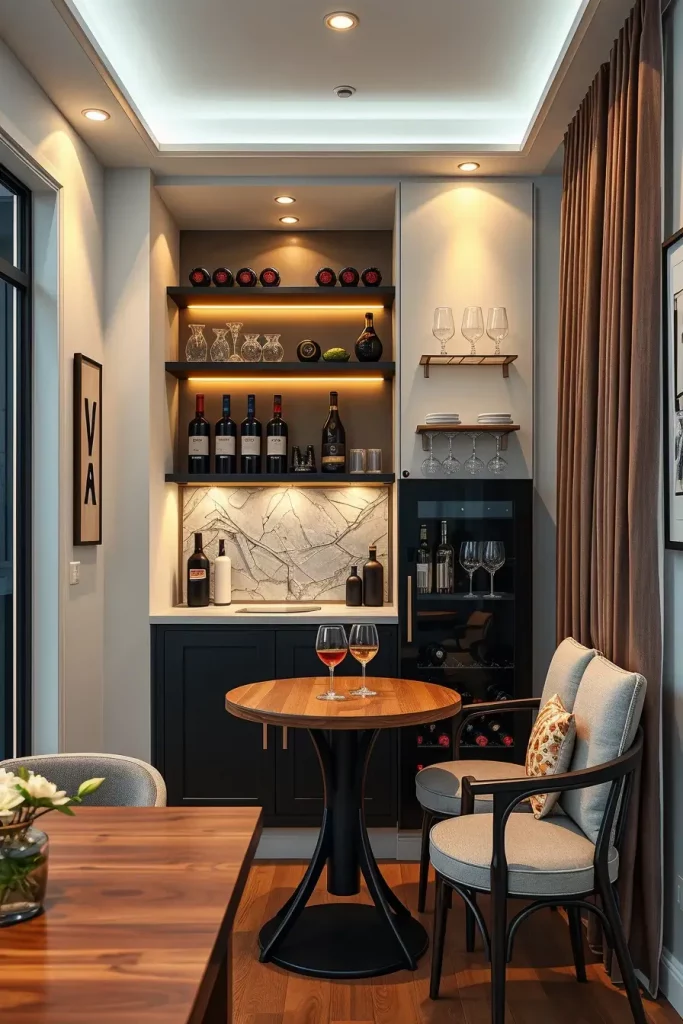
Adding wine cubbies, lighting strips, and small sinks enhances functionality. Hanging wine racks and under-shelf glass holders increase vertical storage. Keep décor minimal with elegant bar tools or vases to maintain a clean look.
Scandinavian Minimalism for Compact Dining
Scandinavian design is ideal for small dining areas, emphasizing simple lines, functional furniture, and muted color schemes. This style reduces visual clutter and creates calming, spacious-feeling rooms.
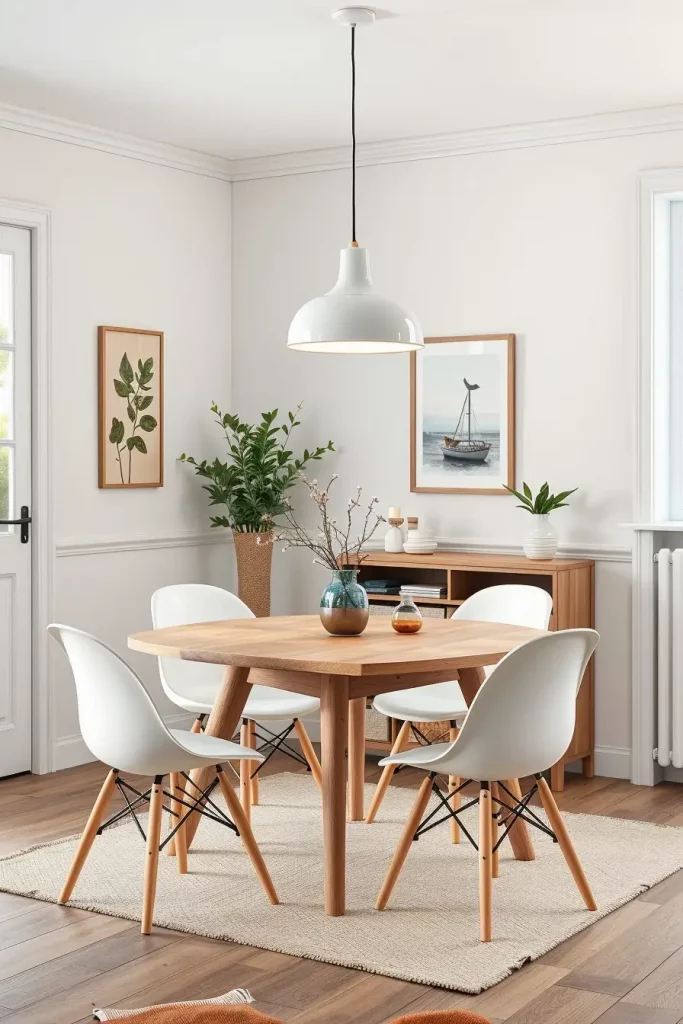
Light woods like birch and ash pair beautifully with white or soft gray walls. Compact round tables and molded chairs provide seating for three to four without crowding. Pendant lights with matte ceramic or paper shades add charm without visual weight.
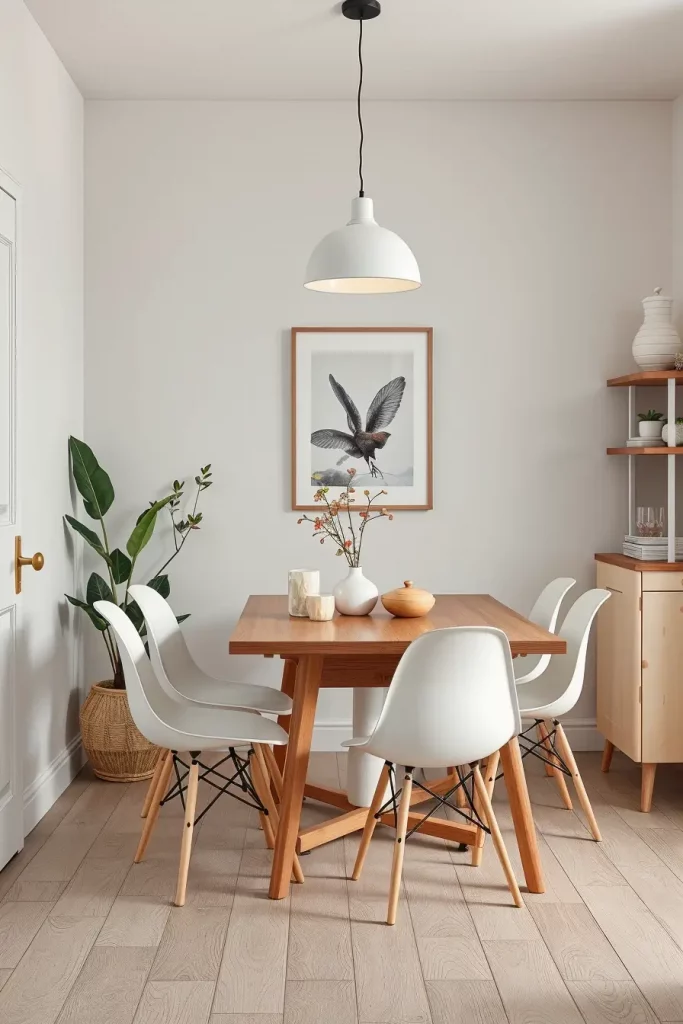
Wall-mounted folding tables and stackable stools enhance flexibility. A narrow floating shelf above eye level offers space for decorative items, especially in rooms with high ceilings.
Designing a small dining room doesn’t mean compromising on style, comfort, or practicality. By balancing light, storage, and minimalist principles, you can create a welcoming and harmonious dining space. Which of these transformations inspires you the most? Share your thoughts or questions about your small space makeover in the comments below. Our team is eager to hear about your design plans.