Looking to transform a compact bathroom into a tranquil, airy retreat that balances practicality with sleek aesthetics? Embracing a minimalist design philosophy is essential for maximizing functionality without sacrificing style. This guide explores innovative minimalist strategies tailored to small bathroom spaces, focusing on space-saving solutions, clean lines, and subtle color palettes that exude modern sophistication.
Optimizing Space with Sleek, Streamlined Fixtures
When designing a minimalist bathroom in a limited area, the foundation lies in choosing fixtures that are both visually light and highly functional. Eliminating bulky, ornate pieces opens up the room, creating a sense of spaciousness and calm. Prioritize wall-mounted toilets and pedestal sinks that avoid heavy cabinetry, complemented by contemporary towel rails that blend seamlessly into the environment.
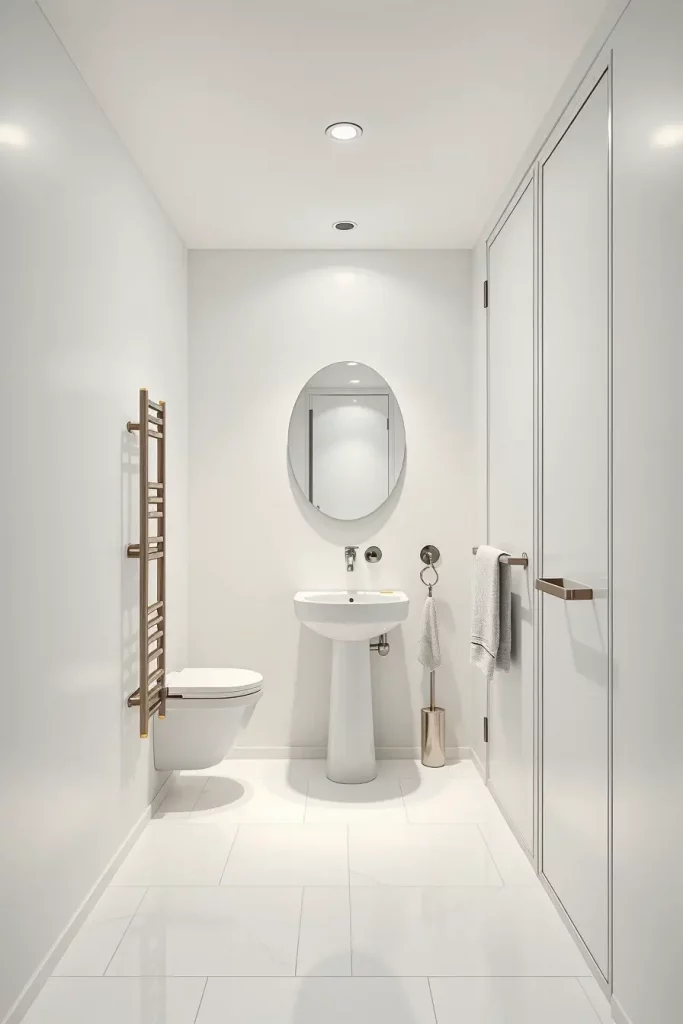
Fixtures with concealed plumbing and smooth, integrated storage options enhance the uncluttered look. Finishes like brushed nickel or matte white are ideal as they subtly recede into the background, allowing the room’s architecture to shine. Floating elements are particularly effective, freeing up floor space and contributing to an open, airy feel.
Incorporating ceiling-mounted LED lighting further elevates the space by providing crisp, even illumination that highlights the minimalist design while enhancing functionality.
Artful Sinks: Blending Utility with Sculptural Elegance
In small bathrooms, every element must serve dual purposes-practicality and visual appeal. Sculptural sinks act as captivating focal points without overwhelming the space. These sinks transcend their basic function, doubling as refined art pieces that enrich the room’s aesthetic.
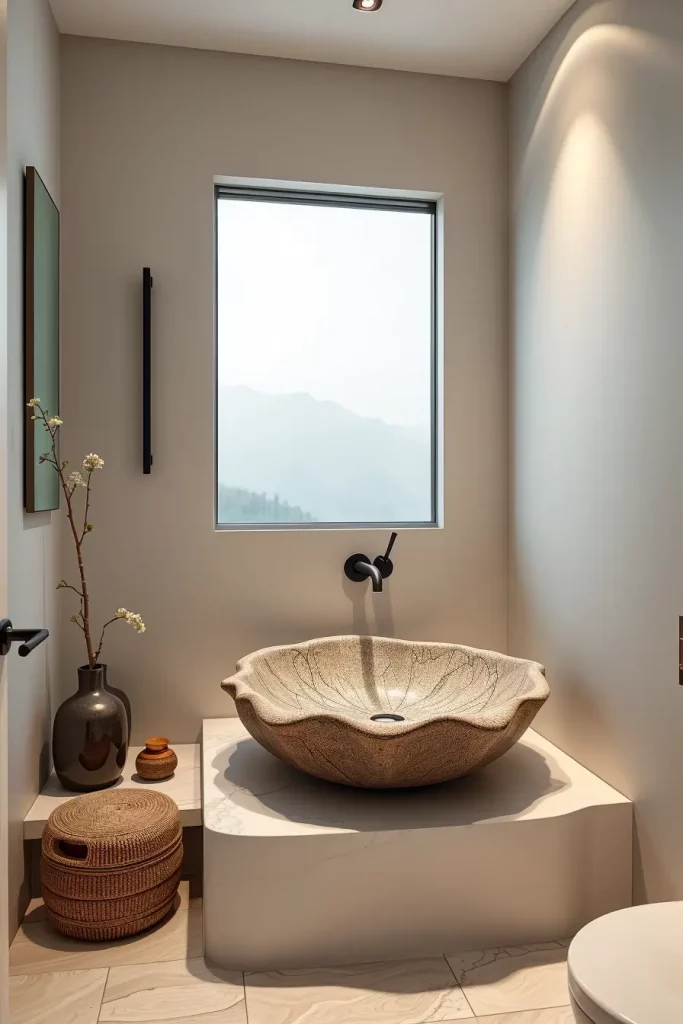
Choose between organically curved or sharply geometric pedestal sinks crafted from matte ceramics or natural stone to add depth and texture. Pair these with sleek single-handle faucets to maintain a cohesive, minimalist aesthetic. For maximum visual lightness, consider compact countertop basins with plumbing concealed within the walls, enhancing the room’s open feel.
Floating Vanities: Creating an Effortless Sense of Space
Floating vanities are a top recommendation for small minimalist bathrooms, as their suspension above the floor generates a sense of weightlessness and openness unattainable with traditional cabinetry. These vanities offer practical storage while preserving a clean, streamlined look.
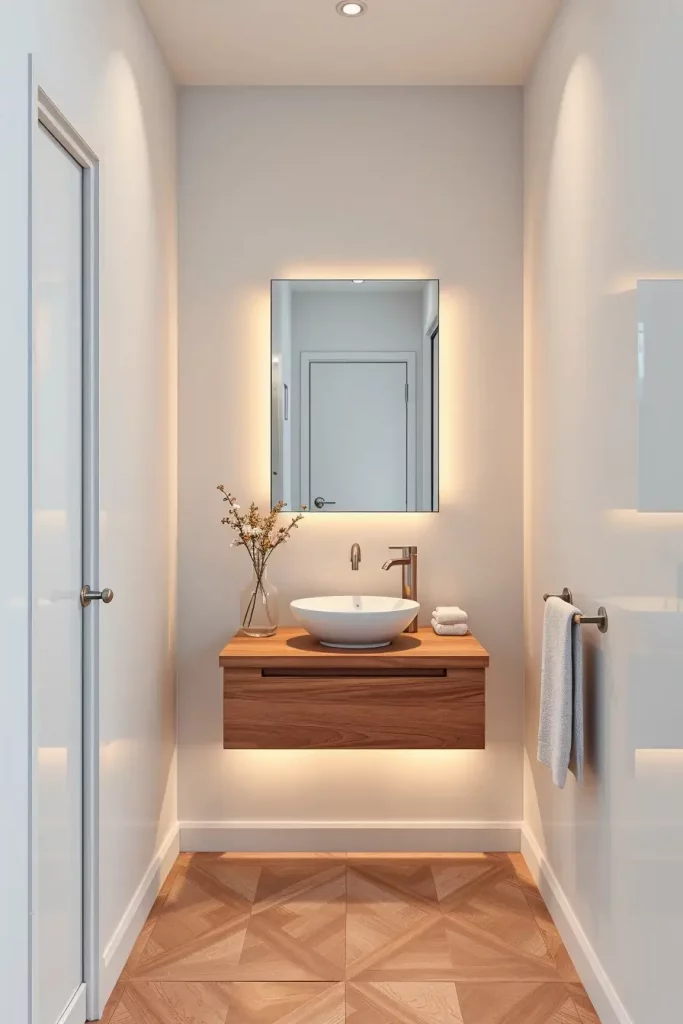
Wood or lacquered finishes with horizontal grain patterns complement push-to-open drawers, maintaining a clutter-free surface. Integrated sinks unify the design, while subtle underlighting adds a sophisticated glow. This approach not only enhances visual spaciousness but also simplifies cleaning.
Adding mirrored fronts or textured finishes can elevate the vanity’s appeal without compromising minimalism.
Wall-Mounted Faucets: Streamlining Countertops and Enhancing Design
Wall-mounted faucets are an elegant yet often overlooked feature in minimalist bathrooms. By freeing up countertop space and reducing visual clutter, they align perfectly with minimalist principles. Their sleek profiles complement floating sinks and narrow countertops, amplifying the illusion of space.
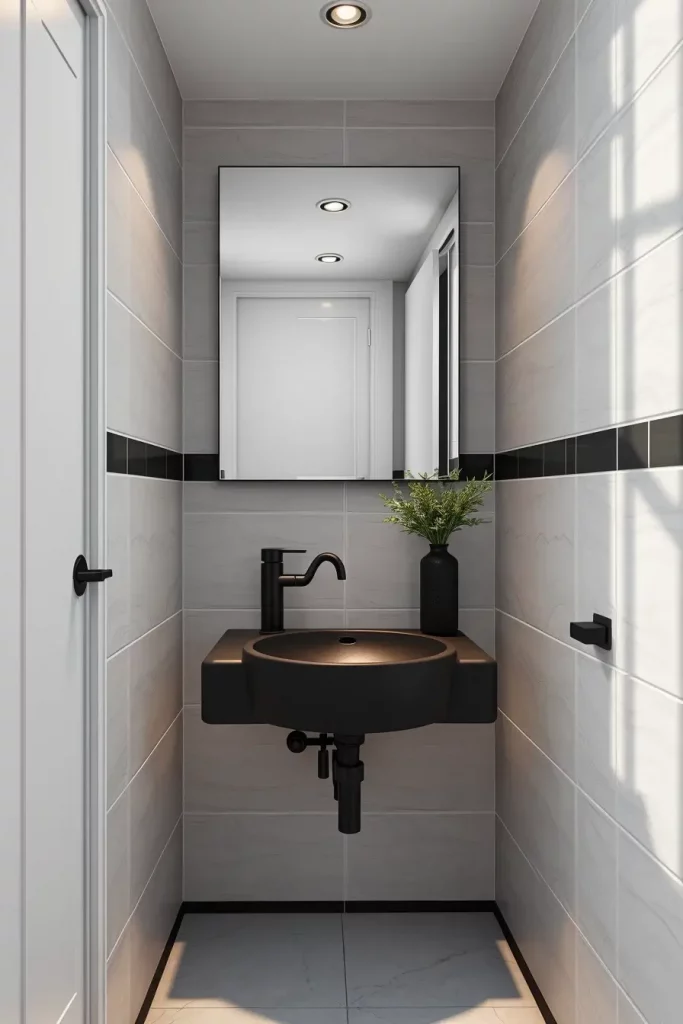
Opt for slender cylindrical designs in polished chrome, matte black, or brushed brass finishes to add either a modern or warm touch. These faucets not only enhance the vanity’s prominence but also eliminate bulky hardware, contributing to a refined, functional space.
Monochromatic Color Schemes: Expanding Space with Elegance
Monochrome palettes are a powerful tool for visually enlarging small bathrooms while fostering a serene atmosphere. Utilizing a single color family with varying shades-such as soft greys, beiges, or muted pastels-creates depth without overwhelming the senses.
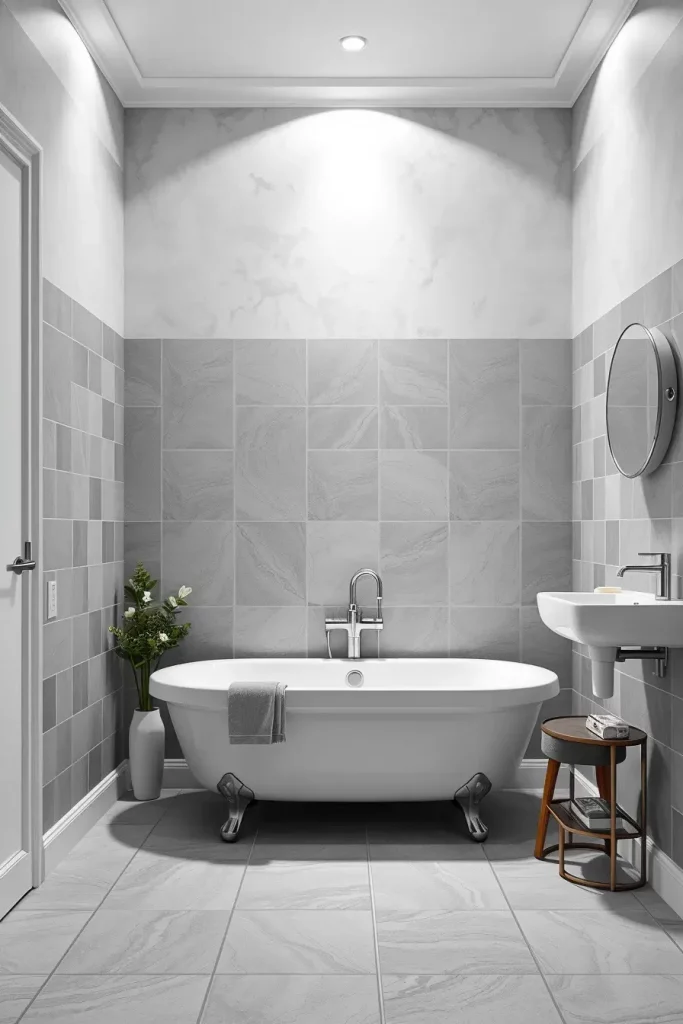
Incorporate matte tiles and satin-finish paints to prevent flatness, and soften the space with textured woven mats or towels in complementary hues to avoid a sterile feel. This cohesive approach allows subtle metal or wood accents to stand out gracefully.
Backlit Mirrors: Illuminating Minimalist Luxury
Backlit mirrors combine practicality with a touch of luxury, casting soft, even light that eliminates shadows and enhances the bathroom’s modern vibe. Frameless designs with integrated LED strips maintain a clean aesthetic and serve as excellent vanity lighting in compact spaces.
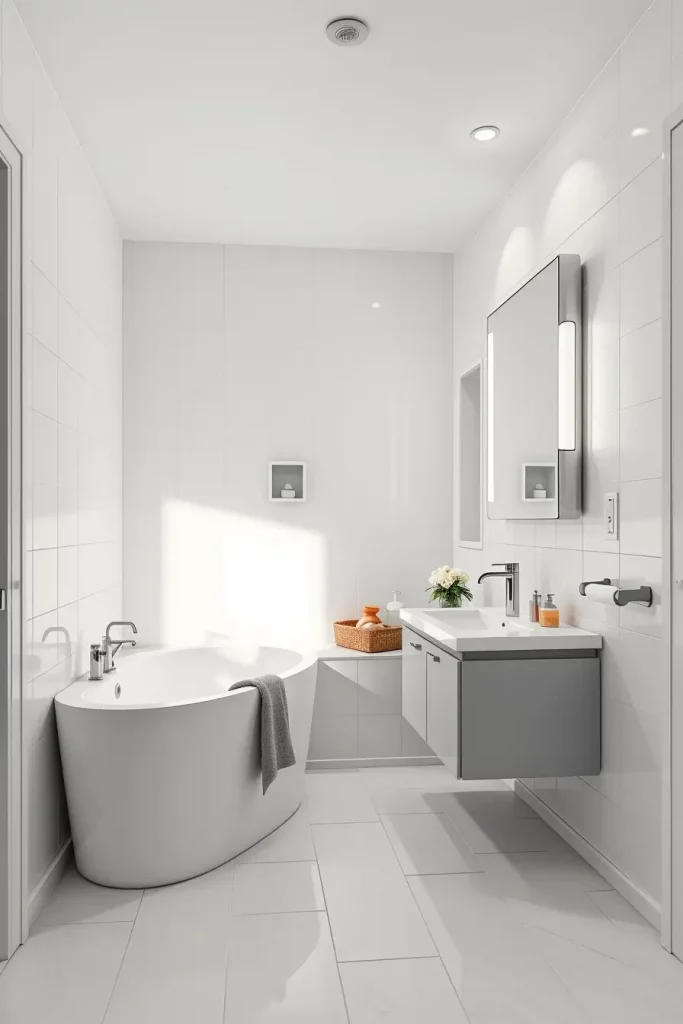
Advanced models often include defogging features and touch controls, enhancing convenience and making them ideal for small, humid environments.
Frameless Glass Shower Enclosures: Enhancing Openness
Frameless glass shower screens are indispensable in minimalist small bathrooms, allowing light to flow freely and visually expanding the space. Their transparent nature creates a seamless barrier that maintains openness and elegance.
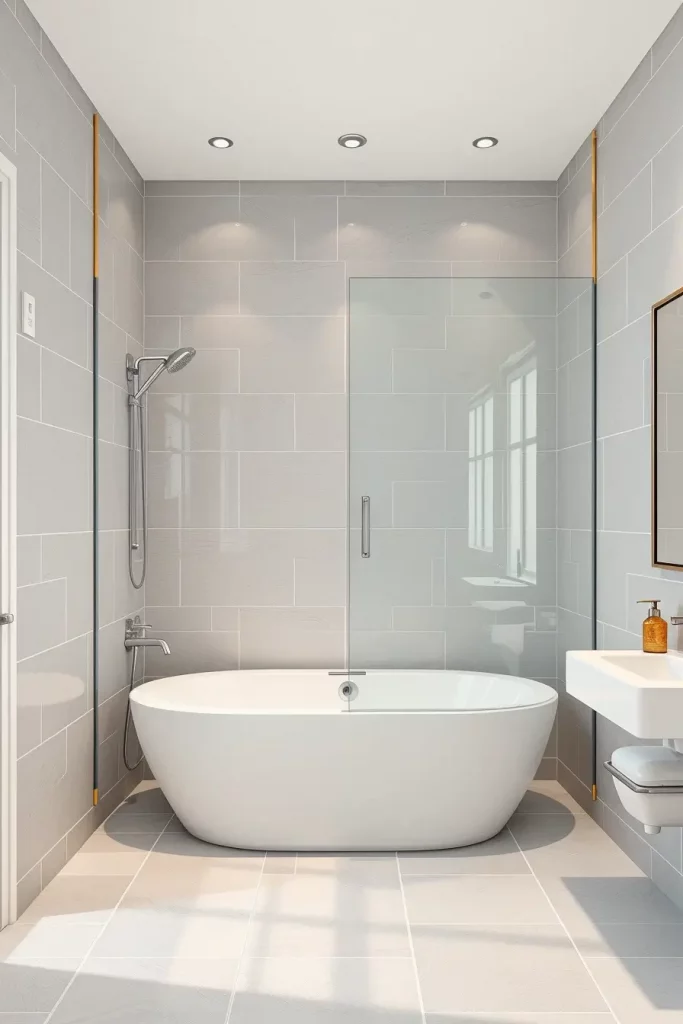
Choose crystal-clear glass with anti-lime coatings for easy upkeep. Whether opting for sliding or pivot doors, minimal hardware ensures uninterrupted sightlines, enhancing the room’s fluidity. Pairing these with curbless showers or continuous floor-to-wall tiling adds dimension and sophistication.
Concealed Storage: Maintaining Clarity with Hidden Solutions
Clutter undermines minimalist design, making hidden storage behind sleek panels essential. Concealed compartments, push-to-open cabinetry, and wall-integrated niches preserve the room’s clean lines while providing ample space for towels, toiletries, and cleaning supplies.
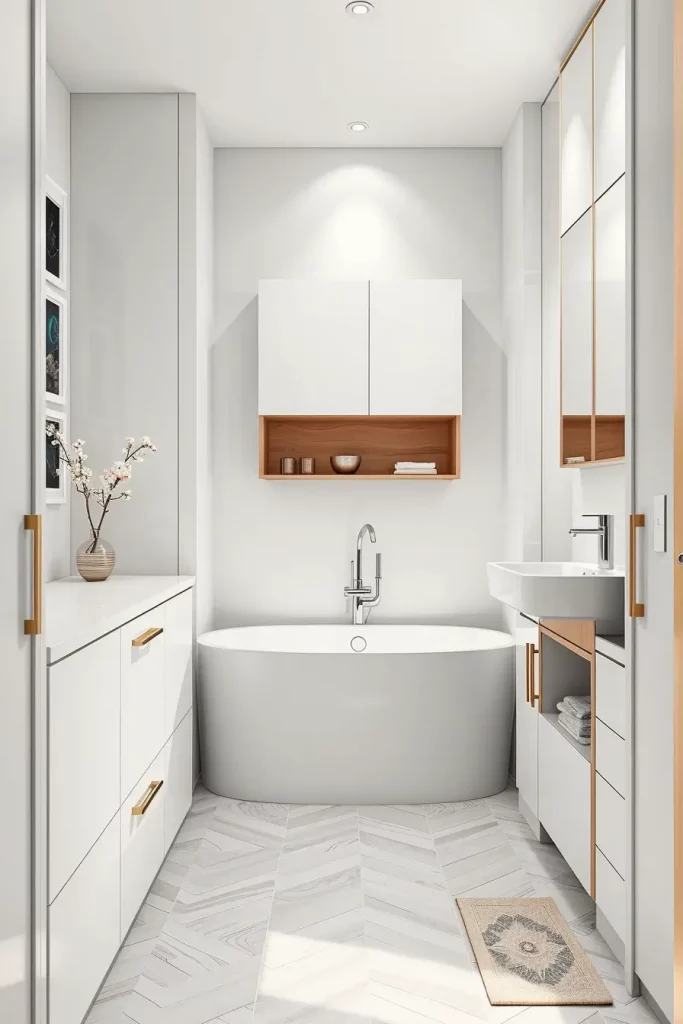
Flat-panel surfaces in matte white, oak veneer, or tinted glass enhance the seamless look. Large mirror panels can cleverly conceal storage, doubling as functional design elements. This approach transforms small bathrooms into boutique-style retreats by eliminating visual distractions.
Large-Format Tiles: Creating a Continuous Visual Canvas
Selecting oversized tiles is a strategic move to minimize grout lines and create an uninterrupted surface that visually enlarges the bathroom. Porcelain or ceramic tiles in soft neutrals with matte finishes provide a cohesive backdrop that complements other design features.
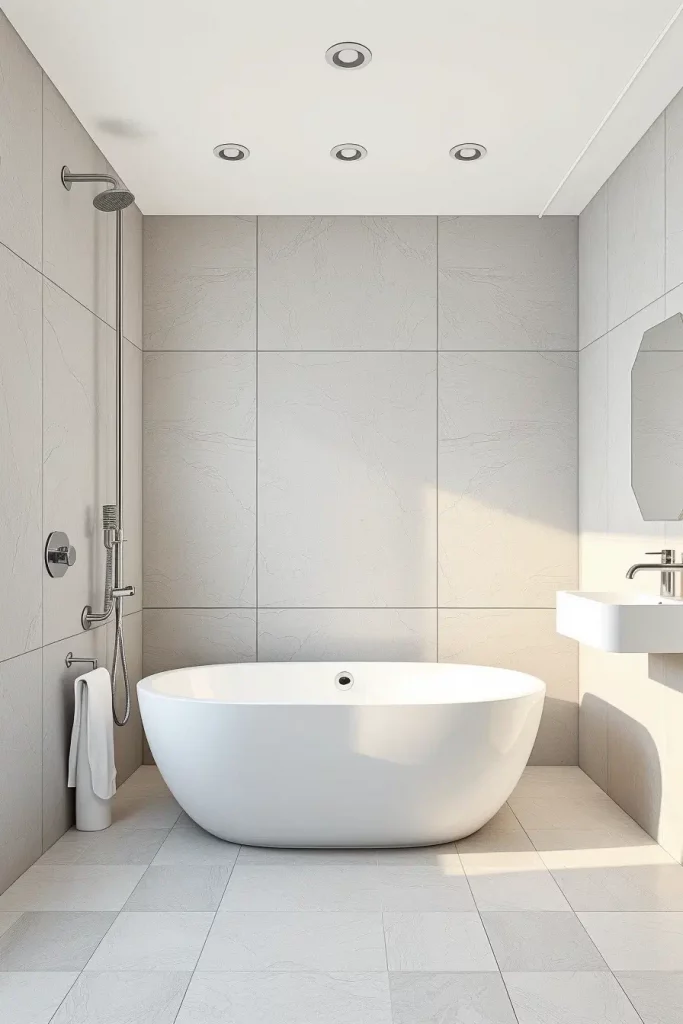
Stone-look tiles add subtle texture without disrupting the minimalist flow. These tiles are not only visually appealing but also easy to maintain, making them a practical choice for busy households.
Matte Black Accents: Defining Contrast with Elegance
Matte black fixtures and hardware introduce striking contrast that anchors neutral palettes without cluttering the space. Ideal for faucets, towel bars, showerheads, mirror frames, and cabinet pulls, these accents add rhythm and structure to minimalist bathrooms.
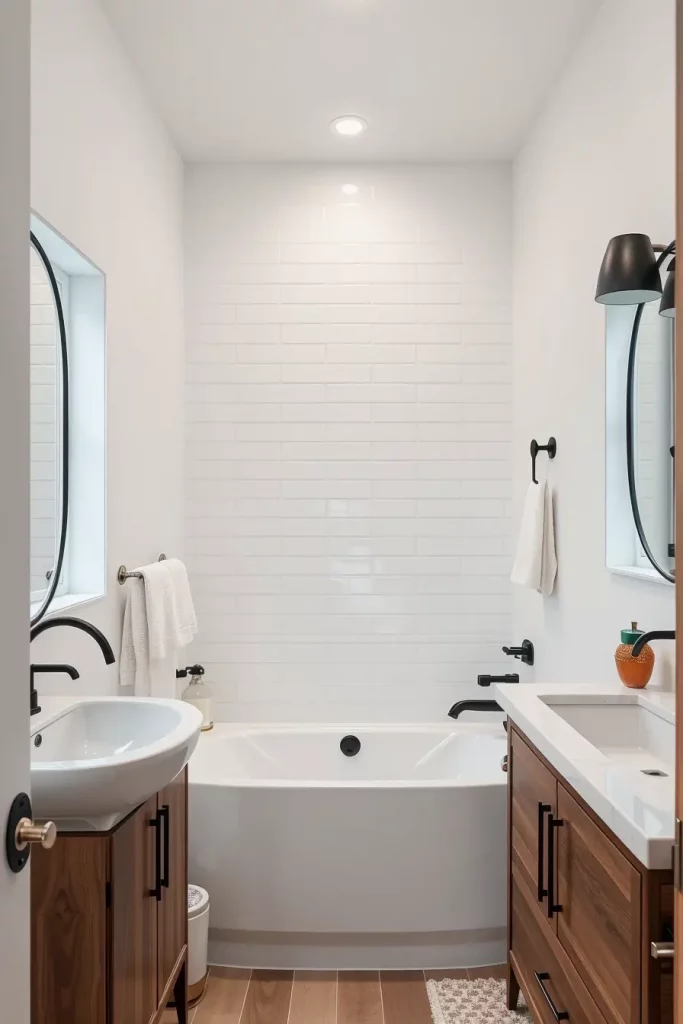
Combining black hardware with light tiles and natural wood elements creates a balanced warmth and modern sophistication. Strategically placed black-framed glass partitions and lighting fixtures unify the design throughout the space.
Warm Neutral Tones: Infusing Comfort into Minimalism
Warm neutrals like taupe, ivory, and greige soften minimalist bathrooms, fostering a cozy yet uncluttered ambiance. These hues work beautifully on walls, tiles, and accessories, harmonizing with natural materials such as wood vanities and woven baskets.
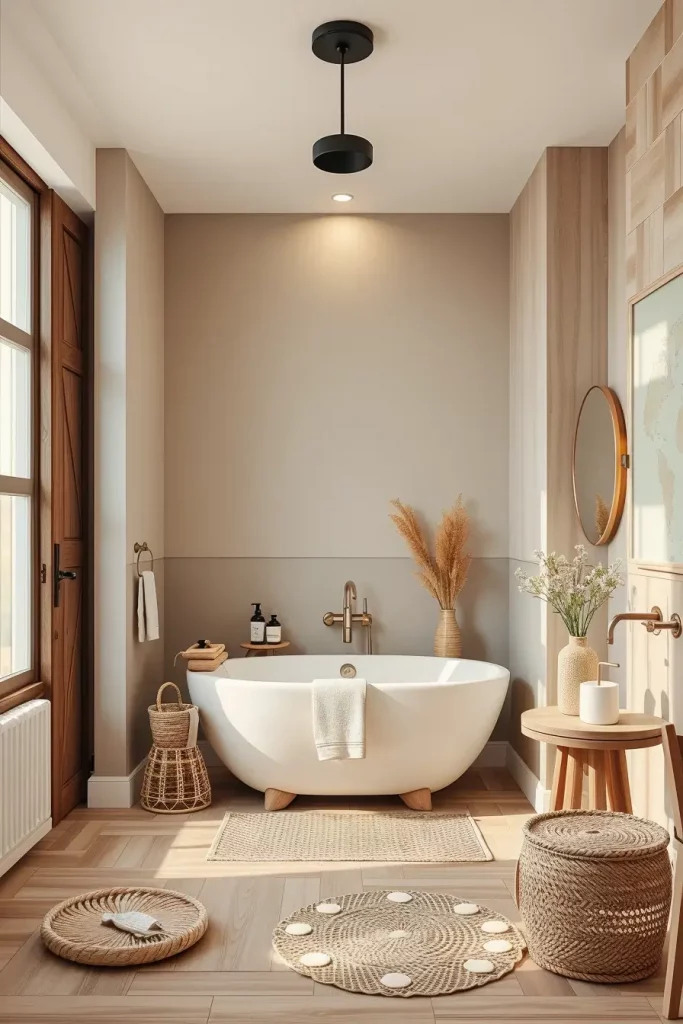
Soft, warm lighting enhances this inviting atmosphere, preventing the space from feeling clinical. Incorporating warm-hued stone tiles or textured wallpaper adds depth and tactile interest.
Compact Freestanding Tubs: Sculptural Luxury in Small Spaces
Freestanding tubs designed for limited spaces offer a luxurious focal point that doubles as a sculptural element. Oval or egg-shaped tubs in matte white resin or acrylic fit perfectly near windows or corners, paired with minimalist floor-mounted faucets for a cohesive look.
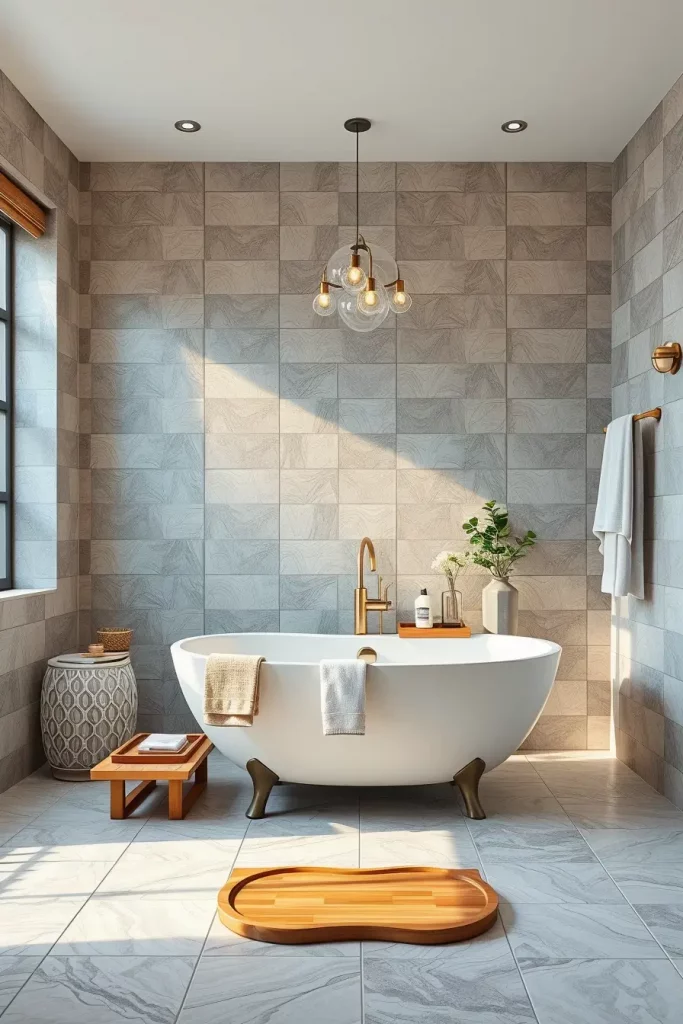
These tubs create a spa-like ambiance without overwhelming the room. Adding a small wooden stool or bath tray enhances both functionality and visual balance.
Recessed Shelving: Discreet Storage with Style
Recessed shelves are a subtle yet powerful storage solution that preserves floor space and maintains minimalist aesthetics. Strategically placed niches in showers, above toilets, and near vanities provide practical storage while blending seamlessly with wall finishes.
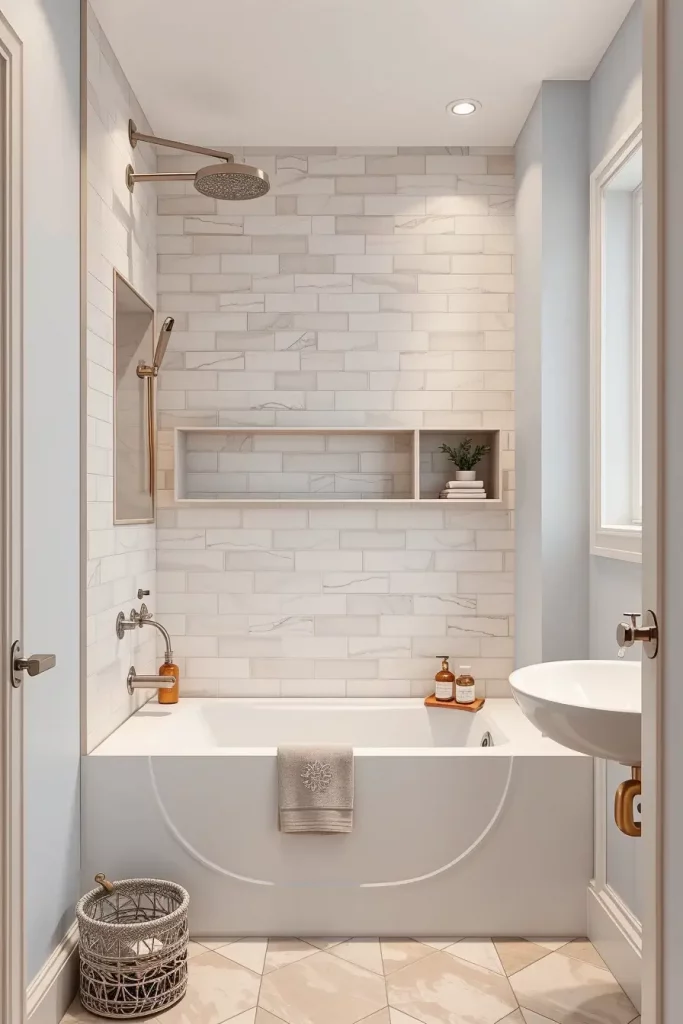
Incorporating LED lighting within niches adds a luxurious touch, highlighting essentials like shampoo, soap, or decorative accents such as small plants or ceramic pieces. Glass shelves or wooden inserts can further refine the look.
Translucent Glass Doors: Balancing Privacy and Light
In compact bathrooms, translucent glass doors-such as frosted, ribbed, or sandblasted varieties-offer privacy without sacrificing natural or artificial light flow. These doors are ideal for walk-in showers and bathroom entrances, maintaining an open, airy feel.
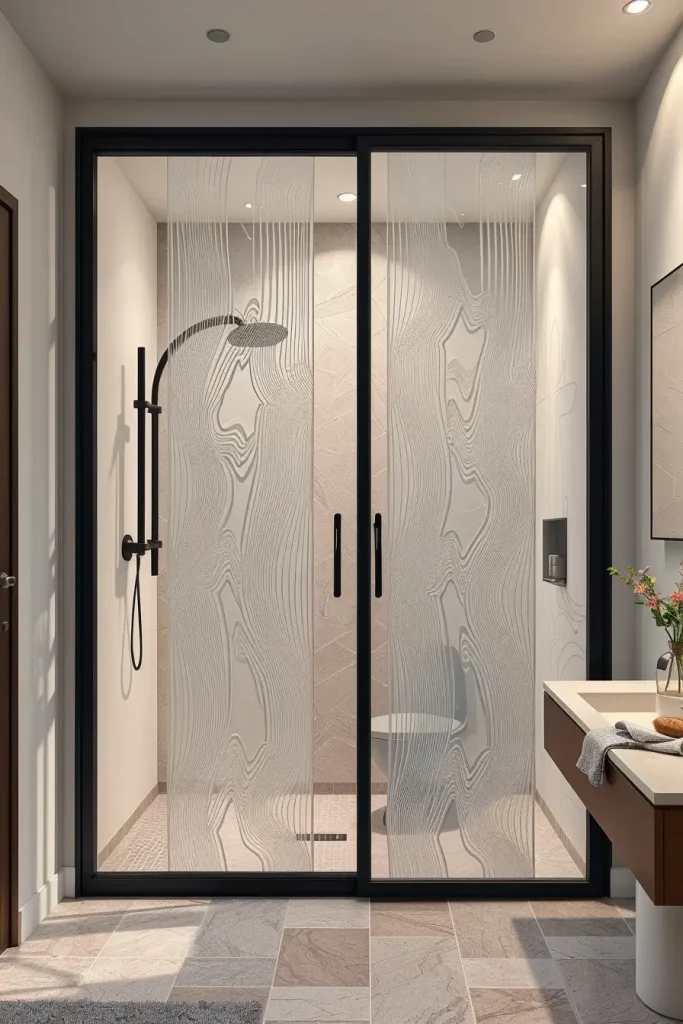
Frames in matte black or white powder-coated aluminum add modern flair while preserving clean lines. Anti-fingerprint coatings and varying privacy levels enhance usability and maintenance.
Wall-Hung Fixtures: Maximizing Floor Space and Visual Flow
Elevating vanities, toilets, and towel warmers off the floor creates vertical expansion, enhancing the perception of space and cleanliness. Concealed brackets and LED underlighting amplify the floating effect, making the bathroom feel larger and more open.
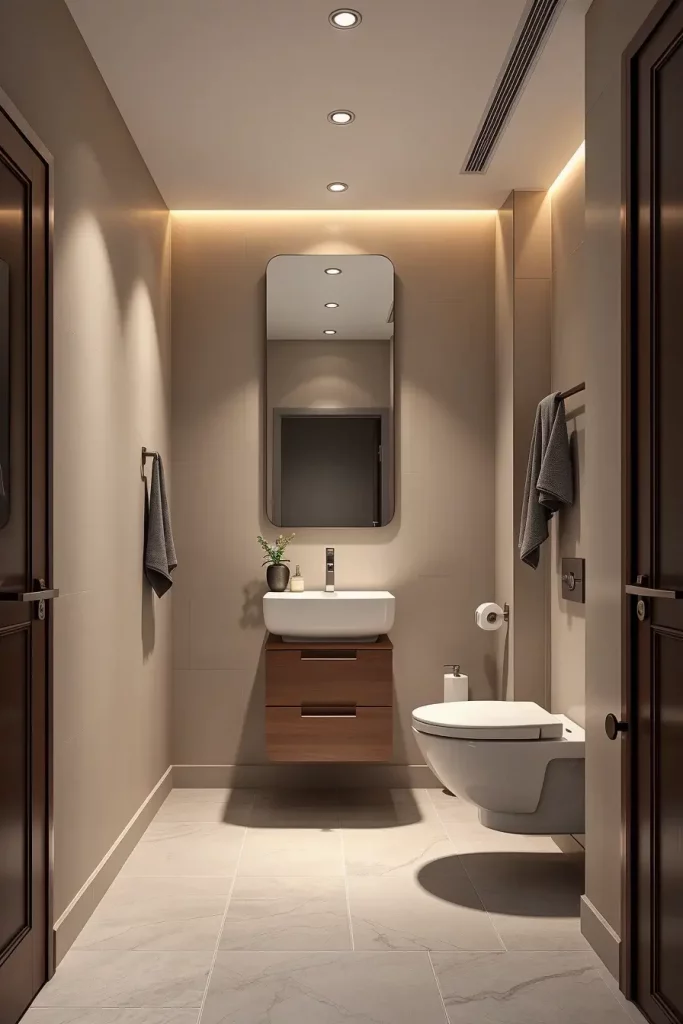
This approach simplifies cleaning and contributes to a serene, uncluttered environment, as demonstrated in numerous compact bathroom renovations.
Open Vanity Designs: Sculptural and Functional
Open vanities featuring metal or wood frames showcase plumbing as part of the design, paired with vessel or custom stone sinks that serve as sculptural centerpieces. These designs reduce visual weight and improve ventilation.
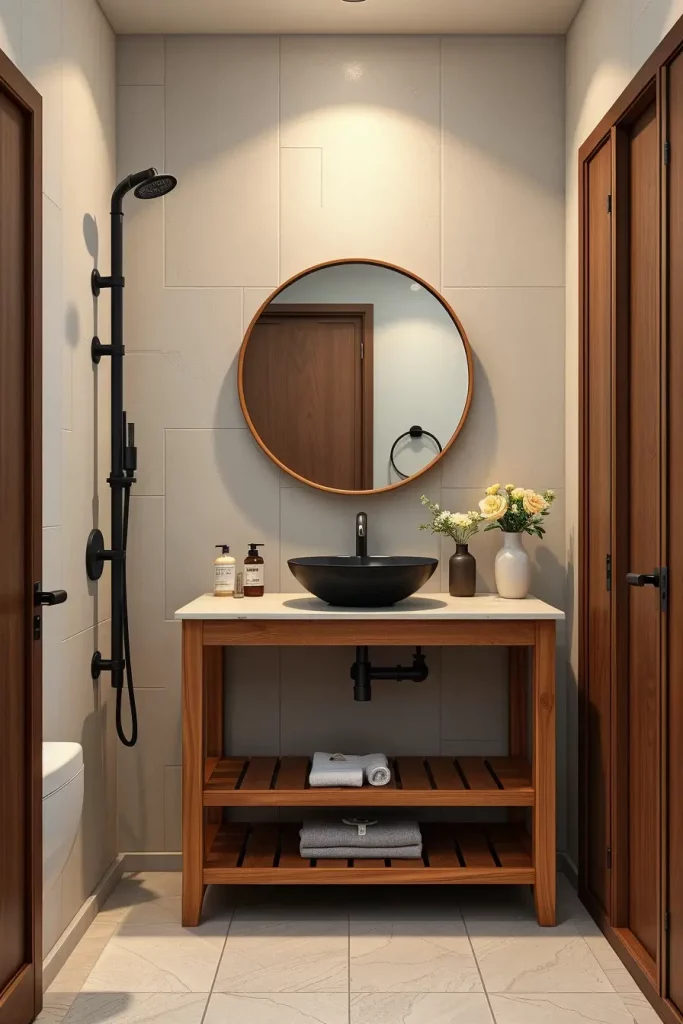
Incorporate marble surfaces with thin metal supports or concrete bases, complemented by baskets or trays for organized storage. Adding leather-lined trays or walnut slats beneath the sink introduces warmth while maintaining minimalism.
Invisible Linear Drains: Seamless Shower Design
Linear drains installed flush with the floor surface eliminate the visual disruption caused by traditional center drains. Matching the drain grate to surrounding materials like microcement or large tiles creates a continuous, spa-like floor.
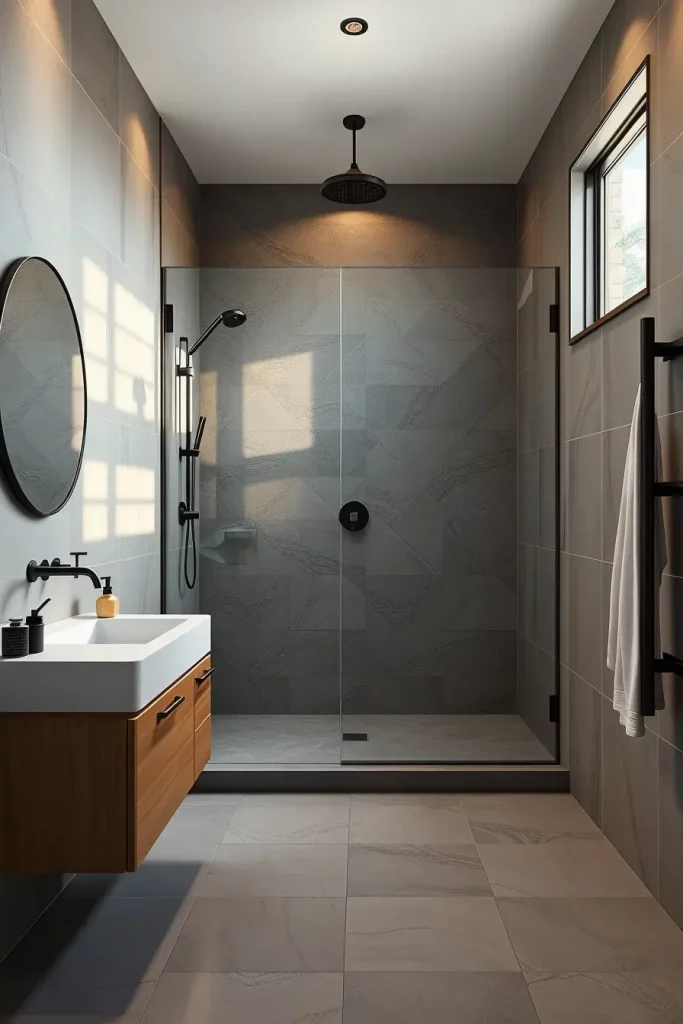
Positioned near shower edges or behind glass panels, these drains enhance accessibility and cleanliness. Proper floor slope is critical to ensure optimal drainage and longevity.
Natural Wood Tones: Adding Warmth to Minimalist Spaces
Contrary to the misconception that minimalism is cold, incorporating neutral wood tones like bamboo, pale oak, or ash introduces essential warmth and texture. These materials harmonize with stone and microcement surfaces, softening the overall look.
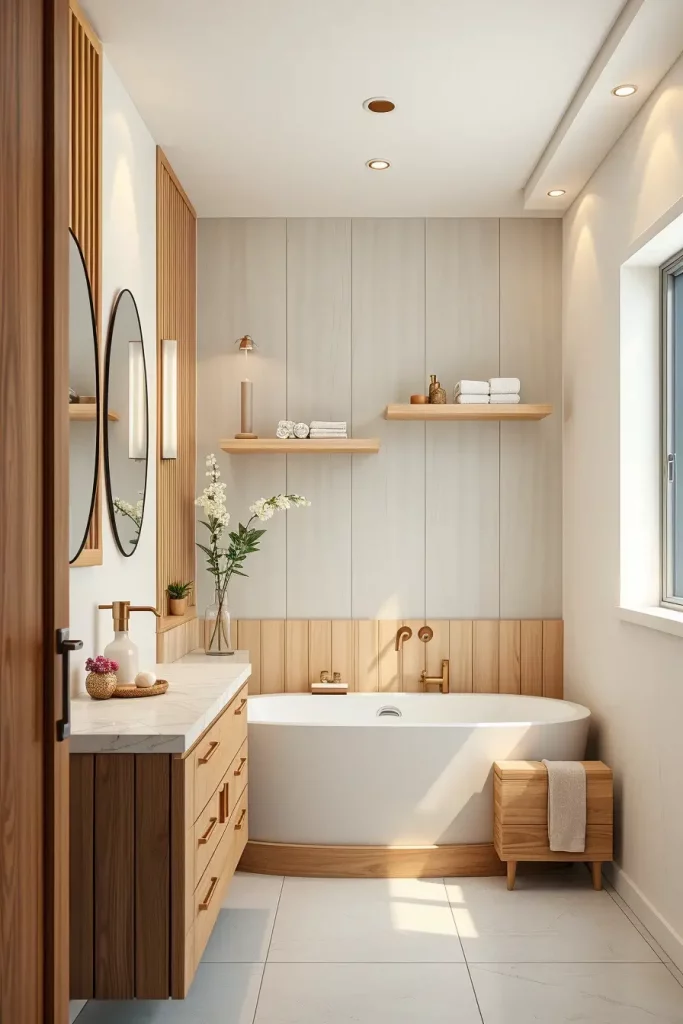
Use wood in floating vanities, open shelving, and mirror frames. Vertical slatted wood panels add height and rhythm, enhancing spatial perception. Wood-look ceramic tiles offer a durable alternative that mimics natural wood’s aesthetic in wet areas.
Architectural Niches: Functional Frames for Decor
Architectural niches combine storage and display, framing toiletries, lighting, or decorative objects to add depth and interest without clutter. Vertical niches adjacent to mirrors are particularly effective, often finished to match surrounding walls.
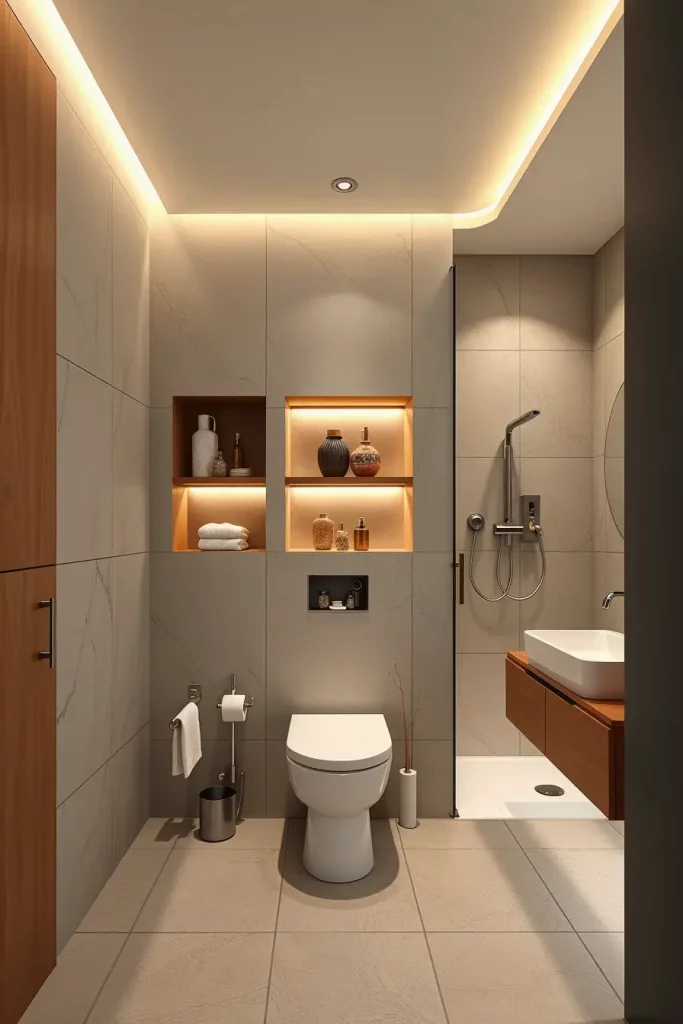
Illuminated with recessed LED strips, niches become subtle focal points. Accent items like brushed gold dispensers or small plants enhance the visual appeal while maintaining minimalist restraint.
Minimalist Art and Sculptures: Balancing Clean Lines with Personality
Incorporating small-scale sculptures or minimal art adds character without overwhelming minimalist spaces. Abstract line drawings, monochrome canvases, and geometric matte-finish sculptures create a gallery-like ambiance.
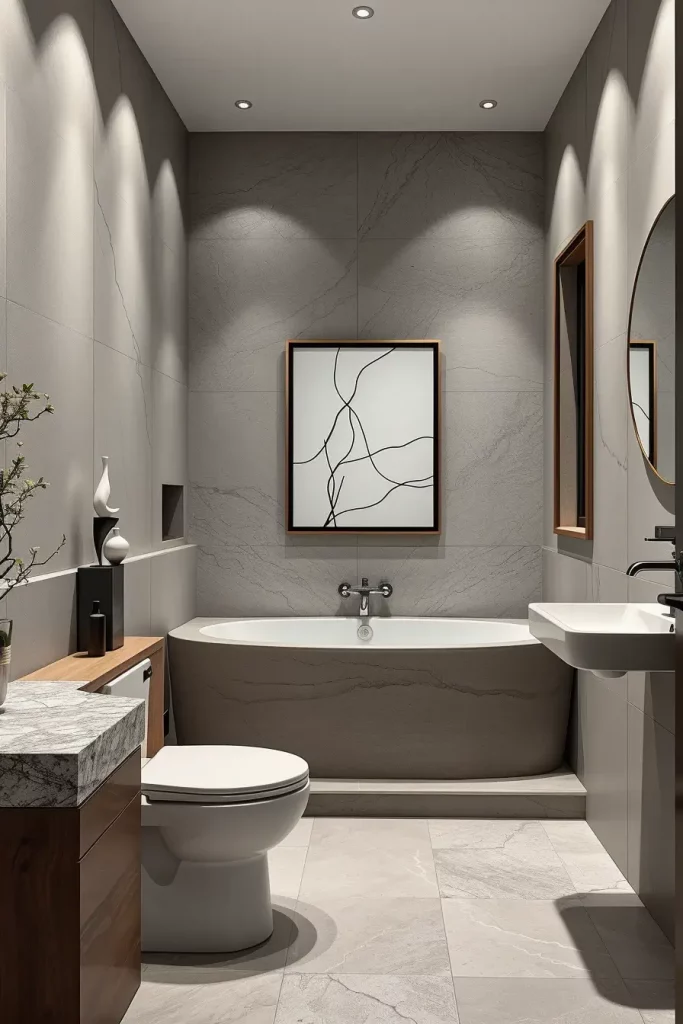
Choose locally crafted or handmade pieces to infuse personal stories and emotional depth, transforming sterile spaces into inviting retreats.
Delicate Metallic Touches: Subtle Glamour in Minimalism
Introducing soft metallic finishes like brushed gold, champagne bronze, or aged brass adds warmth and understated elegance. These finishes work beautifully on faucets, mirror frames, and towel rails, complementing wood and stone surfaces.
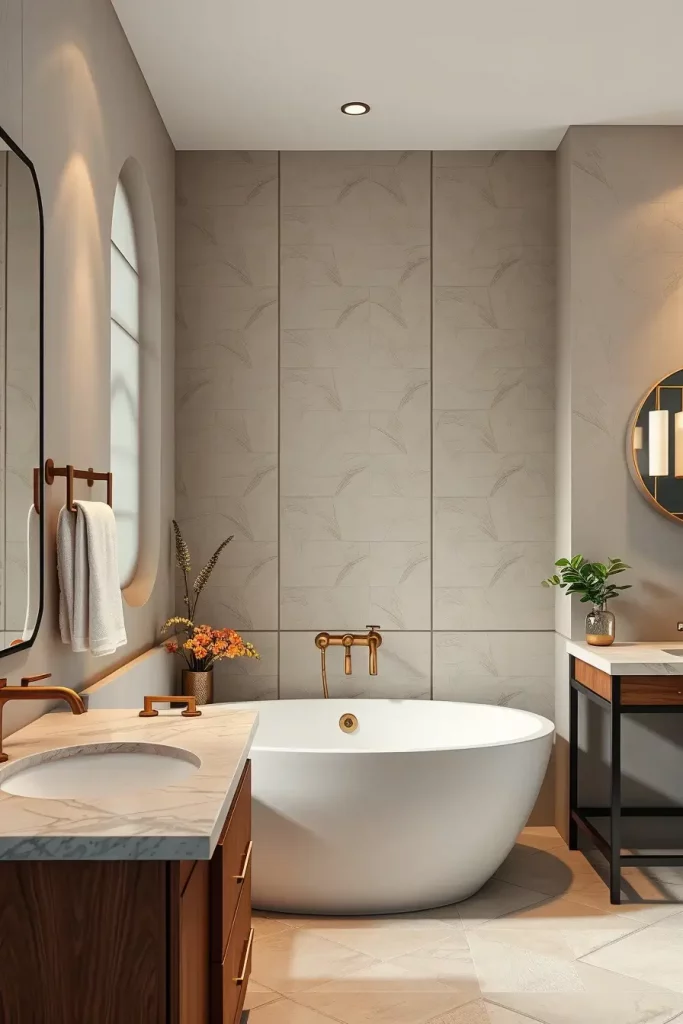
Consistent use of a single metallic finish throughout the bathroom creates harmony and sophistication. Opt for PVD-coated hardware to ensure durability against moisture and tarnishing.
Floating Shelves: Stylish and Functional Storage
Floating shelves offer versatile storage without occupying floor space. Narrow wood or glass shelves provide elegant platforms for folded towels, ceramics, or candles, enhancing both utility and decor.
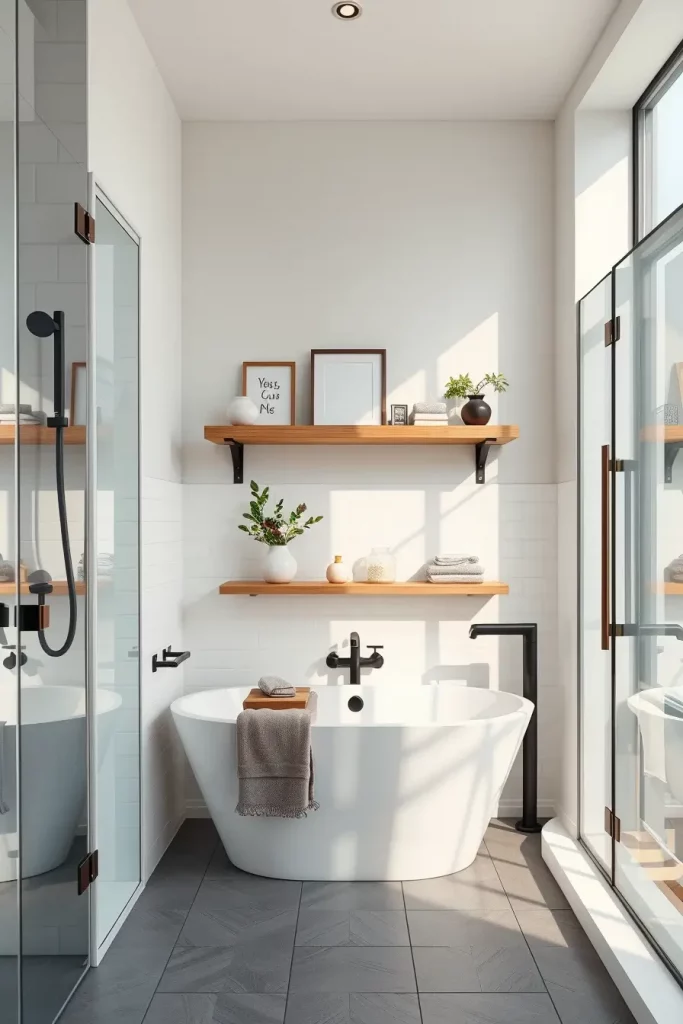
Coordinate shelf materials with other elements-oak shelves with oak-framed mirrors or black metal shelves with matching hardware-to unify the space. Limit items on each shelf to maintain openness and freshness. Adding subtle shelf lighting or polished glass edges can create an almost invisible effect.
Coordinated Toiletries: Streamlining Visual Clutter
Even small details like toiletries impact the minimalist vibe. Replace branded packaging with matching refillable containers in glass or ceramic, featuring neutral tones and simple pump tops or wooden lids. Organize these on trays or open shelves for easy access and visual harmony.
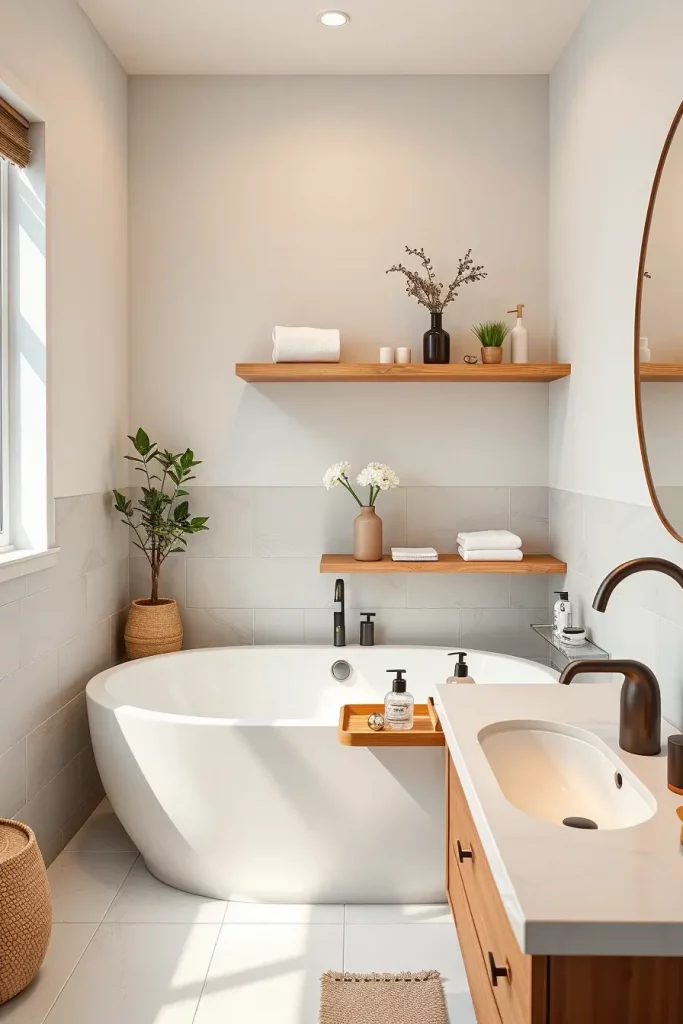
Choosing eco-friendly, locally sourced containers reduces plastic waste and adds a unique tactile element, enhancing both sustainability and style.
Concrete Elements: Urban Edge with Subtlety
Concrete accents introduce an industrial yet refined touch to minimalist bathrooms. Matte, raw textures add visual interest without overwhelming the space. Consider concrete sinks, half-walls, or floating shelves to maintain openness while adding architectural character.
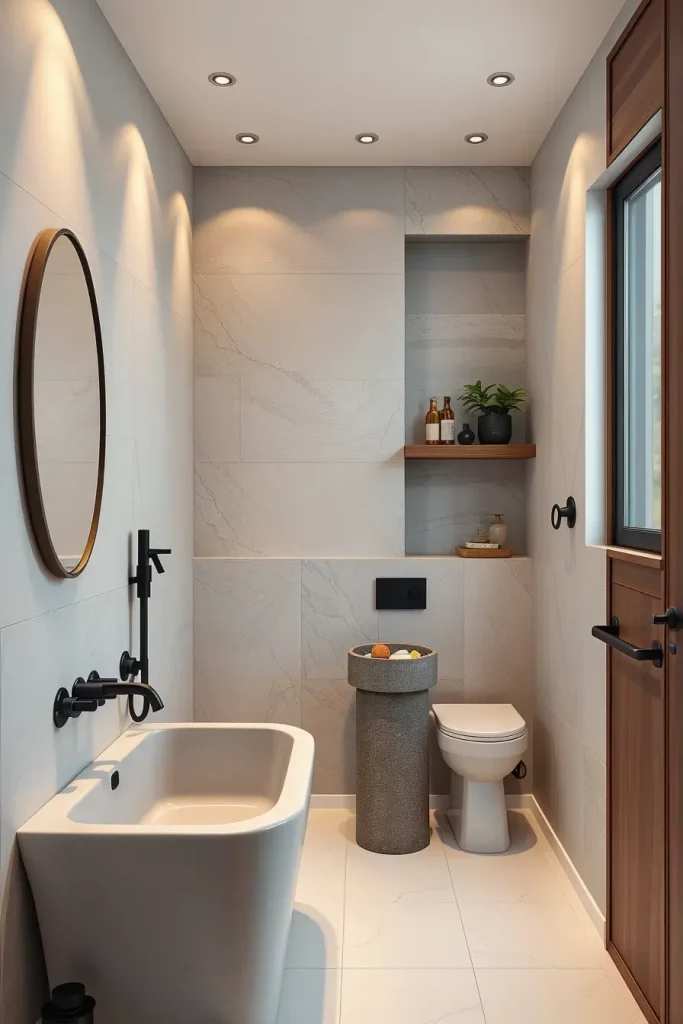
Pair concrete with light tiles and matte black hardware for a balanced, contemporary look. Soft lighting and warm wood elements counterbalance concrete’s coolness, creating a welcoming atmosphere. Frameless or underlit mirrors soften harsh lines, while neutral rugs add comfort.
Tailored Millwork: Seamless and Functional Integration
Custom millwork maximizes every inch of a small bathroom, delivering built-in cabinetry, wall paneling, and shelving that blend flawlessly with the room’s architecture. This approach eliminates visual clutter and enhances functionality.
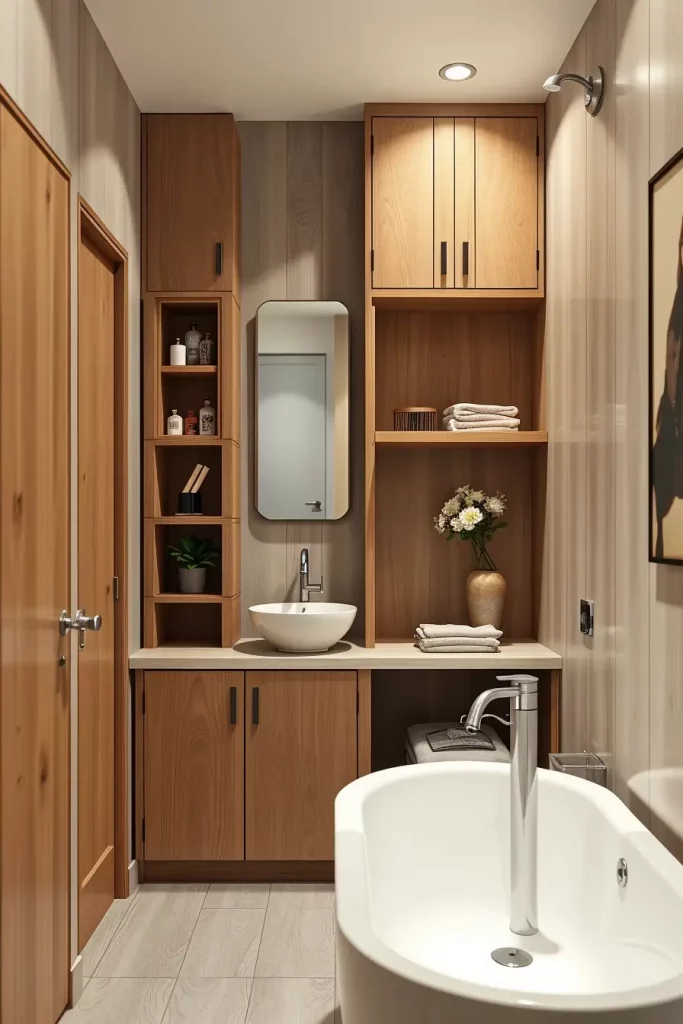
Incorporate push-latch systems and slatted wood panels in pale ash or bleached walnut finishes to maintain a serene, elevated aesthetic. Clients often remark on the spa-like elegance achieved through these tailored solutions.
Sheer Window Treatments: Privacy with Lightness
Minimalist bathrooms benefit from light, airy window treatments that provide privacy without blocking natural light. Sheer linen or cotton panels in soft beige or pale gray add warmth and softness, complementing muted color schemes and natural materials.
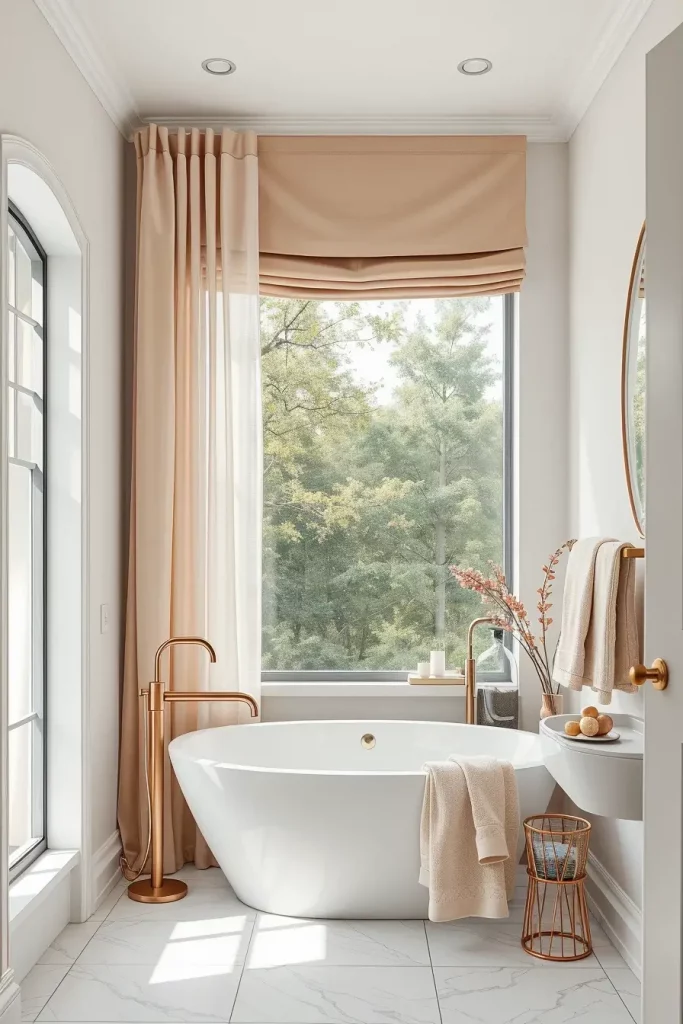
Roman shades made from textured sheer fabrics offer precise light control while preserving clean lines. Pairing these with neutral fabric stools or baskets softens the space’s edges and enhances comfort.
Personalized Accents Within a Restrained Palette
Minimalism doesn’t mean sacrificing personality. Introduce subtle personal touches by selecting a limited palette of accent colors-such as sage green or sandy beige-and incorporating them sparingly through decor, textiles, and artwork.
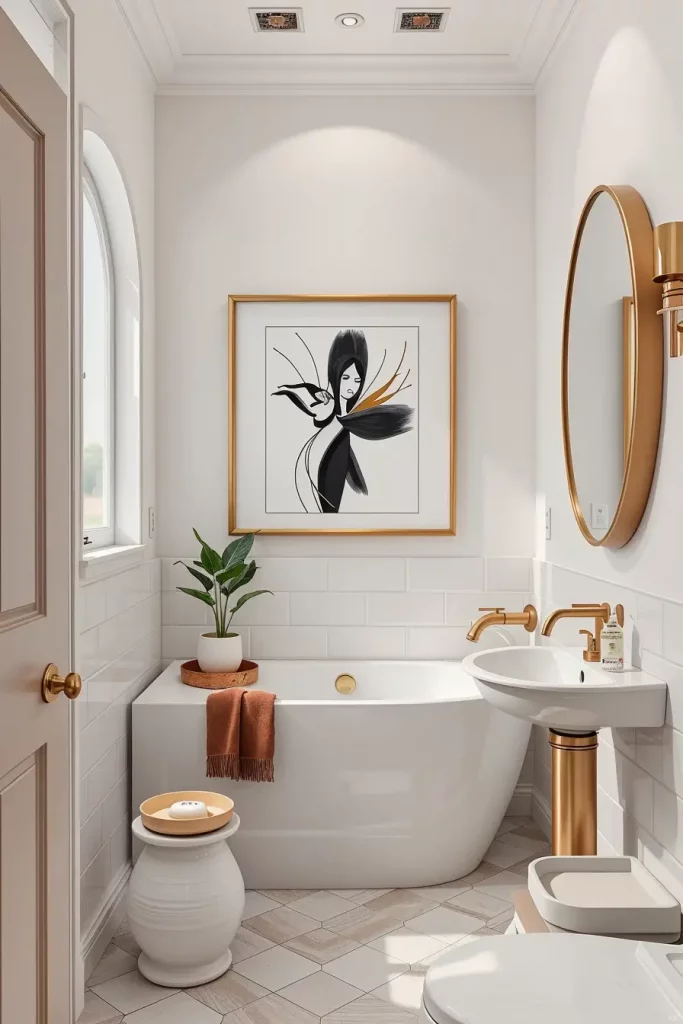
Display meaningful items like architectural sketches in thin brass frames or coordinate metallic accents across small tools and accessories to unify the space. Adding a scented candle or a handcrafted ceramic soap dish introduces artisanal charm, while a low-maintenance plant like a ZZ plant or pothos adds life without clutter.
For minimalist bathroom essentials and stylish fixtures, explore the latest selections on Amazon minimalist bathroom fixtures and floating vanities. For elegant lighting solutions, check out backlit mirrors and wall-mounted faucets to complete your minimalist bathroom transformation.