Smart Tips for Arranging Furniture in a Small Bathroom Without Losing Space or Sanity

Designing a compact bathroom can test your creativity and spatial awareness. Every bit of space matters, and a small misstep can quickly turn a charming nook into a cramped, uncomfortable area.
I’ve encountered bathrooms where maneuvering feels like a carefully choreographed routine. Fortunately, with thoughtful design and practical hacks, you can transform a tiny bathroom into a chic and airy retreat.
This article offers proven layout techniques and insightful tips drawn from actual bathroom renovations. Consider it a casual yet informative conversation.
One acquaintance even rearranged their vanity multiple times in a single day just to find the perfect fit (guilty as charged!).
Step 1: Thoroughly Understand Your Bathroom’s Dimensions
Measure meticulously to avoid costly errors
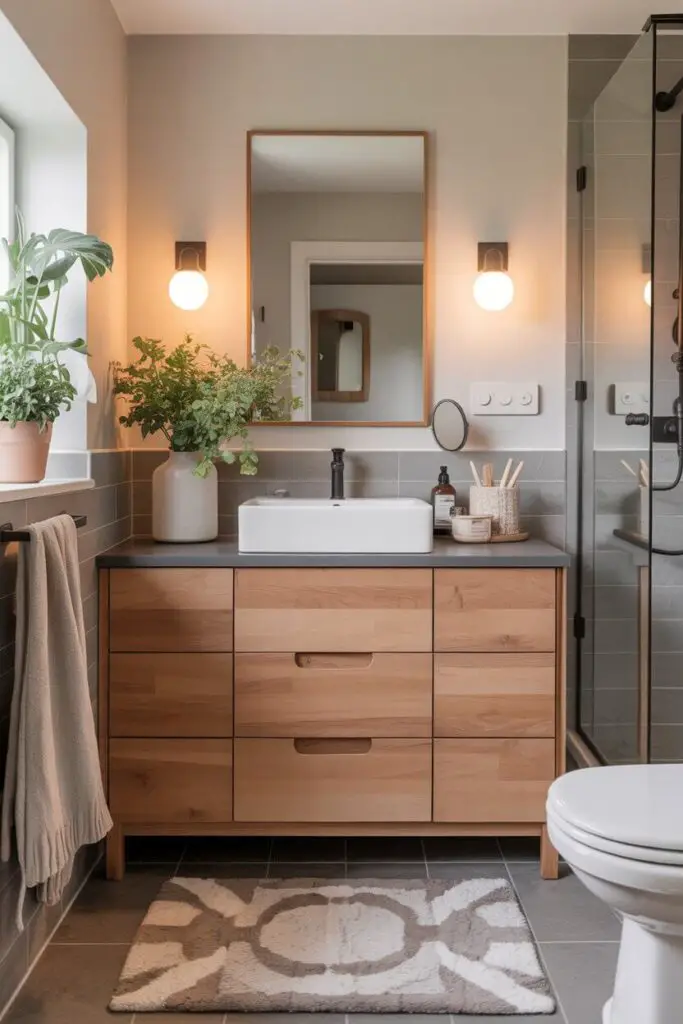
Accurate measurements are the foundation of any successful bathroom layout. Use a reliable tape measure to record every dimension: length, width, height, and the exact locations of doors, windows, and plumbing fixtures. Skipping this step often leads to awkward placements, like a vanity that blocks toilet access.
- Note clearance spaces for doors, drawers, and shower enclosures.
- Identify immovable features such as plumbing stacks and window positions.
- Create a scaled floor plan-even a simple sketch can prevent future headaches.
Insider tip: Always verify that the bathroom door swings freely without obstruction. I once had to switch a door’s swing direction because it blocked half the shower-definitely a lesson learned.
Step 2: Identify Essential Fixtures and Furniture
Focus on what truly matters
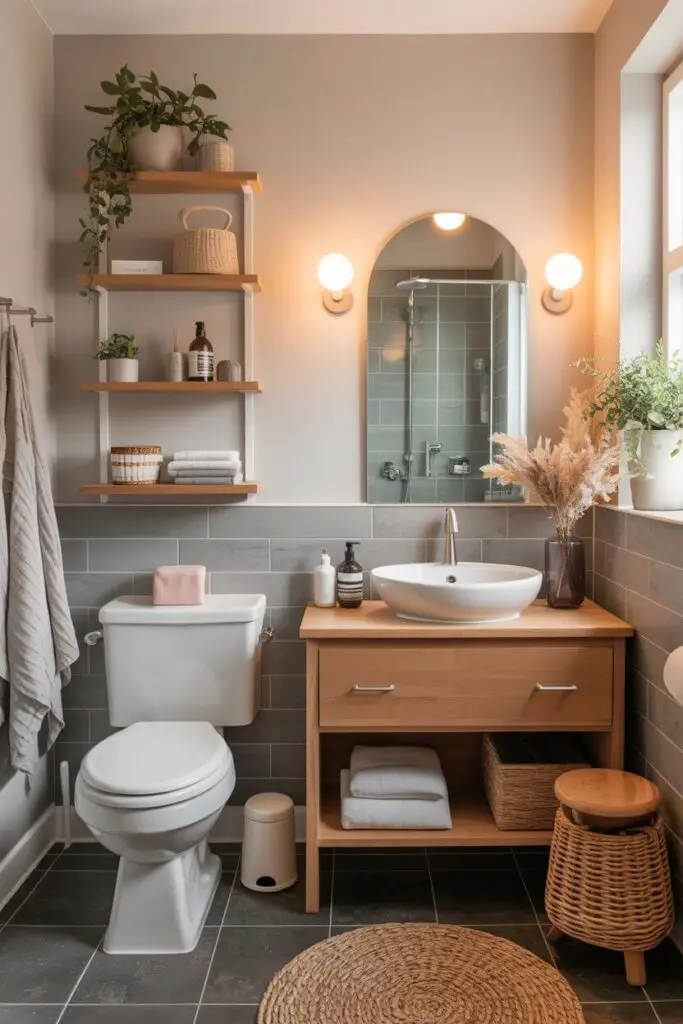
In limited spaces, every item must justify its presence. Begin with the core components: toilet, sink or vanity, and shower or bathtub. Only after these are positioned should you consider additional storage or seating.
Reflect on these questions:
- Would a compact wall-mounted or pedestal sink be more space-efficient than a full vanity?
- Could a corner shower or sink enhance movement and openness?
- Is it possible to replace a bulky cabinet with sleek floating shelves to save floor space?
Eliminate non-functional clutter
Items that serve only decorative purposes but consume valuable space should be reconsidered. In small bathrooms, functionality combined with style is the key to a harmonious design.
Step 3: Tailor Your Layout to Your Bathroom’s Shape
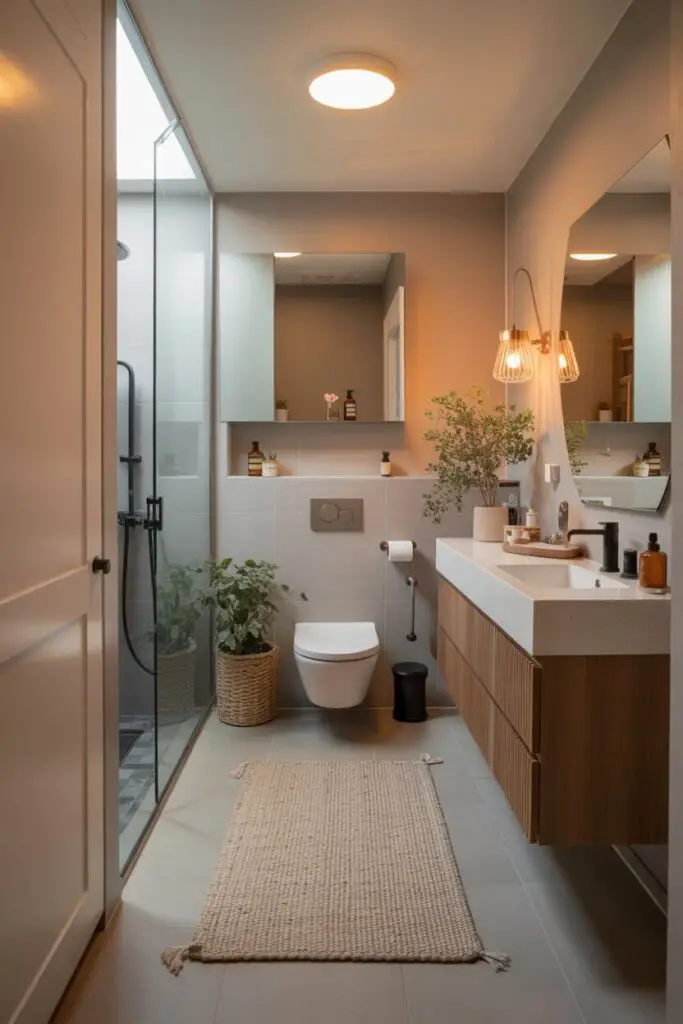
For elongated bathrooms
- Position the largest fixture, usually the vanity, along the longest wall to create balance.
- Place the toilet and shower opposite each other to maintain an unobstructed path.
For square-shaped bathrooms
- Arrange fixtures around the edges to keep the center open.
- Consider wall-mounted toilets or floating vanities to enhance the sense of space.
For irregular or angled layouts
- Utilize corners with corner sinks, angled showers, or triangular shelving units that fit where standard pieces won’t.
- Custom built-ins can cleverly conceal awkward spaces while adding storage.
Step 4: Optimize Visual Flow and Sightlines
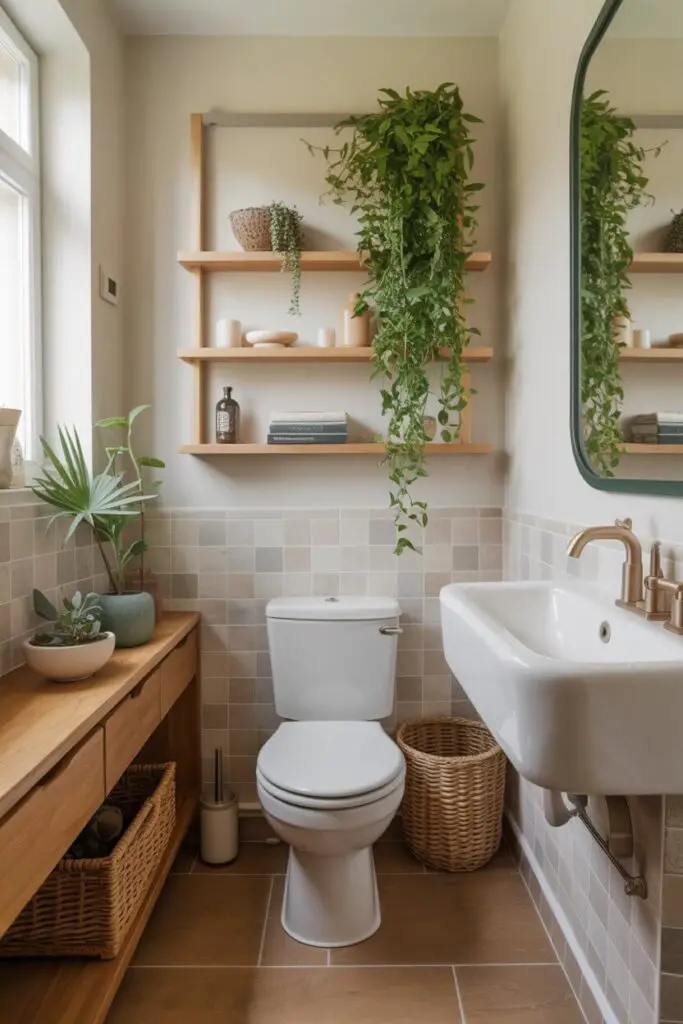
The first impression upon entering your bathroom is crucial. Place visually lightweight items in direct view and tuck bulkier pieces out of immediate sight.
- If the toilet is unavoidable in the main line of sight, soften its presence with a narrow shelving unit or decorative plants above it.
- Position mirrors to reflect natural light or open areas rather than cluttered spots.
Step 5: Maximize Vertical Space for Storage and Style
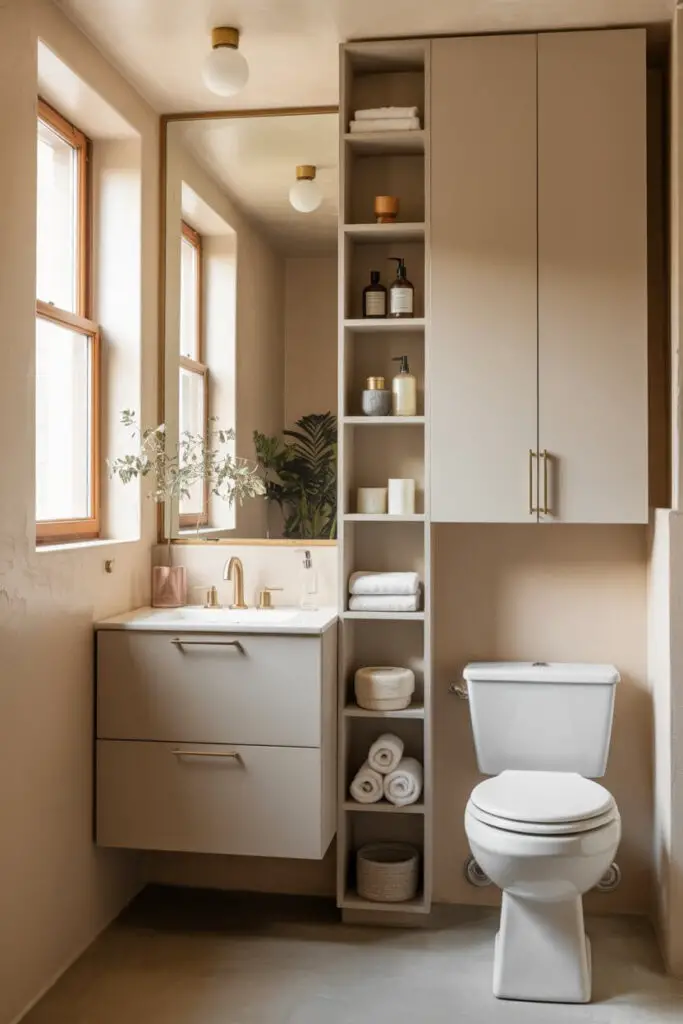
Choose wall-mounted options
- Floating vanities free up floor area, making the room feel more expansive.
- Wall-mounted cabinets or shelves above the toilet provide storage without encroaching on walking space.
Incorporate tall, narrow storage
- A slim tower cabinet tucked into a corner can hold towels and toiletries without overwhelming the room.
- Over-the-door organizers offer practical storage solutions, especially for renters or quick updates.
Step 6: Maintain Clear and Comfortable Pathways
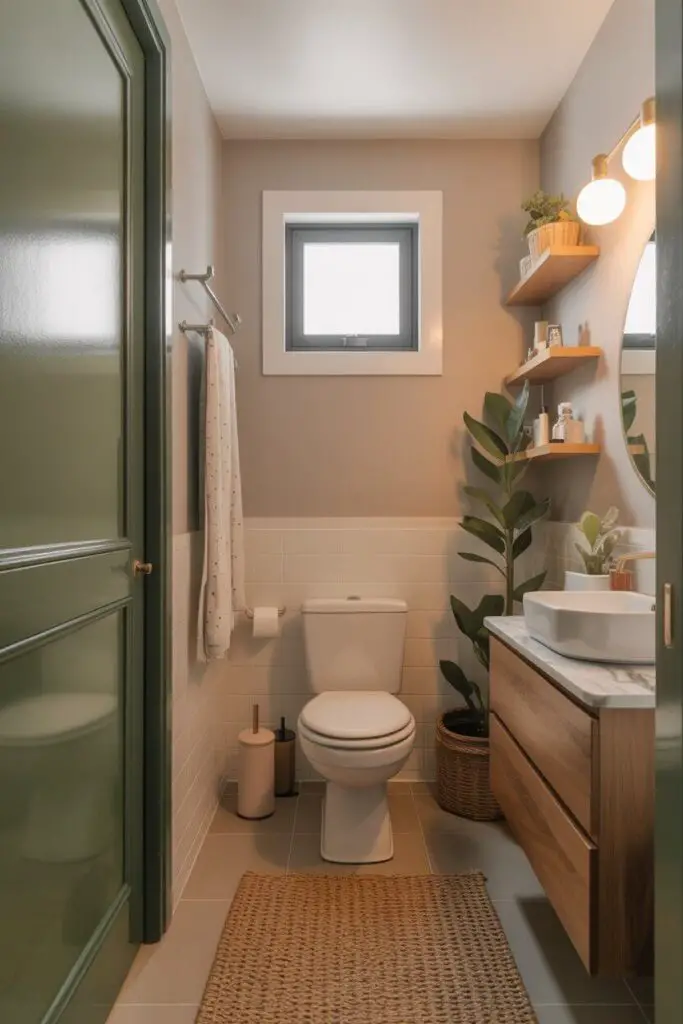
Unobstructed movement is vital in compact bathrooms. Avoid placing furniture that blocks access or narrows walkways.
- Ensure at least 24 inches (60 cm) of clearance in front of the toilet and sink for comfortable use.
- Consider installing a sliding barn door or pocket door to save space usually taken by swinging doors.
Step 7: Organize Based on Usage Frequency
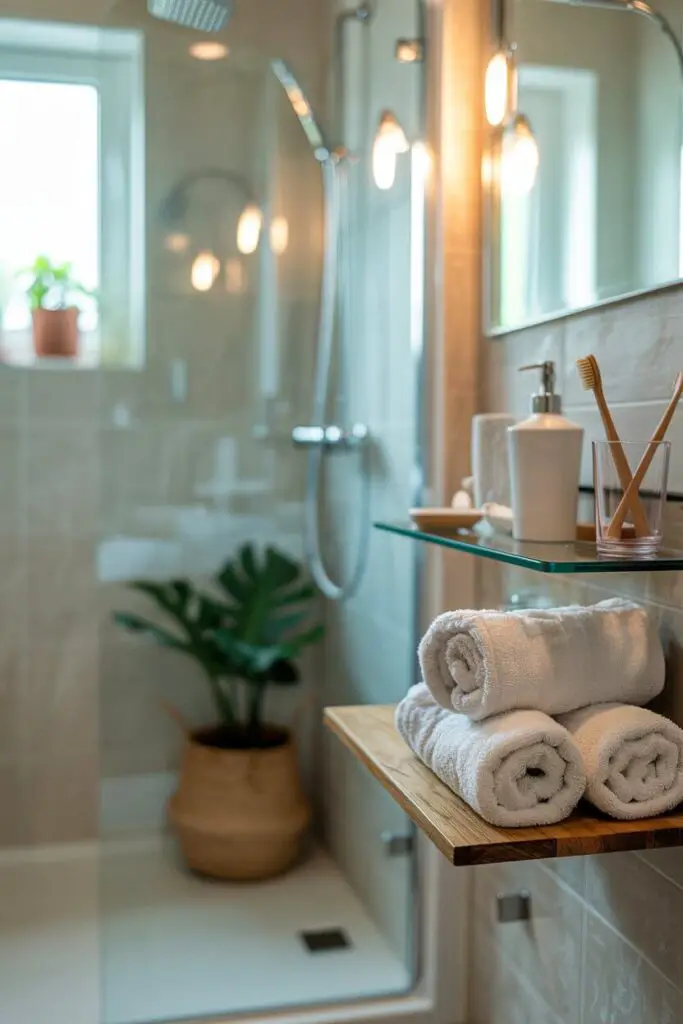
Keep daily essentials within easy reach
Store frequently used items like toothbrushes, hand towels, and soaps close to where you use them. For instance, keep extra towels near the shower rather than across the room.
Place infrequently used items higher or farther away
Reserve upper shelves or less accessible cabinets for backup toiletries or seasonal products.
Step 8: Master the Art of Corner Utilization
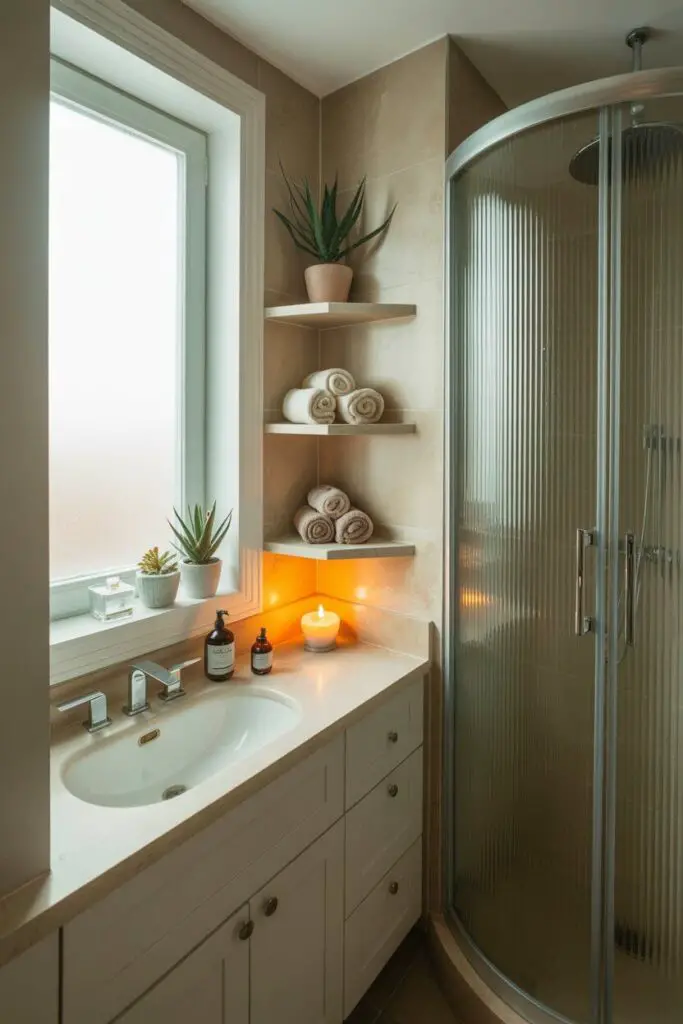
Corners often go overlooked but are invaluable in compact bathroom designs.
- Corner sinks can free up valuable wall space for other uses.
- Curved corner showers optimize floor area and improve movement flow.
- Triangular corner shelves provide charming spots for small plants, candles, or neatly folded towels.
Step 9: Furniture Choices That Maximize Small Bathrooms
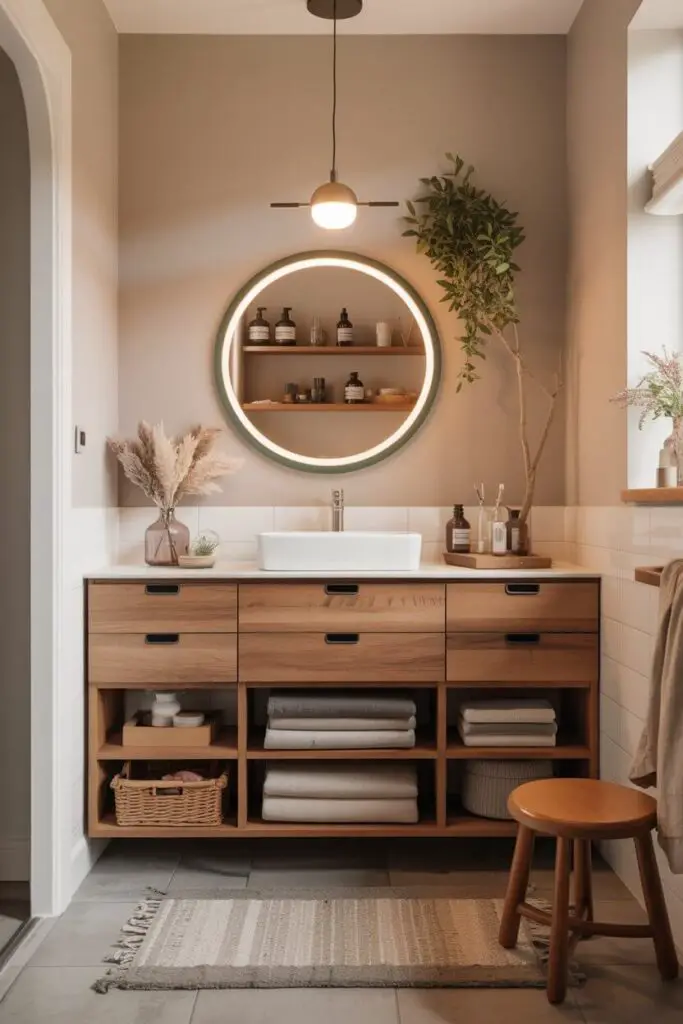
Choose slim-profile vanities
Opt for vanities with a depth of around 40-45 cm instead of the usual 50-60 cm to save space without compromising usability.
Multi-functional furniture
- Vanities with integrated drawers and open shelves help conceal clutter while allowing display of decorative items.
- Storage stools serve as both seating and hidden storage for towels or toiletries.
Transparent storage solutions
Use acrylic or glass shelves to maintain an open, airy feel while providing practical storage.
Step 10: Optimize the Toilet Zone
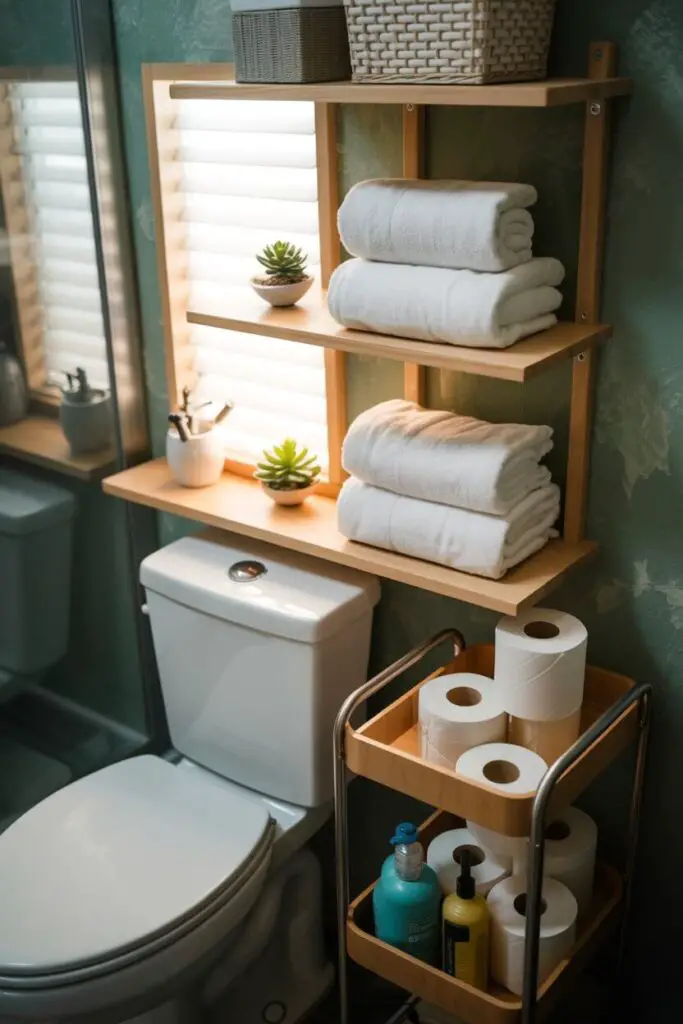
- Install over-toilet shelving to hold tissues, decor, or small essentials.
- If space permits, a slim rolling cart beside the toilet is perfect for extra toilet paper and cleaning supplies.
- Consider wall-mounted toilets to reclaim floor space if your budget allows.
Step 11: Harness the Power of Mirrors
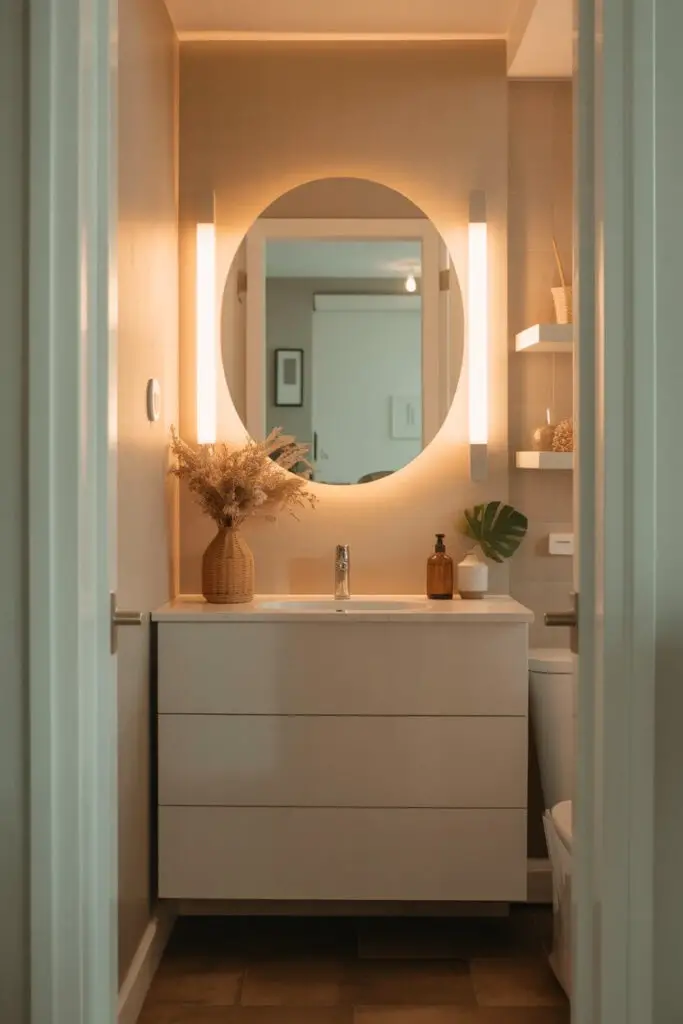
Large mirrors can visually expand your bathroom by doubling the perceived space. Position them opposite windows or light fixtures to reflect and amplify light.
When storage is limited, mirrored medicine cabinets offer a practical two-in-one solution.
Step 12: Align Furniture Placement with Lighting
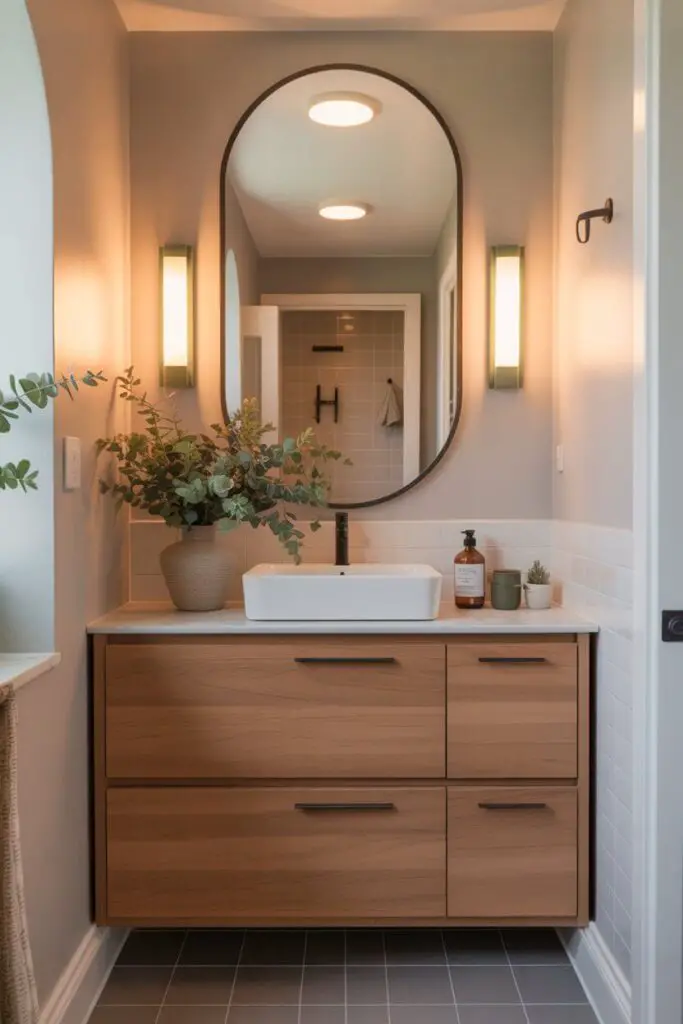
Effective lighting enhances both function and ambiance, so arrange your fixtures accordingly.
- Place mirrors near your primary light source, whether natural or artificial, for optimal brightness.
- Install wall sconces beside mirrors instead of overhead lights to reduce unflattering shadows on your face.
Step 13: Create the Illusion of Space Without Structural Changes
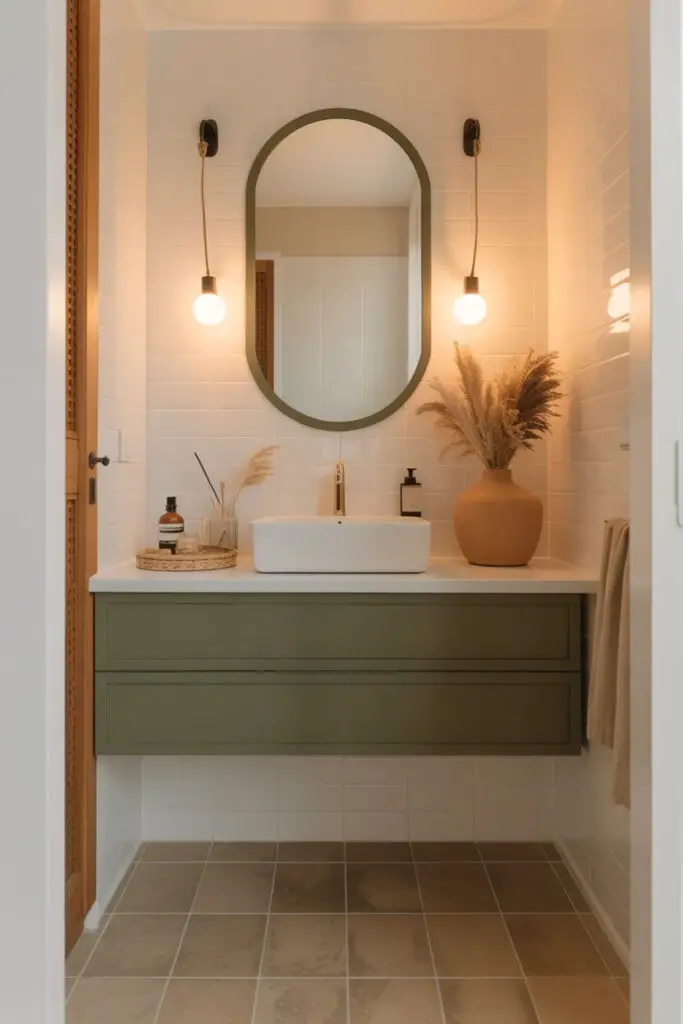
Smart color schemes
Light hues such as whites, creams, and soft greys keep the room feeling open and airy. Don’t shy away from contrast-a dark vanity against a pale wall adds dimension and sophistication.
Strategic tile patterns
Installing floor tiles diagonally can visually widen the space, while vertical wall tiles draw the eye upward, making ceilings appear taller.
Step 14: Prioritize Comfort and Warmth
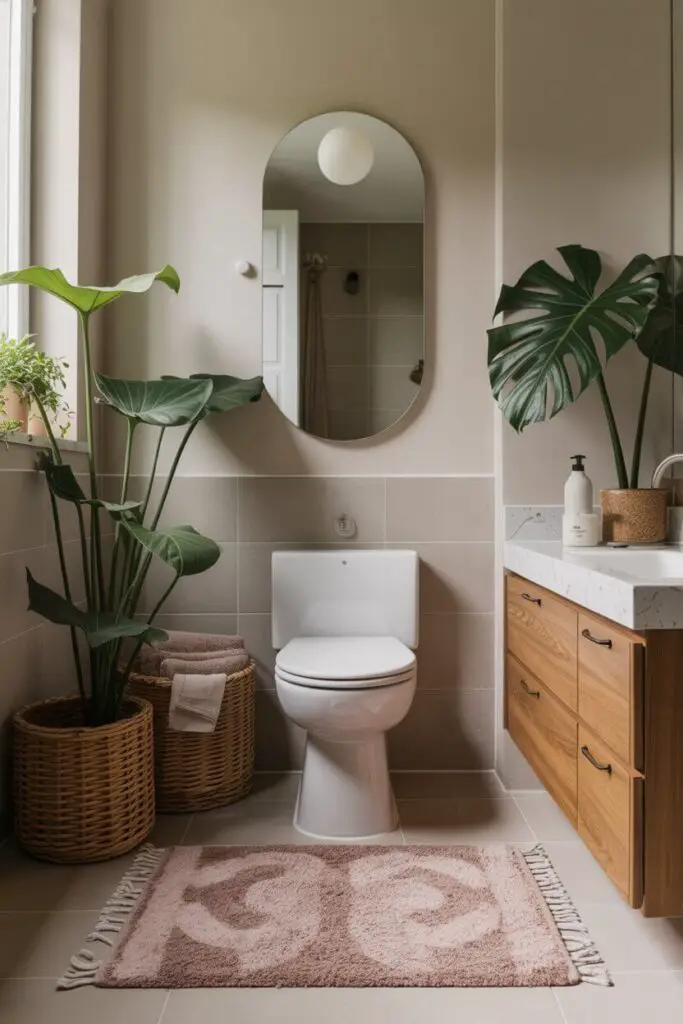
Even the smallest bathroom can exude a sense of luxury.
- Keep plush towels and soft textiles visible to add warmth and texture.
- Incorporate a small, well-sized rug or bath mat to anchor the space without overwhelming it.
Example Layouts for Different Bathroom Shapes
Layout A: Narrow and Long
- Wall-mounted sink along one long wall, toilet adjacent, with slim storage opposite.
- Sliding glass shower door at the far end to maximize space.
Layout B: Nearly Square
- Floating vanity centered on a wall, toilet beside a glass-enclosed shower.
- Tall storage unit tucked neatly into a corner.
Layout C: Irregular Angles
- Corner vanity paired with an angled shower to optimize floor space.
- Custom shelving built into unusual nooks for added storage.
Common Pitfalls to Avoid
- Overloading the space with bulky storage-remember, less is more.
- Neglecting door swing clearance-always verify door movement to prevent blockages.
- Positioning the vanity directly opposite a swinging shower door-this creates awkward traffic jams.
- Ignoring vertical storage opportunities-you could be missing out on valuable space.
Simple Upgrades for Immediate Impact
- Replace a bulky vanity with a floating sink to open up floor space.
- Swap an opaque shower curtain for a clear glass panel to enhance sightlines.
- Add a mirror above the toilet to reflect more light and create depth.
Personal Tip: Use the “Floor Tape” Mock-Up Technique
Before finalizing your layout, try marking furniture footprints on the floor with masking tape. This helps you visualize space usage and avoid bumping into fixtures.
Trust me, it’s far easier to adjust tape lines than to move heavy furniture later!
Closing Thoughts
Arranging furniture in a small bathroom requires a thoughtful balance of priorities, creativity, and practical design. It’s not just about fitting pieces into a limited area-it’s about crafting a space that feels comfortable, efficient, and stylish.
By carefully measuring, focusing on essentials, leveraging corners and vertical space, and maintaining clear pathways, even the tiniest bathroom can become a functional and inviting sanctuary.
So grab your tape measure, draft your plan, and start experimenting with layouts.
And remember: if it feels cramped during your mock-up, it will feel cramped in reality. Make adjustments now, and you’ll thank yourself later. 🙂