Why is it that so many people miss the mark when it comes to “rustic” decor?
Often, a few exposed beams or a sliding barn door are mistaken for authentic rustic style. Adding shiplap to a wall and calling it rustic is a superficial approach. True rustic design transcends mere decoration-it’s an ambiance that resonates with the environment, whether that’s a vast desert or a lush woodland.
My approach to design draws inspiration from two distinct yet harmonious traditions: the sunlit courtyards of Middle Eastern architecture and the bright, practical homes of Scandinavia. Both cultures excel at utilizing local resources, respecting their climates, and embracing simplicity paired with genuine materials. Authentic rustic style emerges where these philosophies intersect. It’s about the essence of a space-the understated warmth in minimalism, the narrative embedded in textures, and the thoughtful intelligence behind every design choice. Rustic isn’t about mimicking a farmhouse; it’s about crafting a timeless refuge that feels rooted and uniquely yours.
Let’s move beyond clichés. Here’s a guide to designing a rustic bathroom that truly resonates.
Building the Rustic Core
The foundation is crucial. Without a solid base, no amount of decorative charm can compensate. This foundation isn’t about accessories; it’s about light, color, and purposeful design. It’s the subtle groundwork that allows every other element to harmonize.
1. Choose an Earth-Inspired Color Scheme
Warm neutrals are often recommended-and rightly so-but don’t settle for a generic beige swatch. Instead, consider how natural light interacts with your bathroom and select hues drawn from nature’s palette. For example, in intense sunlight, stark white can feel harsh and clinical. Opt for softer tones reminiscent of plaster, tadelakt finishes, or pale sand shades that absorb and diffuse light gracefully.
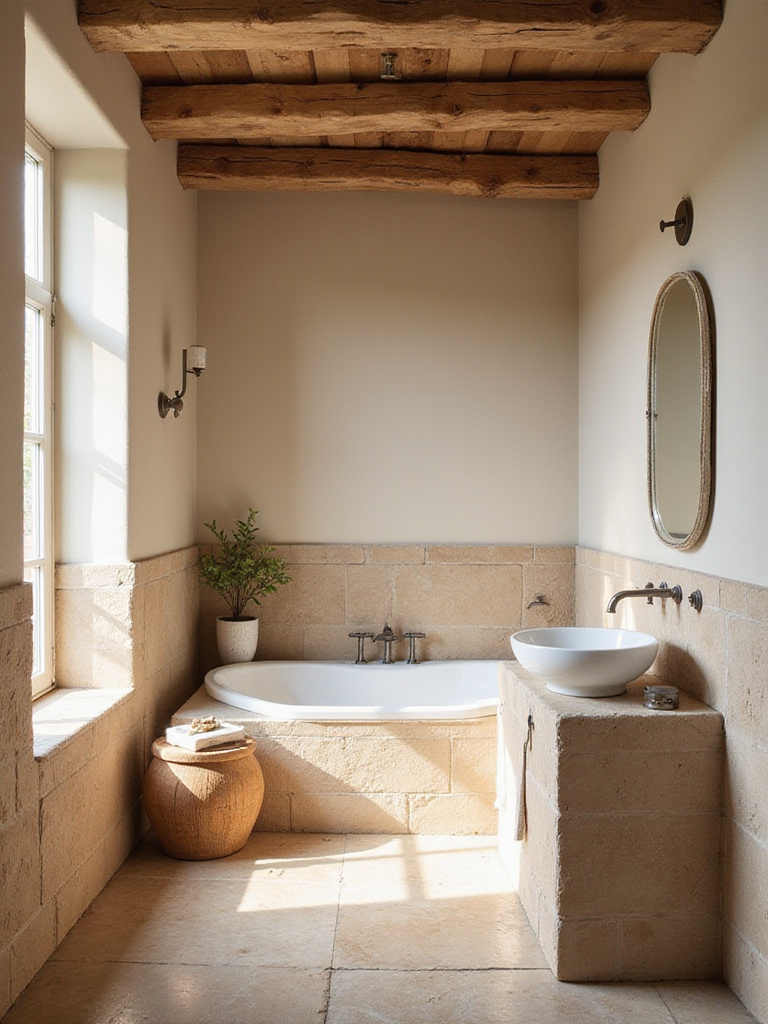
From experience, a “perfect greige” can appear dull under certain lighting. A custom lime wash with subtle tonal shifts can breathe life into walls, offering a velvety texture that feels both ancient and contemporary. Think about colors inspired by stone, clay, sun-bleached timber, and dried grasses-these natural hues have endured through time and provide a serene backdrop that highlights your authentic materials.
2. Harness Natural Light as a Design Element
Even the finest materials lose their charm without proper lighting. Scandinavian homes maximize scarce sunlight with expansive windows, while Middle Eastern designs use courtyards and intricately screened openings (like mashrabiya) to sculpt and soften light. The goal is not just to have windows but to artfully control the light entering your space.
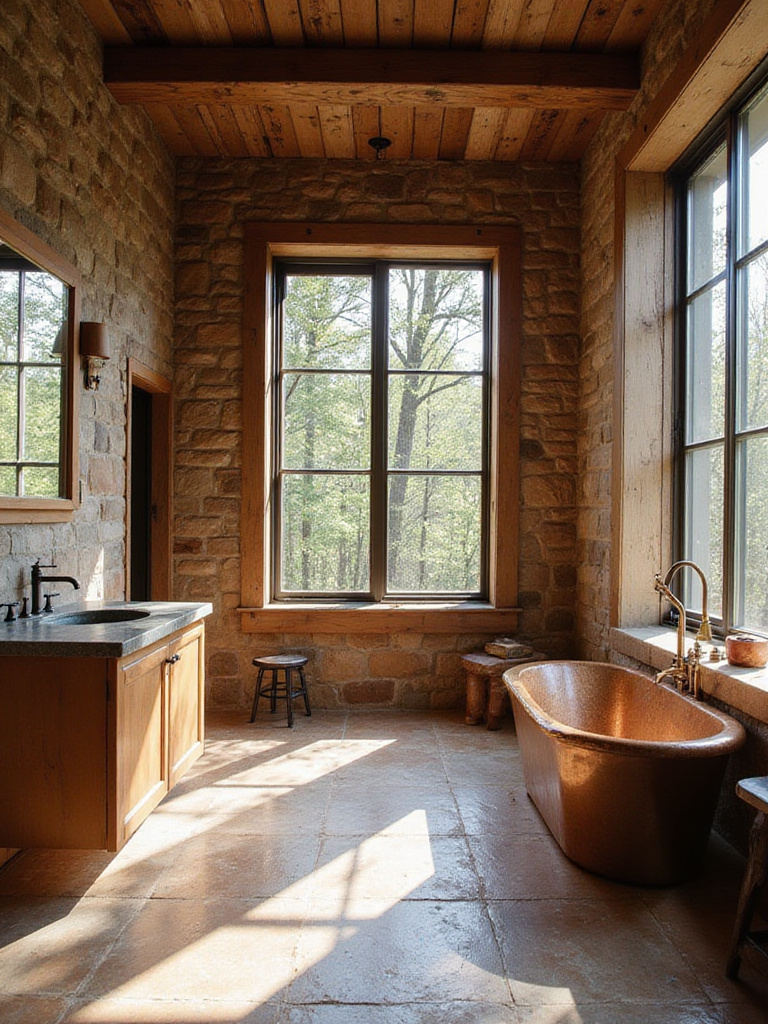
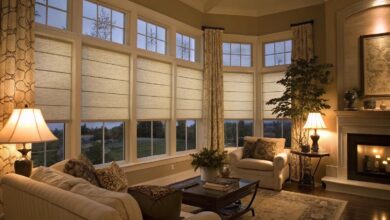
Instead of defaulting to frosted glass for privacy, consider high clerestory windows that admit light while maintaining seclusion, or linen shades that filter glare and add texture. In one desert project, a window faced a blank wall, so we created a private courtyard with an olive tree and white gravel outside. The reflected light and shifting shadows transformed the view into a living artwork.
Mirrors amplify light-positioning a large, simple mirror opposite a window can double the brightness, making compact bathrooms feel spacious and vibrant.
3. Craft Your Own Rustic Narrative
Rather than confining yourself to labels like “farmhouse,” “lodge,” or “cabin,” focus on the story your space tells. Are you seeking a connection to forest surroundings? Then textures and tones reminiscent of a cabin might suit you. Or perhaps you desire a tranquil urban retreat, where minimalist shapes and tactile natural materials dominate.
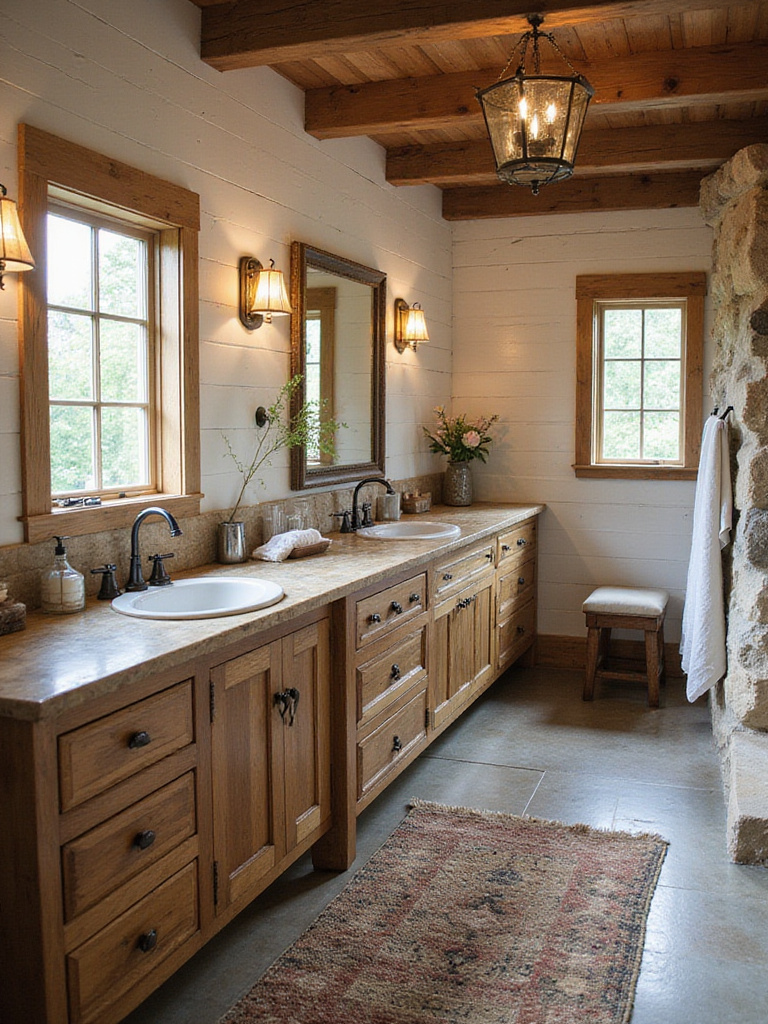
My clients often embrace a philosophy blending Scandinavian minimalism’s clean lines with the warm, earthy textures of desert architecture-resulting in a “warm minimalism.” Instead of fixating on style categories, ask yourself: How do I want to feel here? Grounded? Cozy? Serene? That emotional compass will guide your design choices more authentically than any label.
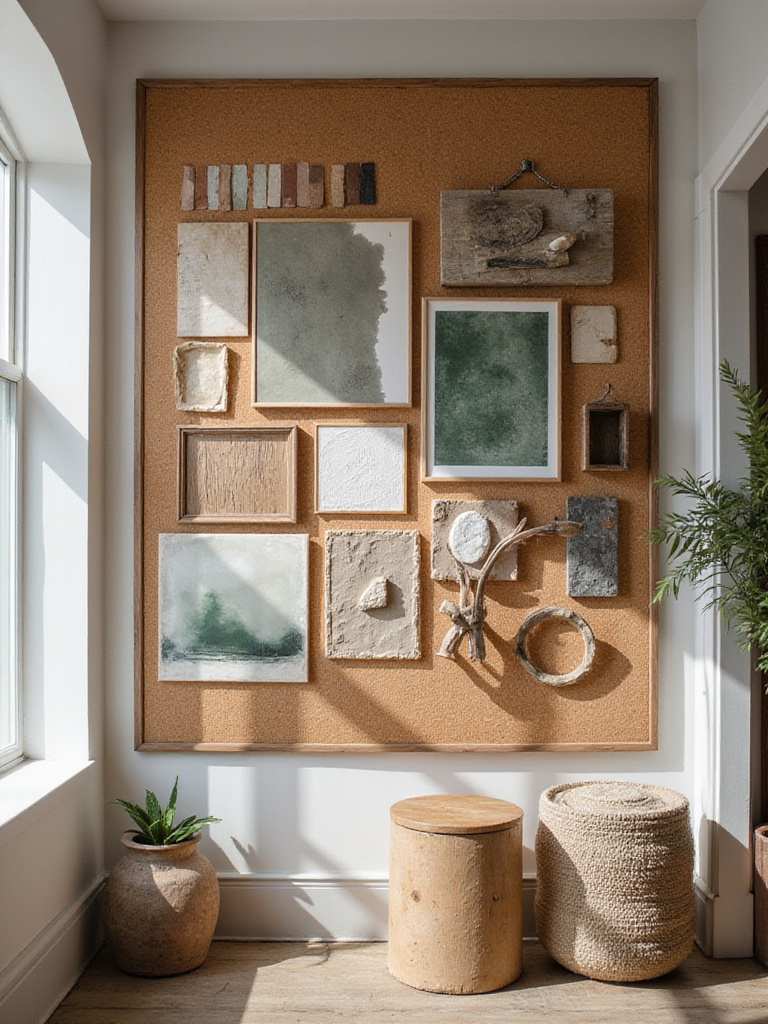
4. Assemble a Tangible Mood Board
While digital inspiration boards are helpful, rustic design thrives on tactile experience. Gather physical samples-tiles, wood chips, fabric swatches, metal hardware, paint cards-and arrange them together. Observe how they transform under morning and evening light, and feel their textures. This hands-on approach reveals unexpected harmonies or clashes, preventing costly mistakes and ensuring a cohesive, intentional outcome.
5. Design for Enduring Practicality
Both Scandinavian and Middle Eastern traditions prioritize function alongside beauty. In bathrooms, this means considering ventilation to protect wood and stone from moisture, and planning storage that conceals everyday clutter, allowing natural materials to shine.
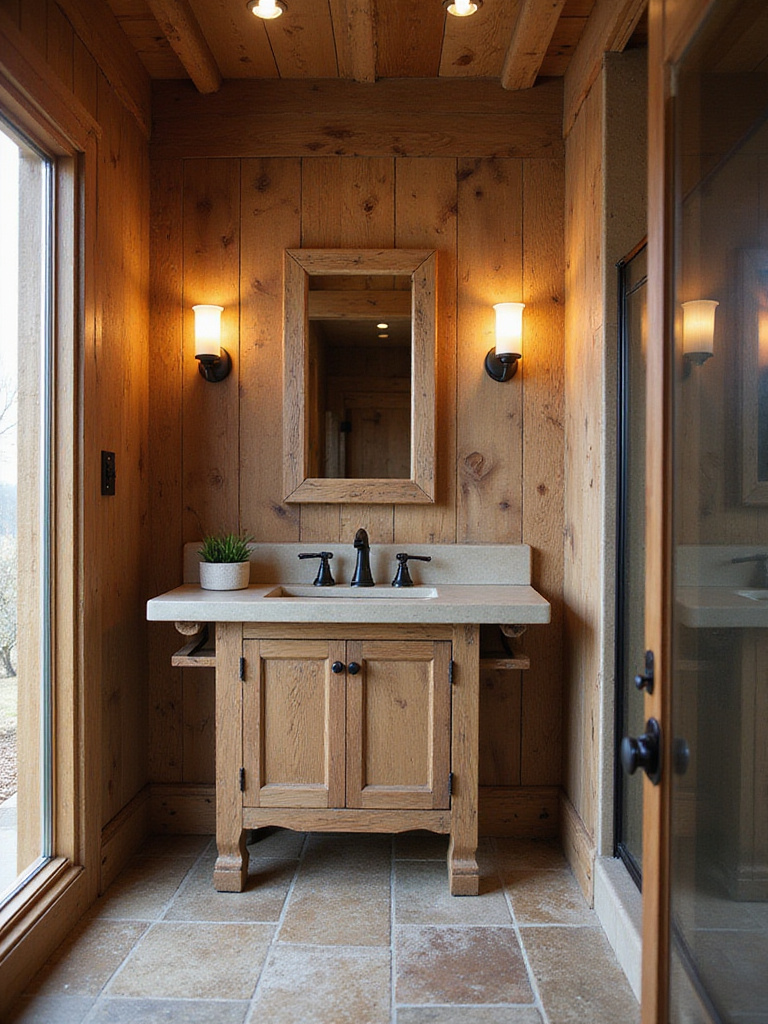
Consider ergonomics early: where will towels dry best? Is the vanity height comfortable? Is lighting positioned to minimize shadows at the mirror? Incorporating niches in shower walls-an idea inspired by ancient hammams-provides seamless storage without clutter. Prioritizing comfort and usability ensures your rustic bathroom is as enjoyable daily as it is visually stunning.
Incorporating Genuine Rustic Materials
Now comes the soul of your space: the materials. Think of this as composing with texture, history, and light rather than mere decoration.
6. Employ Reclaimed Wood Thoughtfully
Reclaimed wood epitomizes rustic charm, but moderation is key. A full wall of dark barn wood can overwhelm a small bathroom. Instead, highlight a single beam overhead, a floating shelf of sun-bleached wood, or a vanity countertop that showcases nail holes and saw marks, sealed for durability.
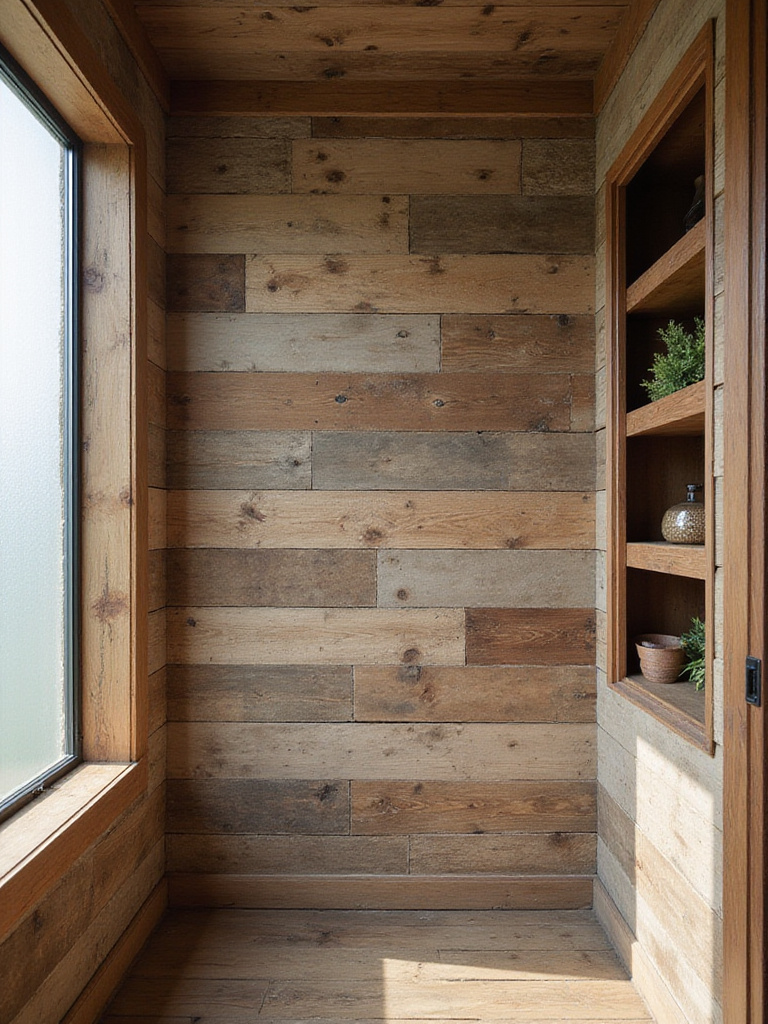
Choose wood with a story-like salvaged timber from an old water tower, subtly referencing the importance of water in arid regions. This imbues your space with authenticity and a sense of place.
7. Anchor Your Design with Stone
While wood adds warmth, stone conveys permanence and earthiness. Beyond countertops, consider shower floors of smooth river pebbles for a tactile experience, or textured slate and travertine backsplashes that play with light throughout the day.
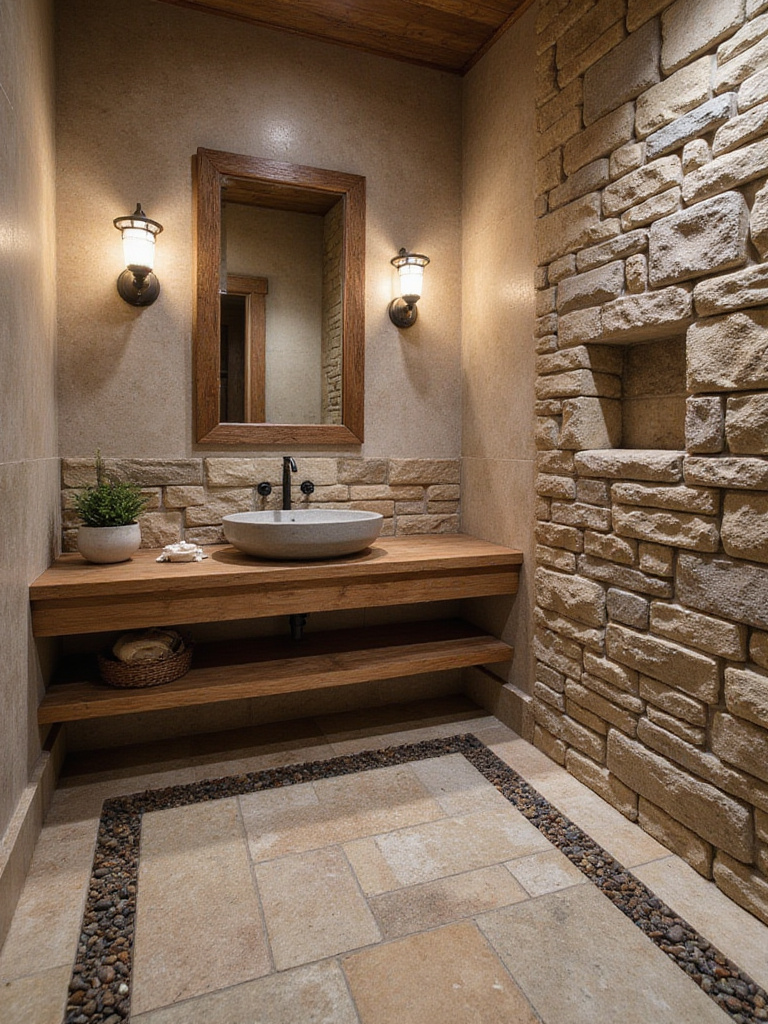
Select stones suited to your climate and moisture levels. In warmer areas, lighter stones like travertine or limestone stay cool underfoot. A carved limestone sink can serve as a sculptural centerpiece, blending seamlessly with wood and plaster surroundings.
8. Opt for Metals That Age Gracefully
Rustic doesn’t mean defaulting to oil-rubbed bronze. Instead, embrace “living finishes” like unlacquered brass, which starts bright and warms with use, developing a unique patina that tells your story.
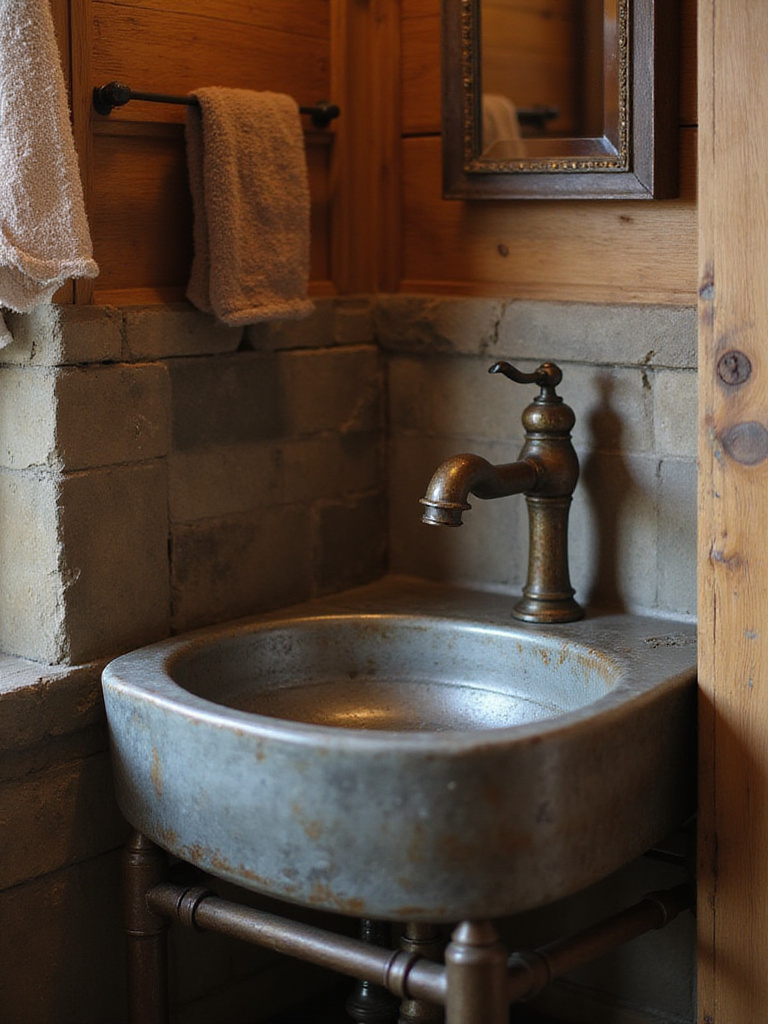
Matte black fixtures offer a sleek, modern contrast to natural textures without the coldness of chrome. Avoid overly polished or plastic-coated metals; instead, choose substantial pieces that will age alongside your wood and stone.
9. Incorporate Exposed Brick with Caution
Exposed brick adds texture and history but can act as a thermal mass, absorbing and radiating heat-potentially overheating your bathroom if placed on sun-facing walls.
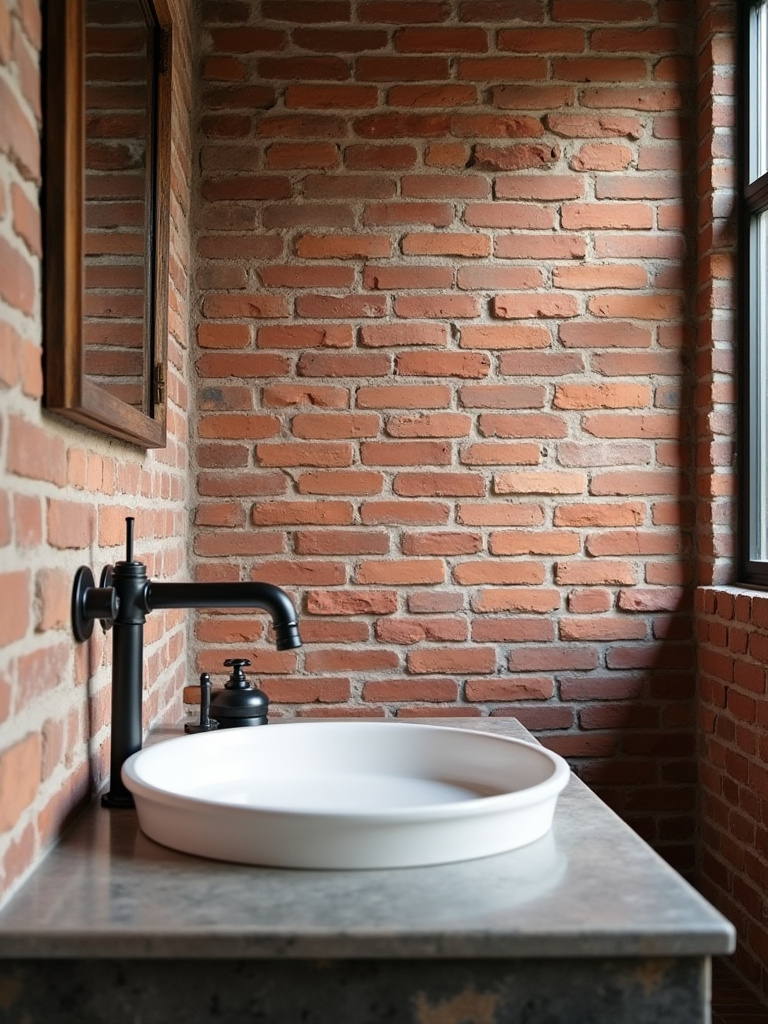
Instead, use brick as an interior accent or opt for Moroccan Zellige tiles-handmade glazed clay tiles with subtle variations and a light-reflecting sheen that suit bathrooms beautifully. A wall of white Zellige can shimmer with life, adding movement and depth.
10. Modernize Wrought Iron with Sleek Lines
Forget heavy, ornate wrought iron. Embrace slender, minimalist black iron inspired by Scandinavian and Middle Eastern designs. Think thin-framed mirrors or simple, elegant light fixtures that emphasize strength and simplicity over decoration.
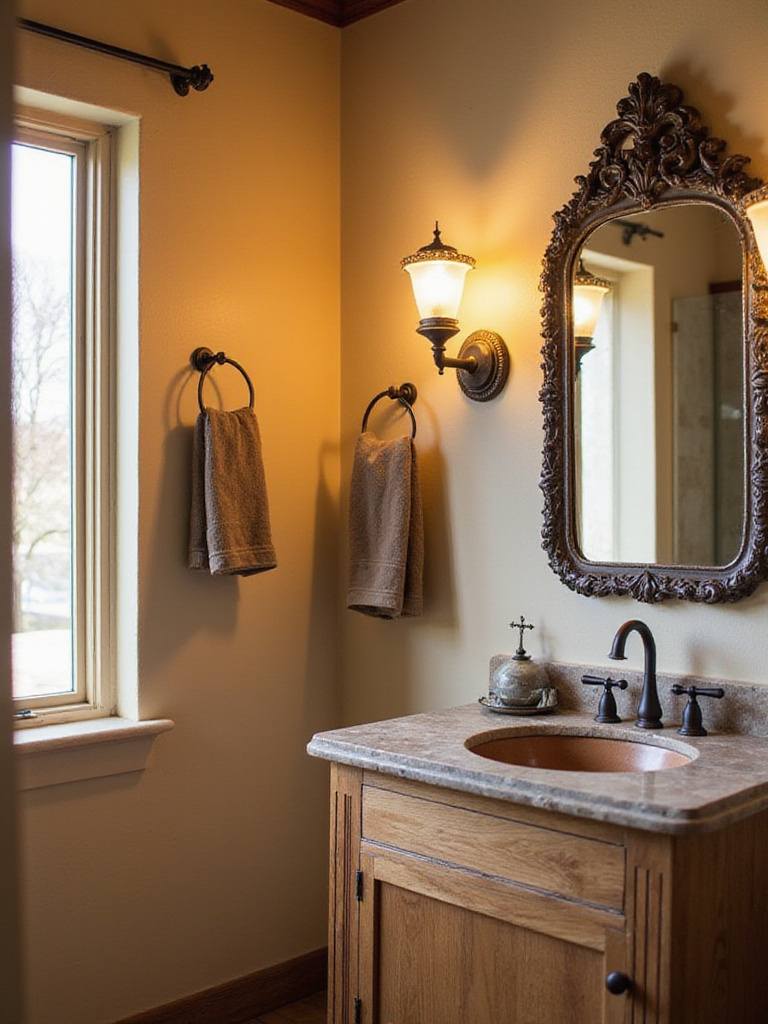
Custom ironwork can elevate furniture-like black iron legs on a light wood vanity-adding refinement while maintaining rustic integrity.
11. Introduce Natural Fibers for Comfort
Wood, stone, and metal can feel austere without softening elements. Layer in natural textiles like thick cotton or wool bath mats and absorbent linen towels to create warmth and tactile contrast.
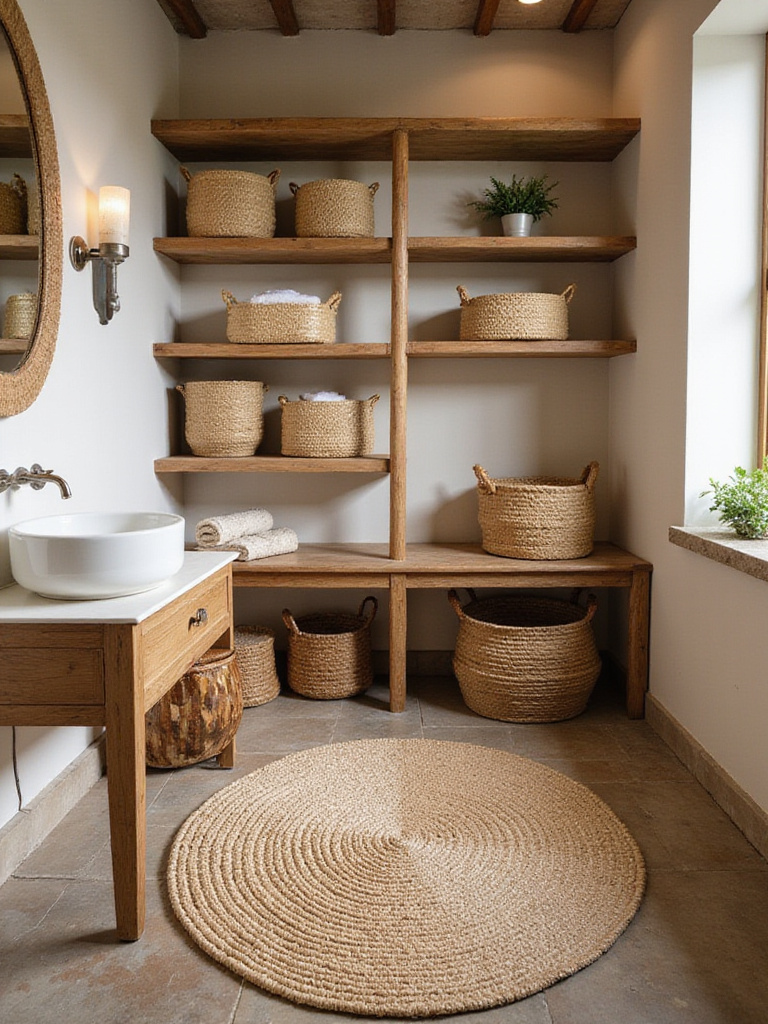
Woven baskets made from seagrass or palm leaves provide organic storage for towels or toiletries, balancing the room’s linear elements with soft, natural shapes. A simple addition like a large woven basket and a plush rug can transform a cold bathroom into a cozy retreat.
Choosing Essential Rustic Bathroom Fixtures
Fixtures are both functional and aesthetic anchors. Select pieces that feel sculptural and timeless.
12. Ground the Space with a Subtly Distressed Vanity
Distressed doesn’t mean overdone. Seek vanities crafted from single wood slabs showcasing natural grain, knots, or live edges. Alternatively, floating vanities made from sun-bleached wood open up the room while adding warmth.
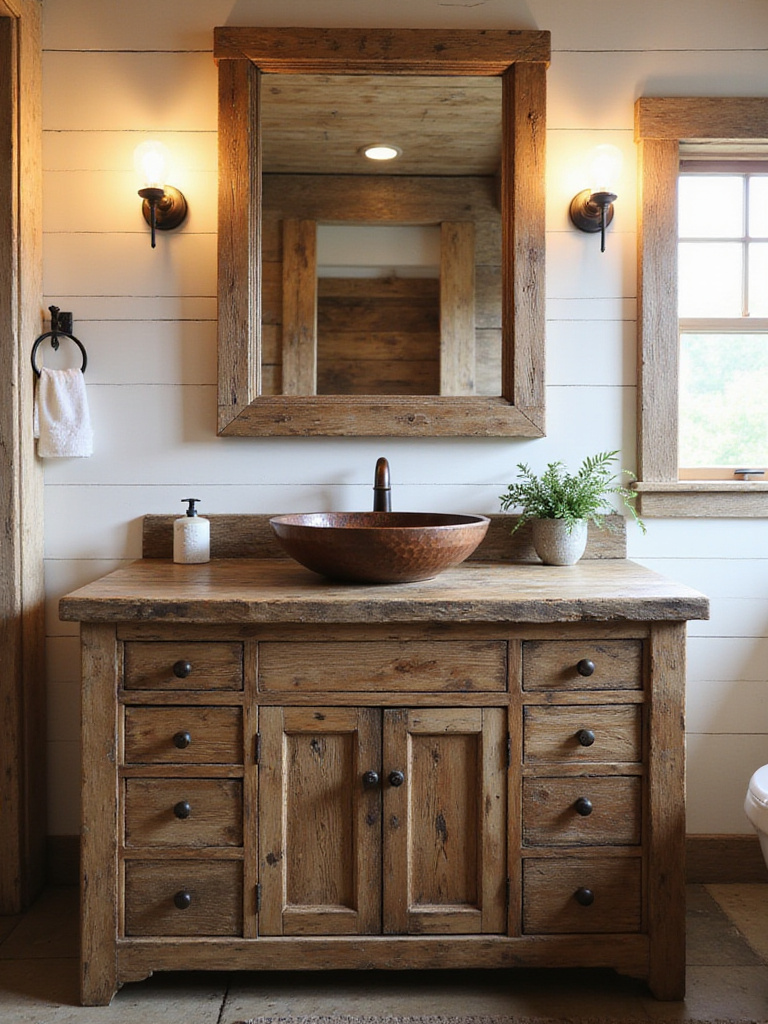
13. Select a Sink That Doubles as Art
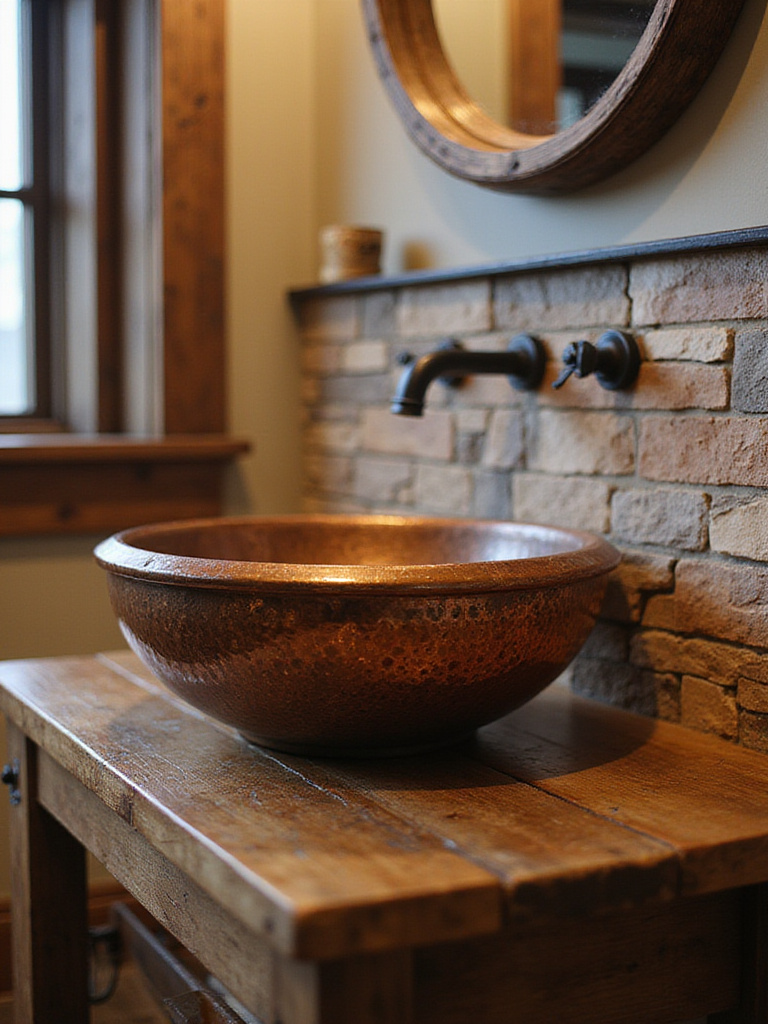
Replace standard sinks with vessel sinks made from river stone or veined marble, turning them into focal points. Hand-hammered copper or brass sinks add texture and evolve with use, enhancing the room’s character.
14. Rethink the Door Beyond the Barn Door
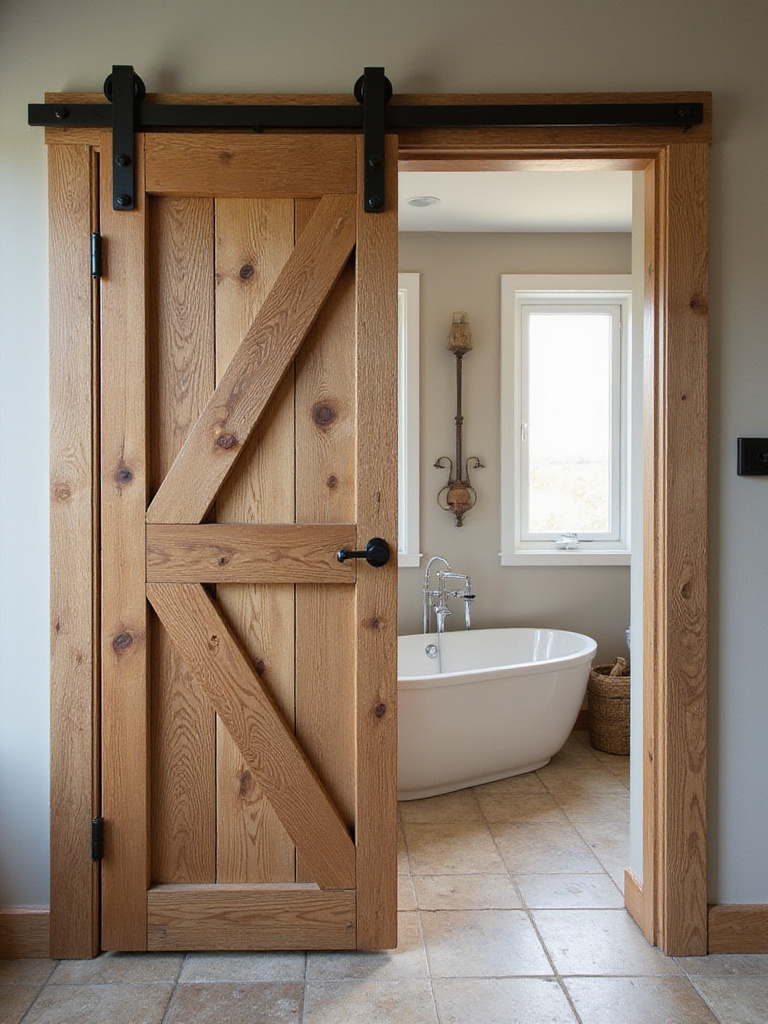
Barn doors are overused and can feel out of place. Instead, opt for solid wood pocket doors that save space and maintain clean lines. Custom doors with slatted wood or woven cane panels add texture and integrate seamlessly with your design.
15. Upgrade Faucets with Patina-Ready Finishes
Faucets are the jewelry of your bathroom. Choose unlacquered brass or matte black for warmth and character. These finishes develop a unique patina over time, reflecting daily use and adding authenticity.
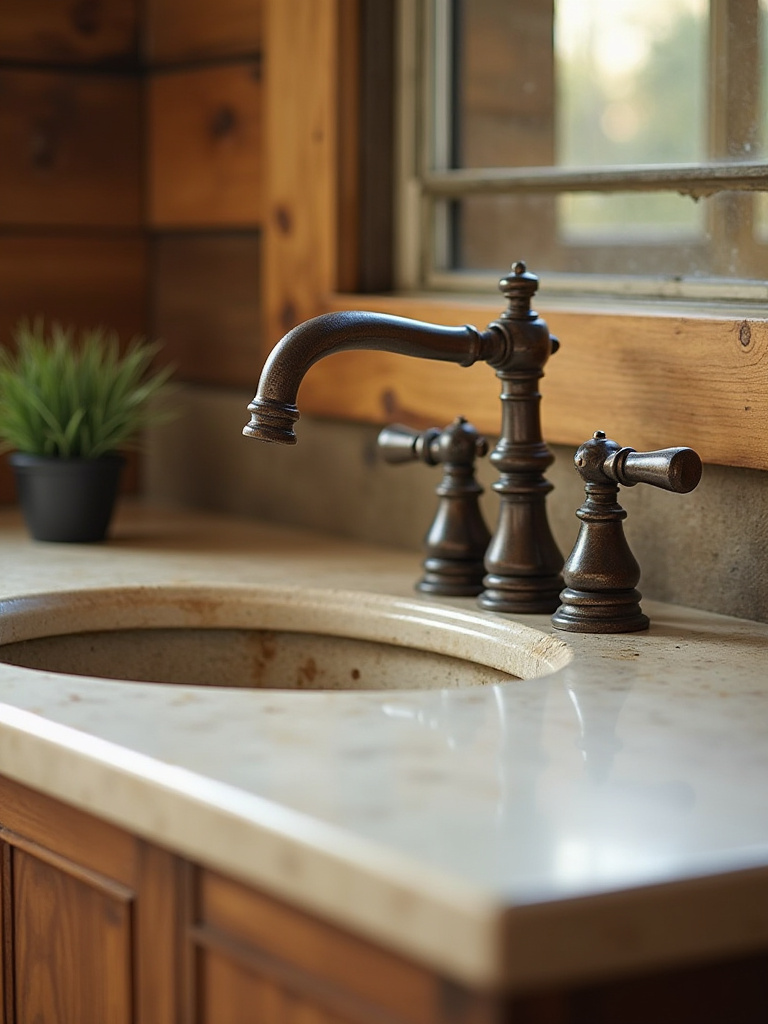
Invest in quality-solid brass faucets feel substantial and elevate the entire space.
16. Consider Alternatives to the Clawfoot Tub
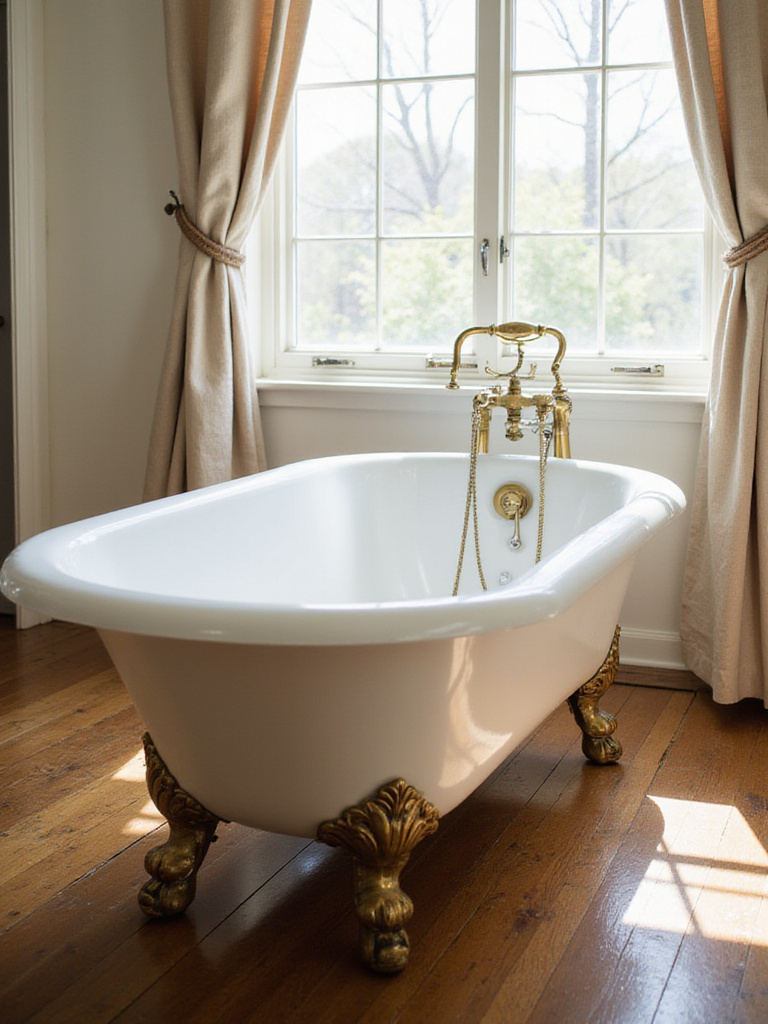
Clawfoot tubs evoke a specific Victorian style that may clash with modern rustic aesthetics. Instead, choose sculptural freestanding tubs with clean lines or built-in tubs clad in waterproof plaster (like tadelakt) or matching stone, creating a serene, grotto-like bathing experience.
17. Curate Open Shelving with Intent
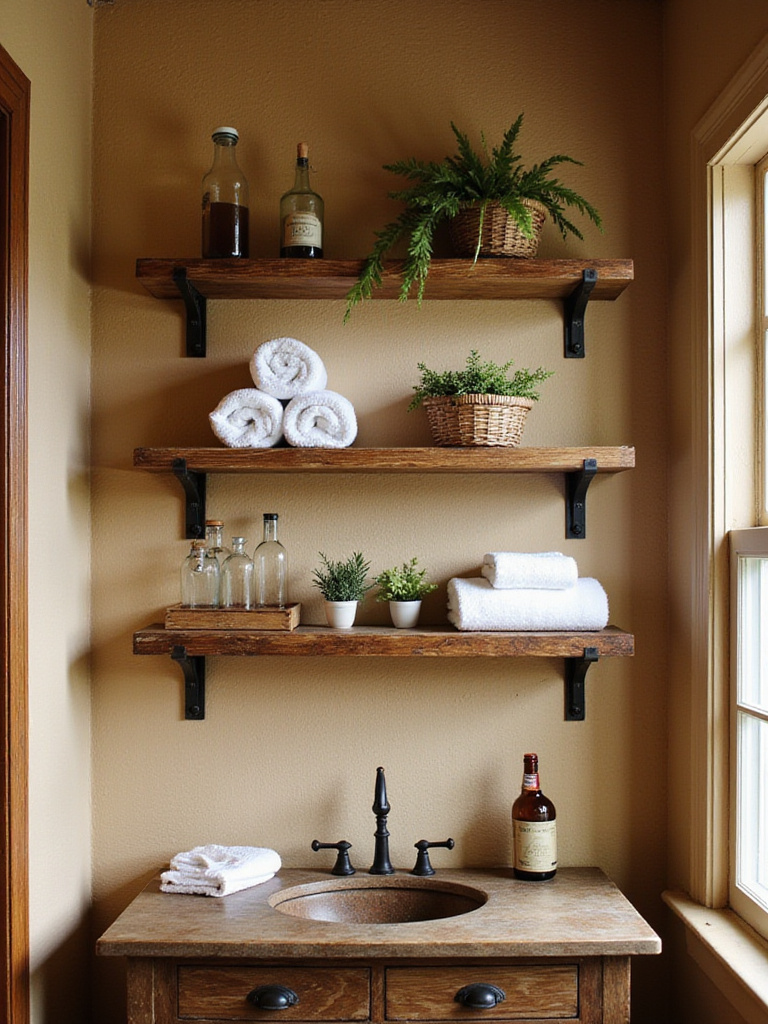
Open shelves are ideal for rustic bathrooms but require careful curation. Use a single thick floating shelf matching your vanity or a niche carved into plaster. Display essentials like rolled linen towels, ceramic cups, and small plants, while hiding clutter behind closed cabinetry.
Elevating Rustic Ambiance with Thoughtful Details
With the major elements in place, it’s time to add the finishing touches that breathe life into your bathroom.
18. Illuminate with Warm, Sculptural Lighting
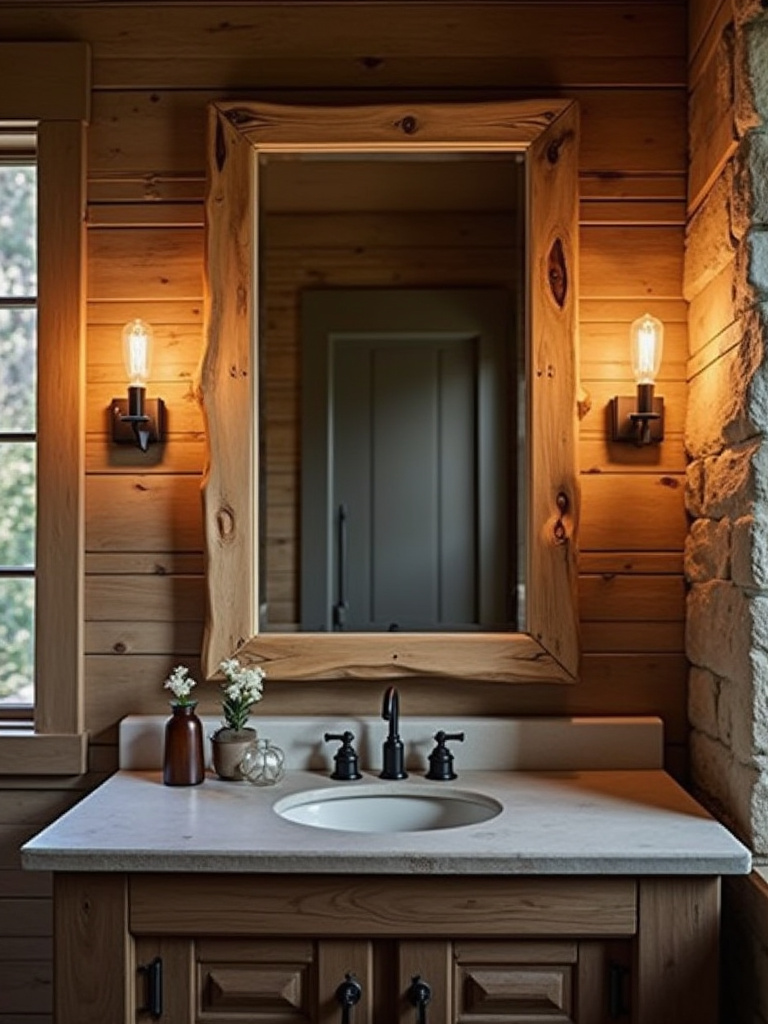
Replace generic mirror lights with paired sconces on either side for flattering, shadow-free illumination. Choose materials like alabaster, ceramic, or plaster that diffuse light softly. Position sconces at eye level (about 60-65 inches from the floor) and install dimmers to switch between bright task lighting and relaxing ambient glow.
19. Organize with Woven Baskets and Trays
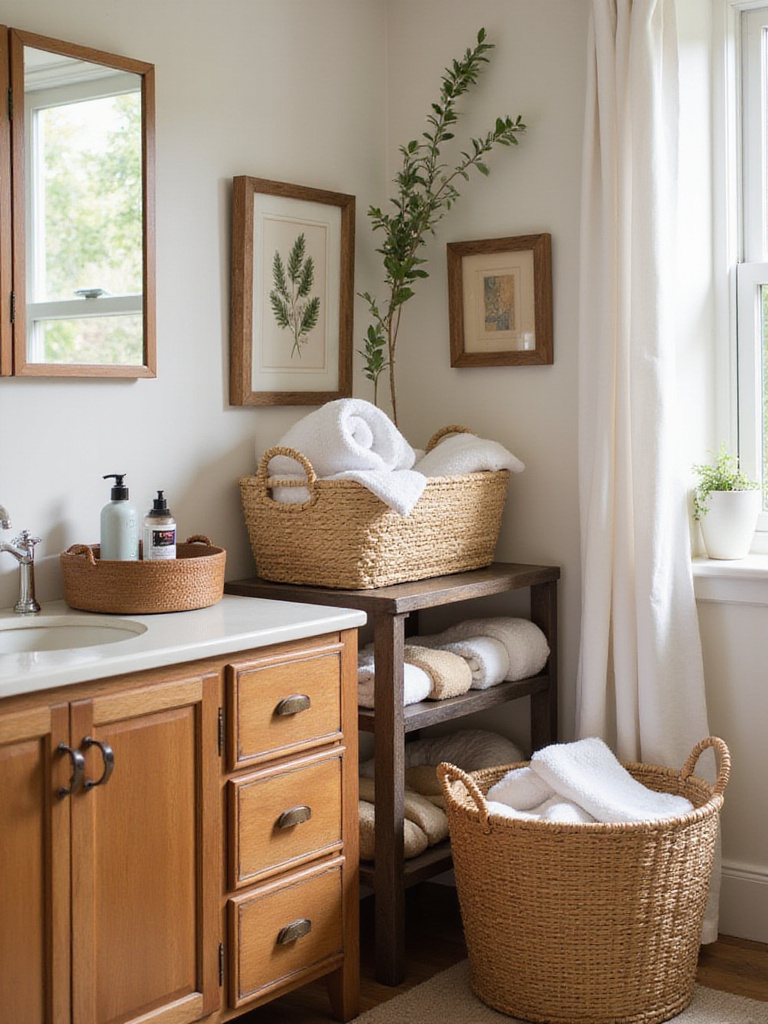
Woven baskets add warmth and order. Use large baskets for laundry or towels and smaller ones for lotions and soaps. On countertops, a wooden or slate tray groups essentials, creating a curated, clutter-free look.
20. Add a Touch of Unexpected Comfort
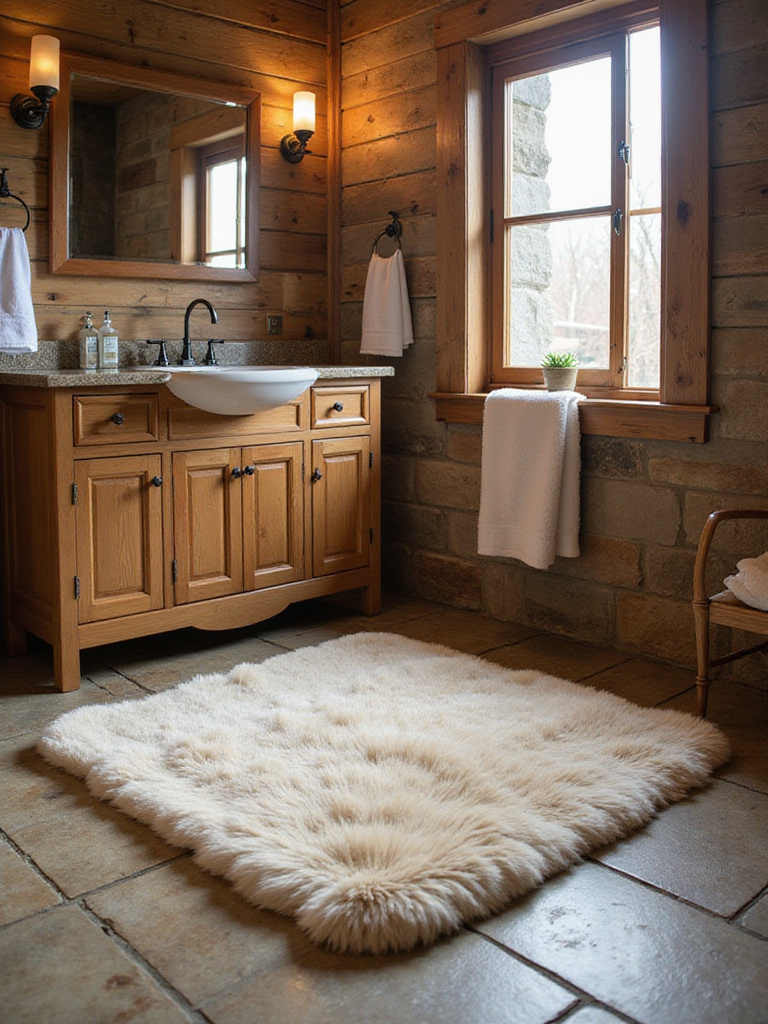
Stepping onto a cold floor after a bath can be jarring. Upgrade your bath mat to a chunky hand-knitted wool rug or a plush sheepskin for a luxurious Scandinavian-inspired “hygge” feel. The contrast between soft textiles and cool stone enhances the sensory experience. Just ensure proper ventilation to keep these textiles fresh.
21. Incorporate Vintage Treasures with Character
A rustic bathroom should feel curated over time, not assembled overnight. Select a few vintage pieces with soul-like a weathered wooden stool by the tub or a silver-backed mirror with elegant patina. These add personality and prevent the space from feeling sterile.
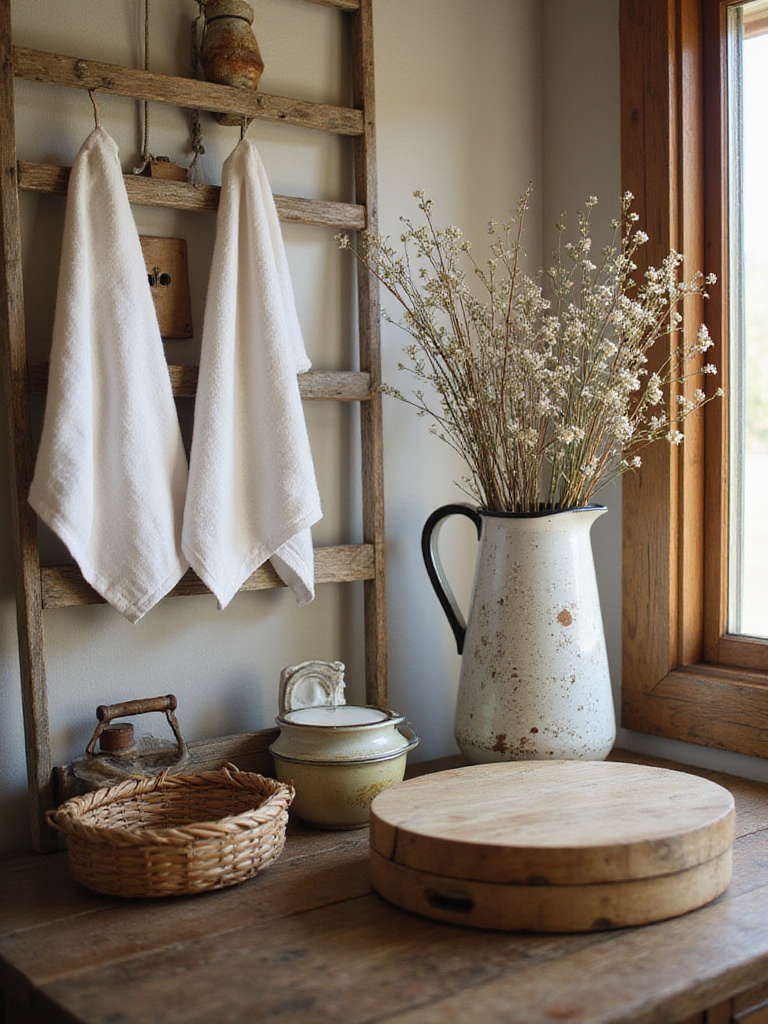
For example, old ceramic canisters can hold bath salts or cotton balls, blending function with history and charm.
Practical Rustic Enhancements
Here are some clever, low-effort ideas that add rustic flair and functionality.
22. Repurpose a Wooden Ladder for Stylish Storage
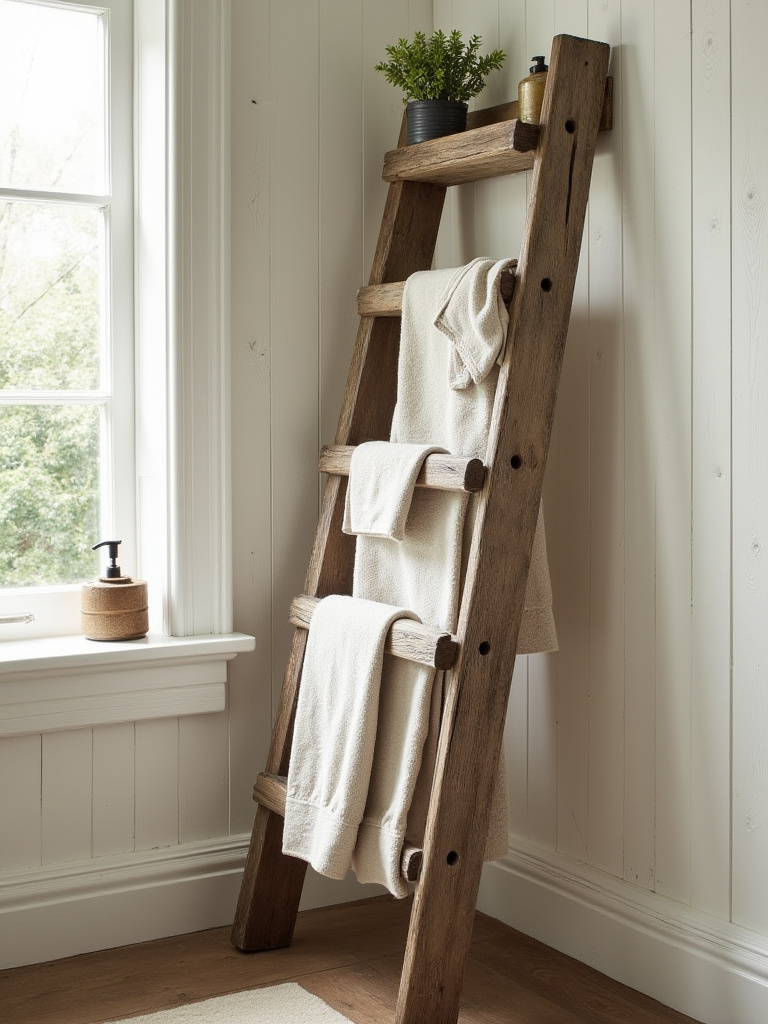
A simple wooden ladder-whether primitive or modern bamboo-makes an excellent towel rack. It maximizes vertical space, allows towels to dry properly, and serves as a sculptural element. Keep it minimal with a few linen towels and secure it to the wall for safety.
23. Elevate Countertop Storage Beyond Mason Jars
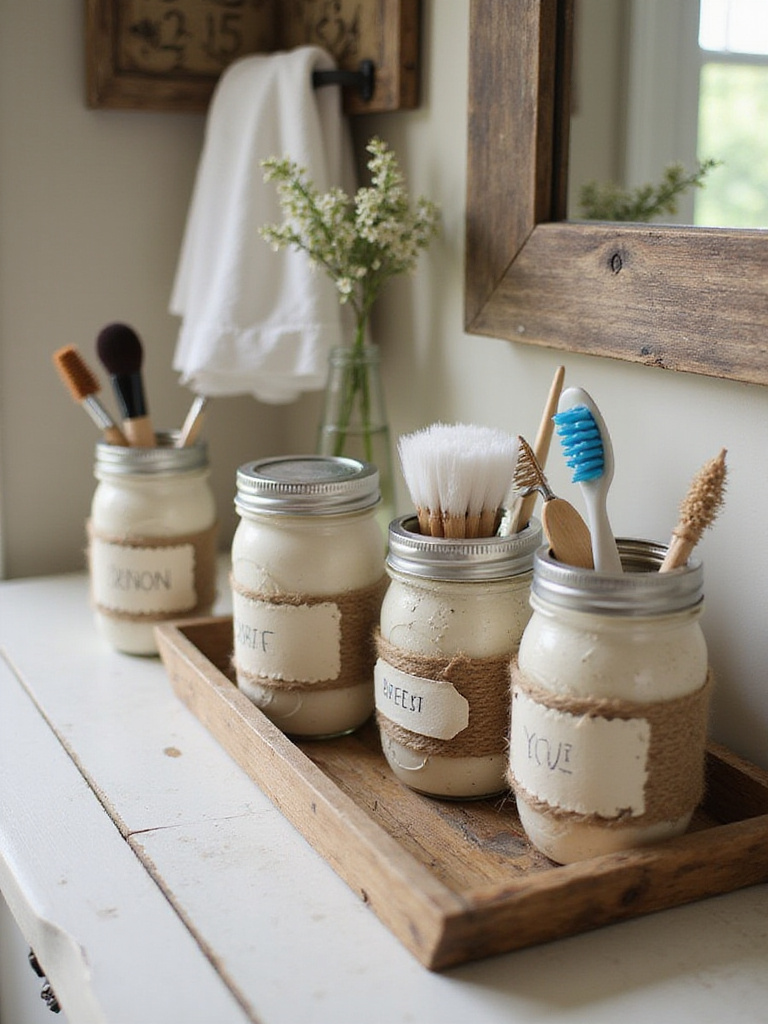
Mason jars are common but predictable. Instead, gather mismatched glass jars or unglazed earthenware vessels from thrift stores to hold cotton swabs, brushes, and toothbrushes. Group them on a simple tray for a curated, handmade look that enhances your countertop’s rustic charm.
Your Personal Rustic Retreat
Designing a rustic bathroom is more than ticking boxes-it’s a philosophy. It’s about peeling back excess to reveal the raw beauty of authentic materials. It’s a dialogue between clean modernity and textured tradition, warmth and coolness.
By focusing on natural light, tactile materials, and meaningful objects, you create not just a room, but a sanctuary. A place that grounds you, soothes you, and reconnects you with the genuine. Above all, it should feel unmistakably yours.
For those looking to explore rustic bathroom decor, reclaimed wood vanities, or natural stone tiles, Amazon offers a wide selection to help bring your vision to life.